58% of consumers now use GenAI tools instead of traditional search to find products.
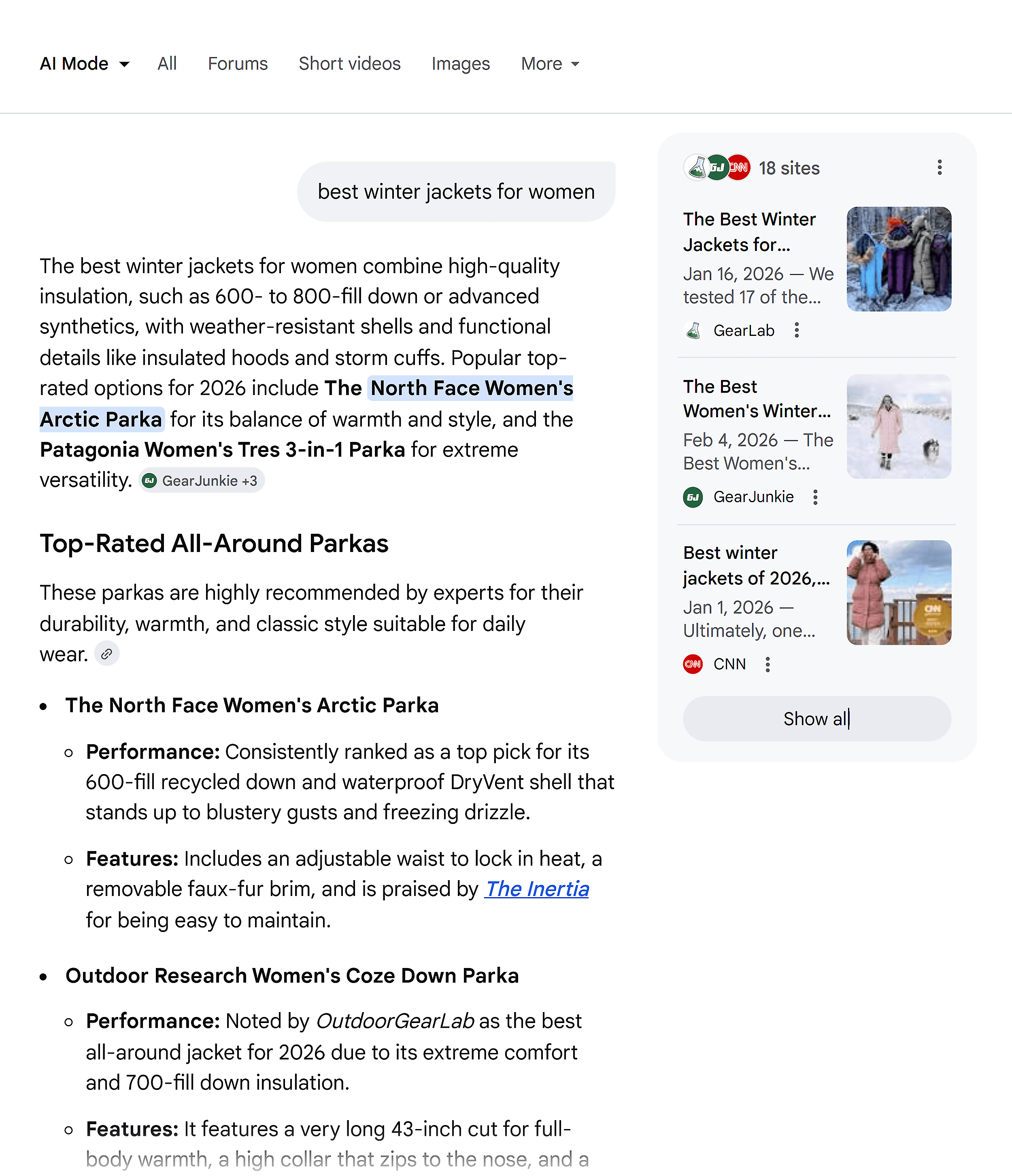
Imagine your customer runs a simple query in Google’s AI Mode: “Winter jackets for women.”
Instead of a long list of links, they get direct product recommendations — alongside:
Descriptions of features and best use cases
Ratings and reviews
Editorial sites that mention the product
Direct comparisons with top competitors
All in one response.
Which raises an obvious question:
Why do some products show up, while others are ignored entirely?
Many factors influence AI recommendations.
But one of the most important — and most controllable — is your product pages.
In basic terms, AI needs to understand what your product is and who it’s for.
When that information is clear, structured, and specific, your products have a much better chance of appearing in AI results.
In this guide, we’ll break down how AI evaluates product pages, and which elements matter most.
Plus, we’ll see how leading ecommerce brands structure their pages to get recommended.
Free checklist: To get a head start, download our Product Page AI Optimization Checklist. It includes everything you need to get more product mentions in AI platforms.
How AI Models “Think” About Product Pages
Ever wondered how large language models (LLMs) choose which products to surface in answers?
While there’s a lot at play, you can basically narrow it down to two factors:
Consistency: Information about your brand and products matches across your website and third-party sites
Consensus: Multiple reputable sources validate your product’s quality, use cases, and performance. This includes reviews on your product pages and third-party sites.
For LLMs to confidently cite a product page, they need consistent, up-to-date information.
AI models analyze product pages to pull details that help them answer user queries.
Remember, AI queries don’t look like a regular search.
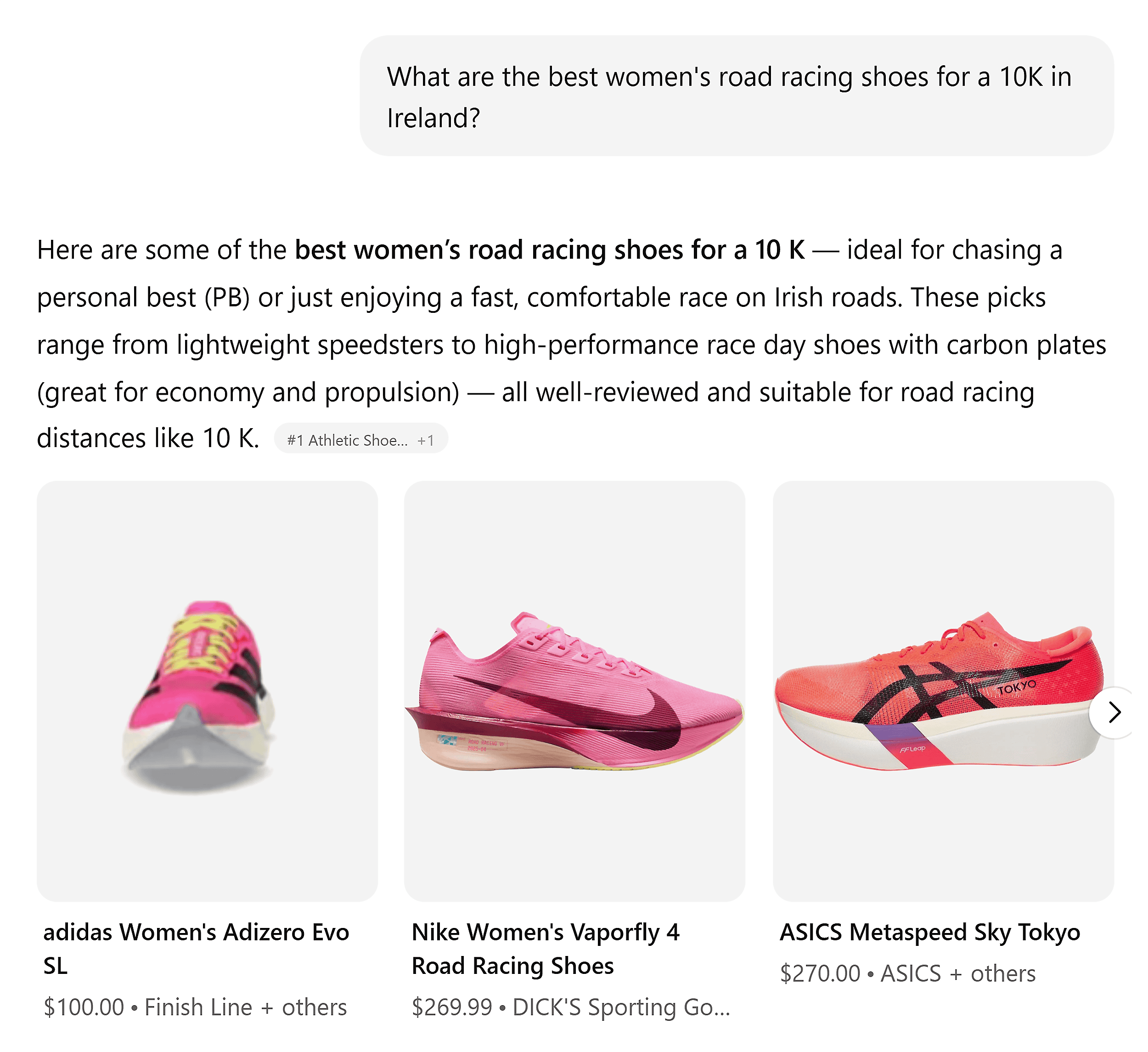
Prompts are often highly specific requests for products that fit a clear use case or situation.
Example: What are the best women’s road racing shoes for a 10K in Ireland?
AI looks for product pages that clearly communicate:
What the product is
What it’s used for
Who uses it
In what situations it can be used
This helps the system understand your product in the context of user queries.
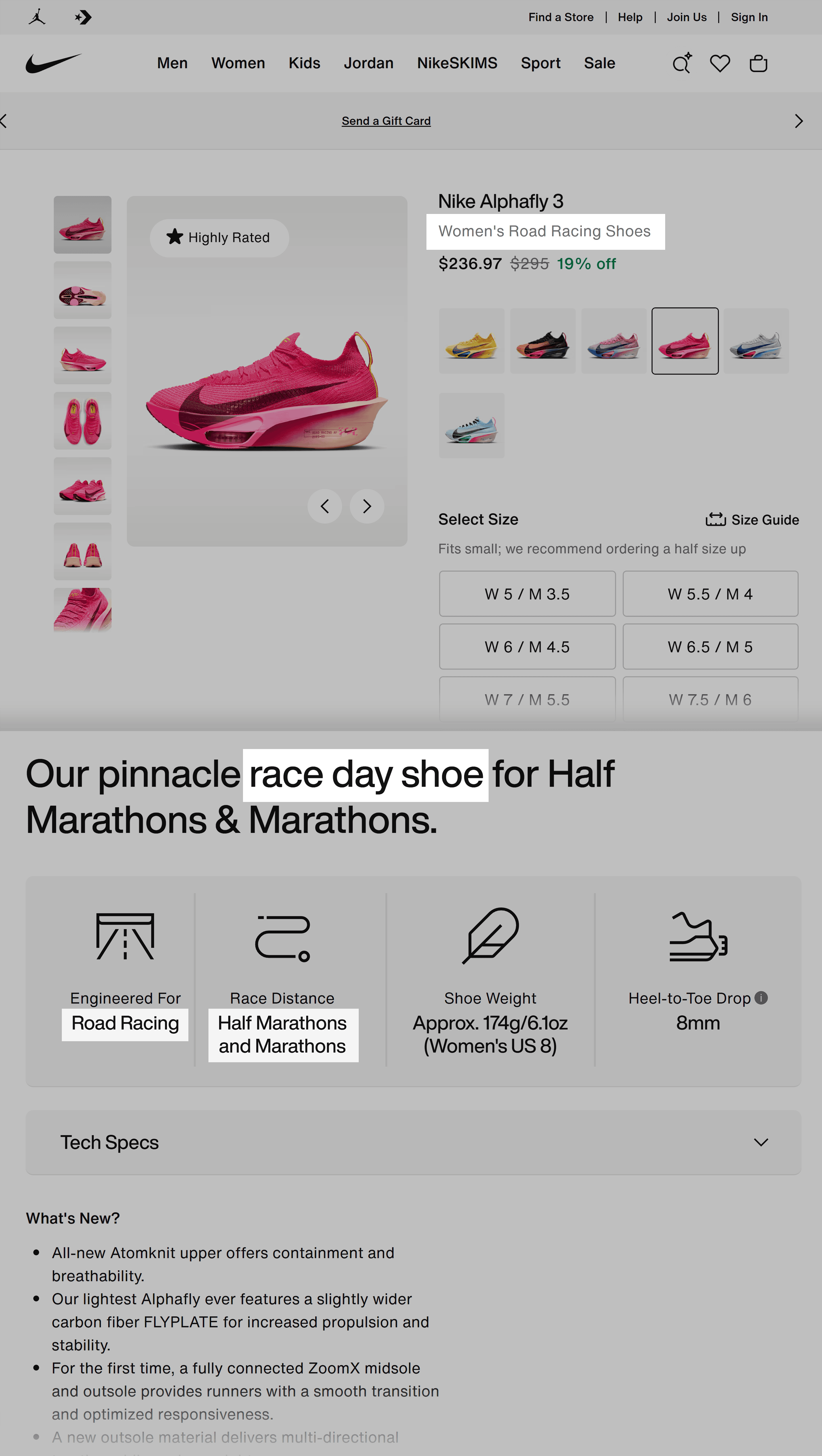
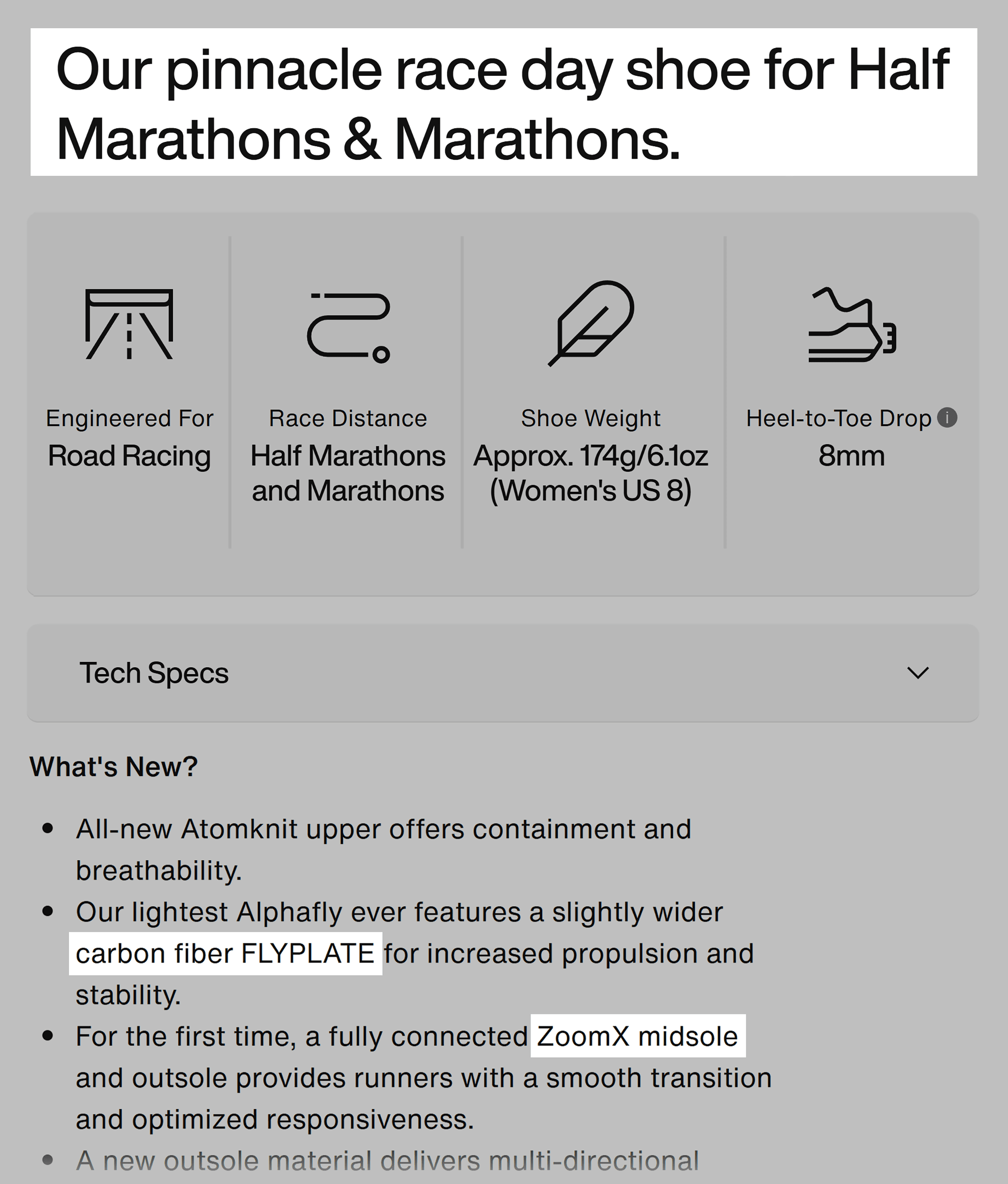
Take this Nike road racing shoe product page, for example.
AI systems understand when and how to recommend this product because it contains details like:
What the product is: “Women’s Road Racing Shoes”
Who should use it and when: Racing-related language like “marathon” and “race day shoe” makes it clear this product is for racing
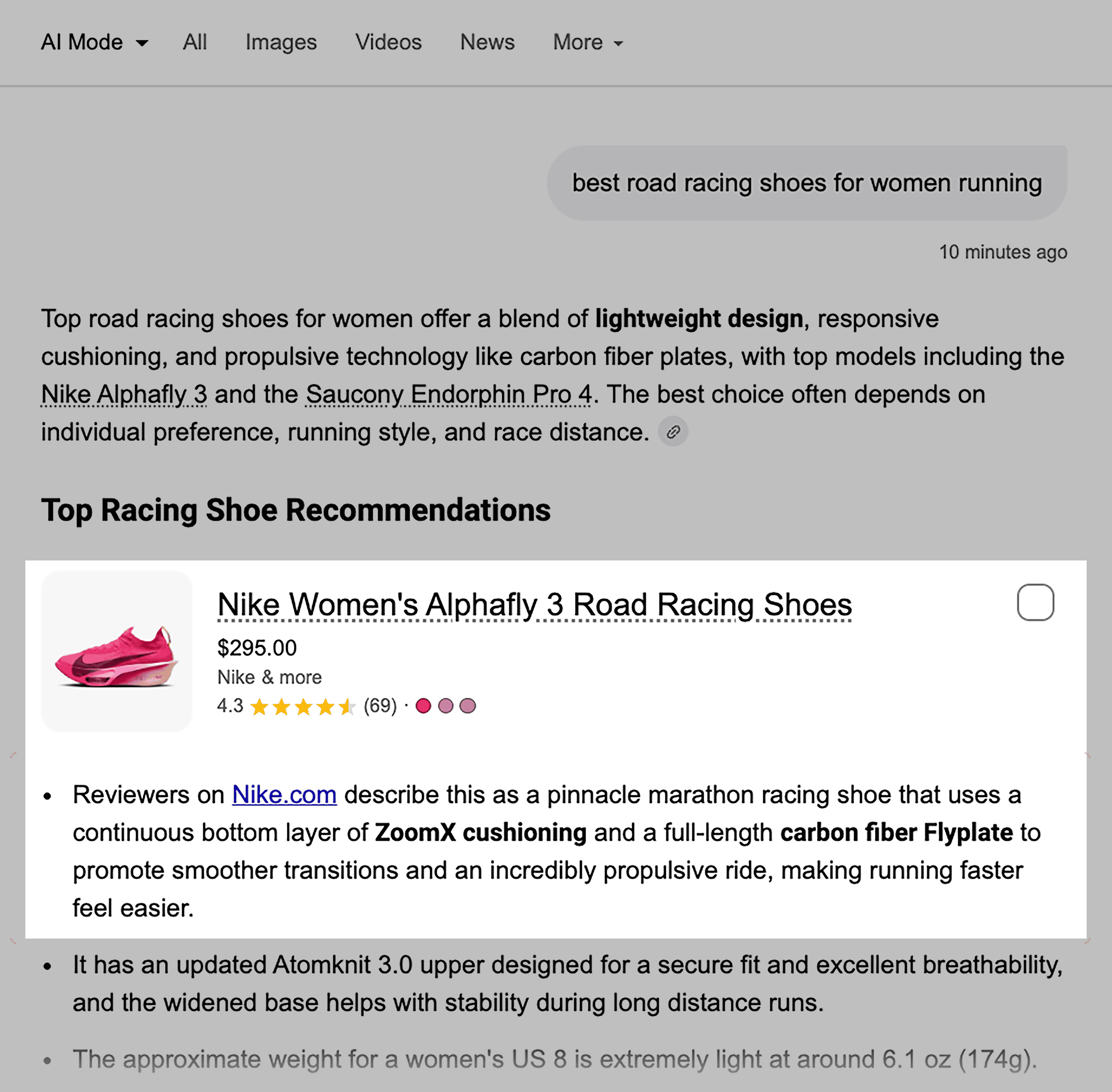
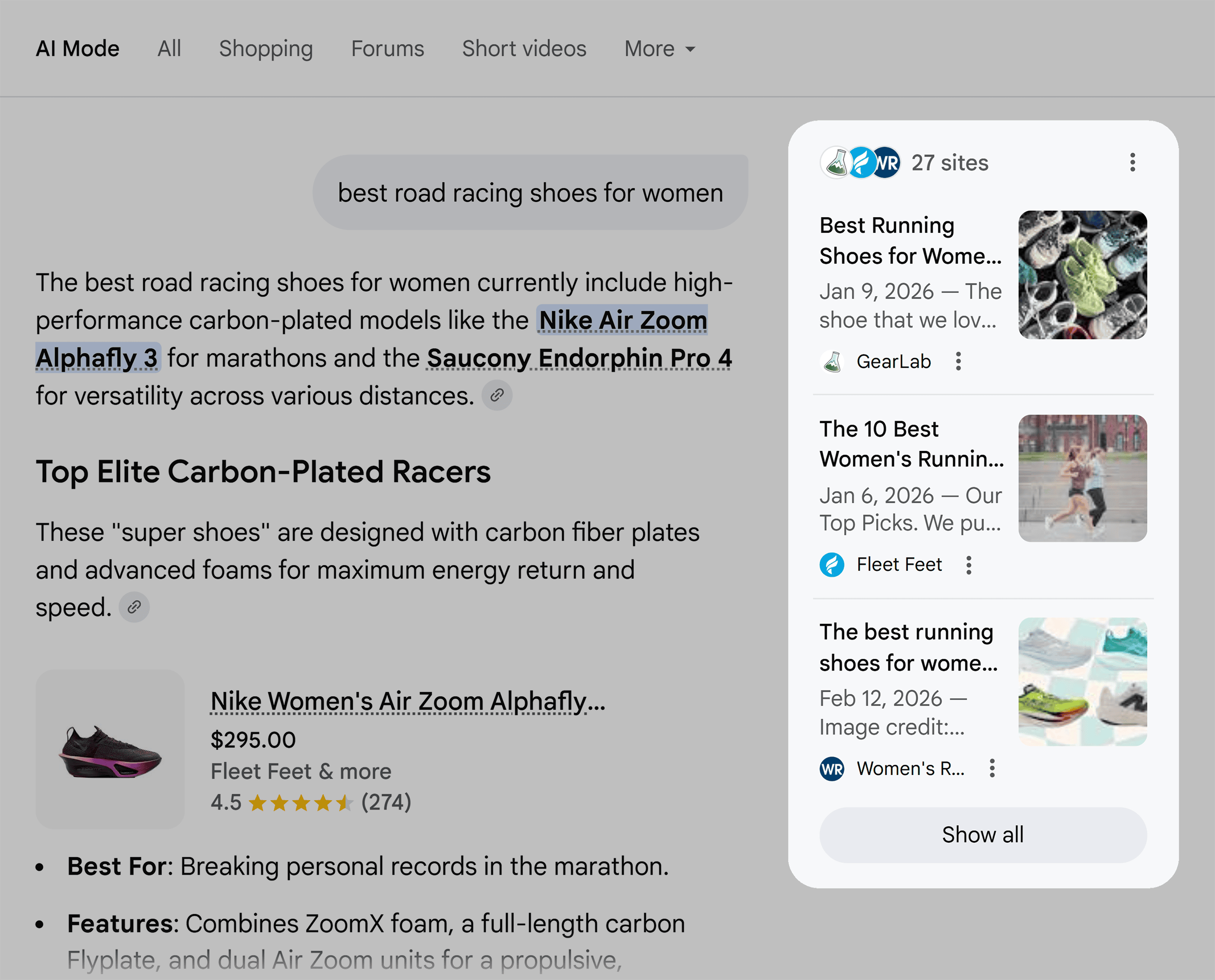
When I searched “best road racing shoes for women” in AI Mode, it recommended Nike’s Alphafly.
And where did the information it quoted come from?
Nike’s own product page.
AI models also look for consensus signals on product pages.
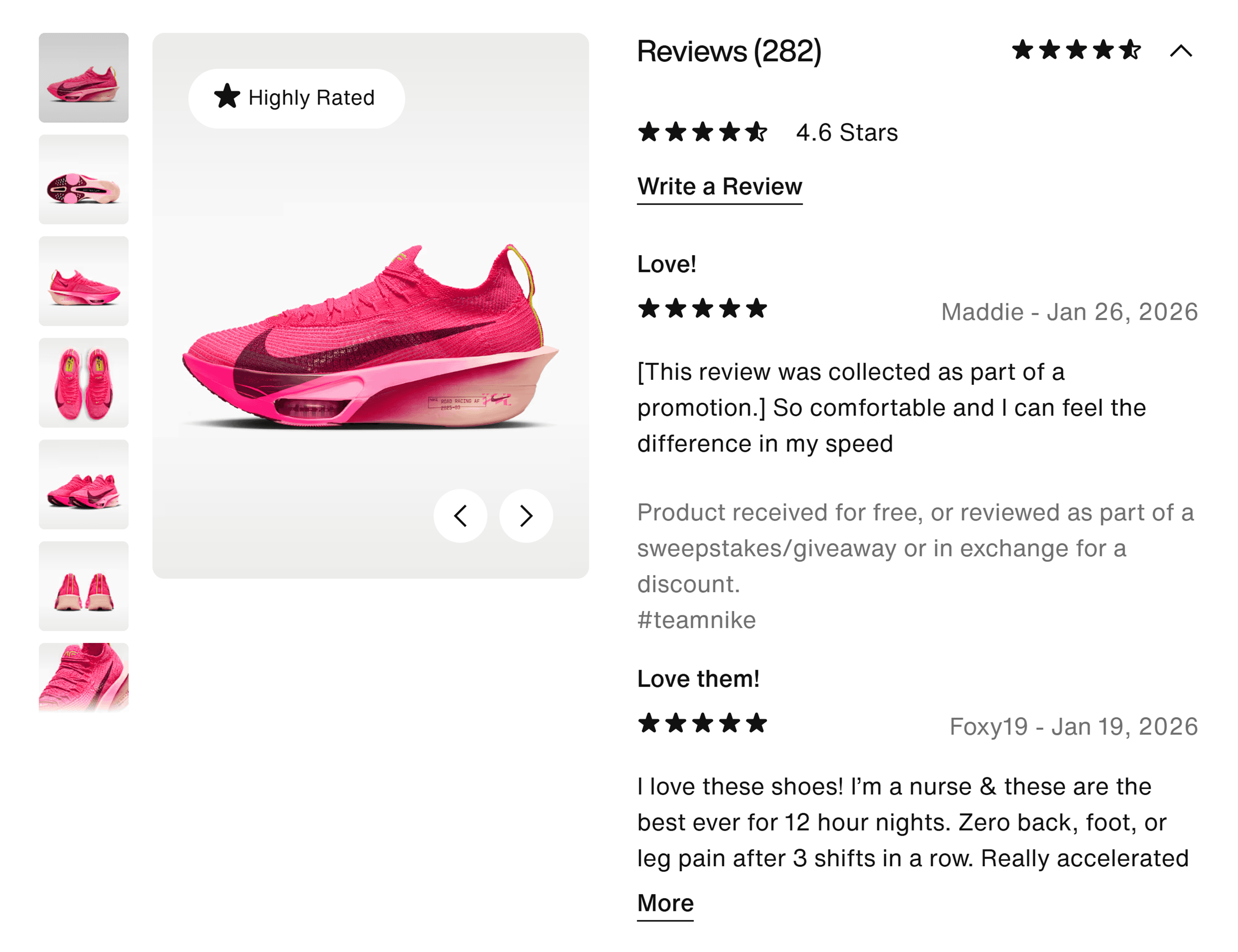
This includes customer reviews and ratings.
When AI analyzes reviews, it looks for patterns. This includes repeated mentions of specific use cases, features, or product benefits.
For example, the Nike Alphafly is highly rated with plenty of reviews on the Nike website.
Among other benefits, this improves its chances of being recommended by AI platforms.
But AI doesn’t rely solely on product pages.
It cross-references independent sources to back up claims about your products.
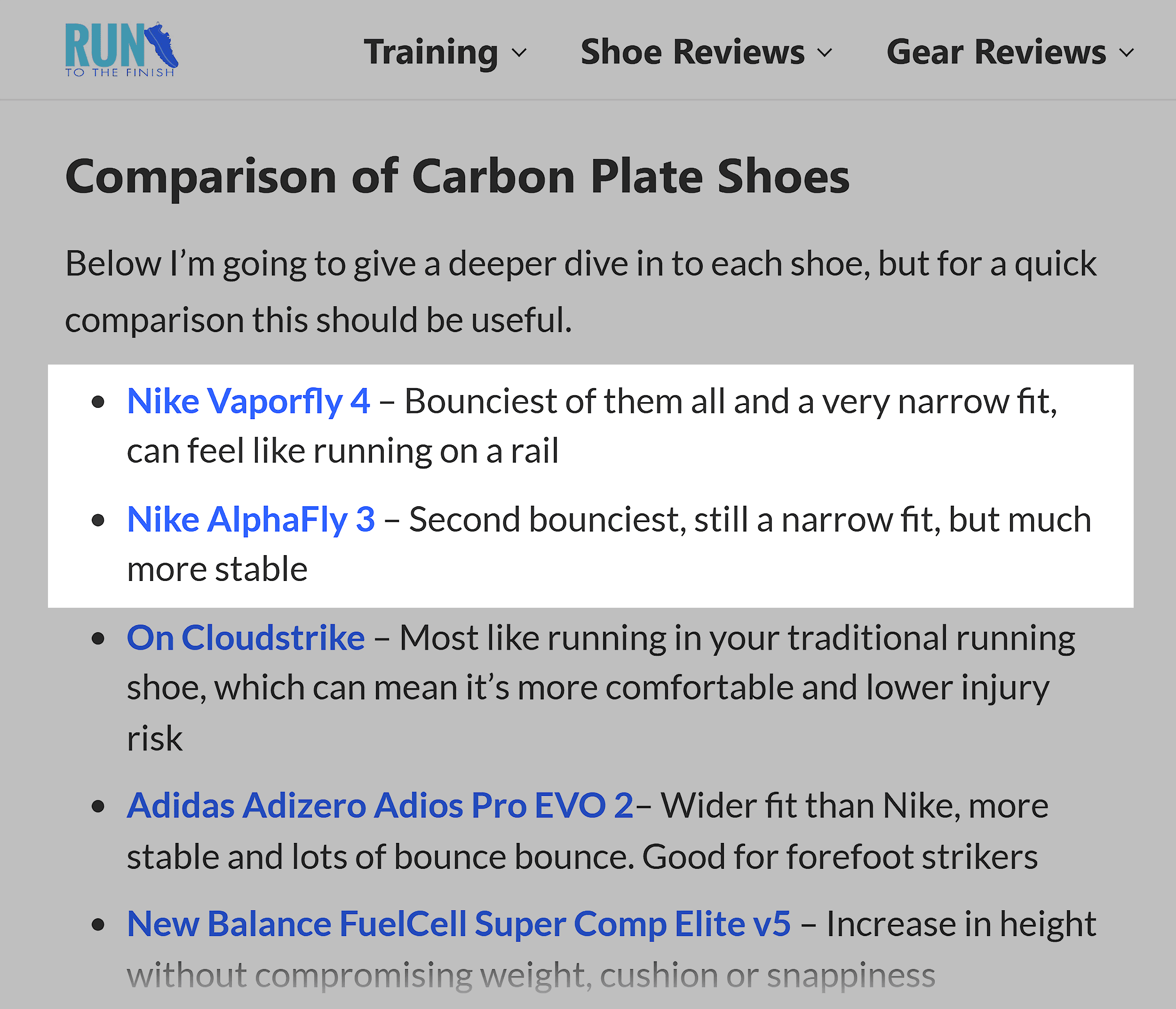
In a similar search for racing shoes, I found that AI Mode cites various third-party sources to support its recommendations.
Like this one, that includes a review of Nike shoes, complete with product details.
Product pages are one piece of the AI visibility puzzle.
But they create the foundation AI systems need to confidently recommend your products.
Further reading: Learn how LLMs recommend brands in Semrush’s AI Visibility Index.
6 Essential Elements of a Product Page for AI Visibility
You likely already have some (or all) of the elements below on your product pages.
But for AI visibility, having them isn’t enough.
What matters is clarity, specificity, and structure.
Note: These elements aren’t in any particular order: all are important for AI visibility.
1. Clear Product Descriptions with Semantic Language
A clear product description explains more than what your product is. It spells out what it does, who it’s for, and why someone would choose it.
This matters for AI visibility because LLMs rely heavily on semantic retrieval.
In other words, AI understands the intent and meaning behind queries. Not just exact-match keywords.
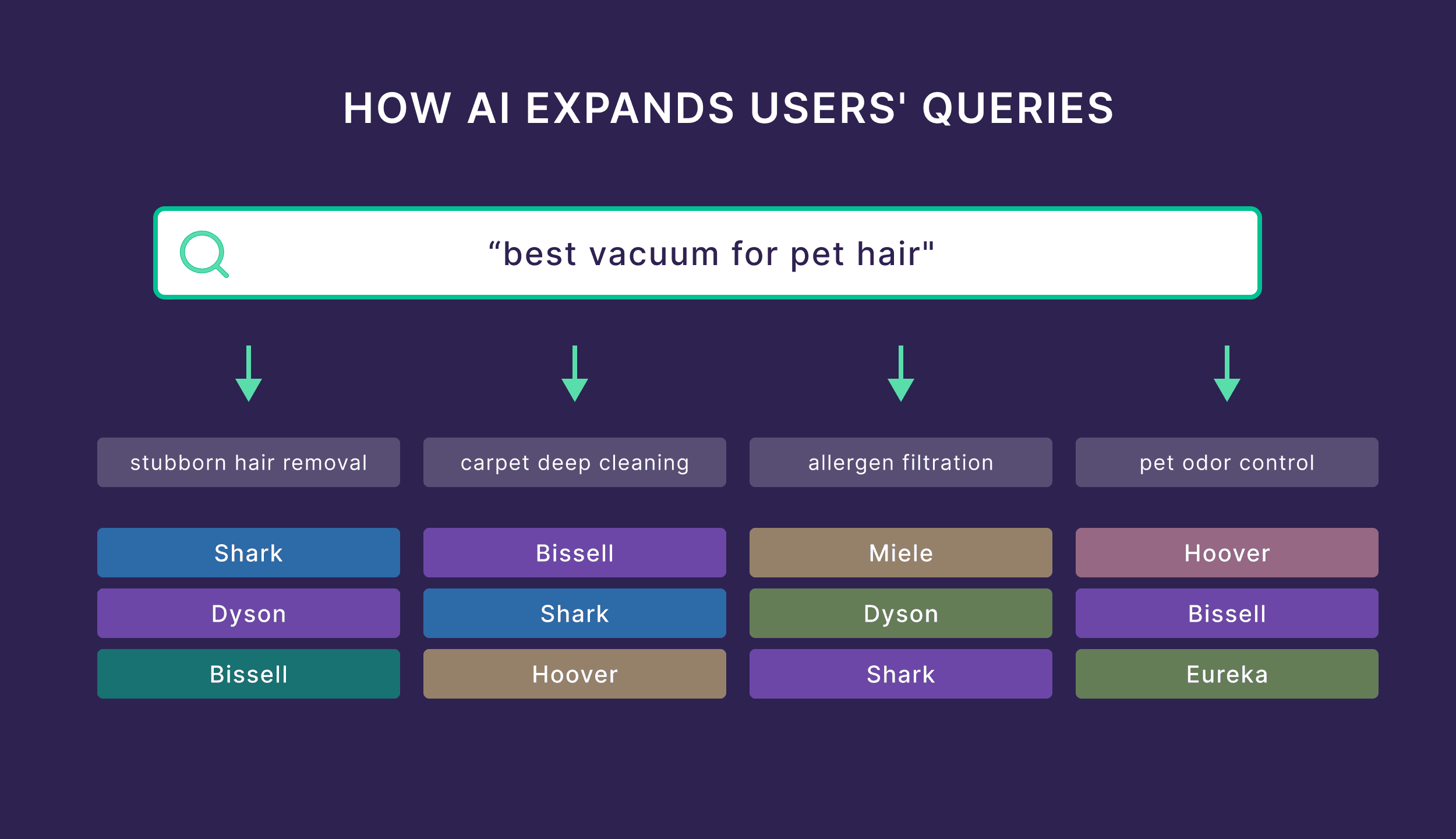
For example, when someone searches for “vacuum for pet hair,” AI doesn’t just look for that phrase.
It also looks for semantically related terms. Things like “stubborn hair,” “carpets,” “pet odors,” and “allergens.”
These terms help AI infer use cases, surface the right features, and decide when your product is a good fit.
Including them on product pages improves your chances of appearing in AI-generated answers.
So, how do you find these terms?
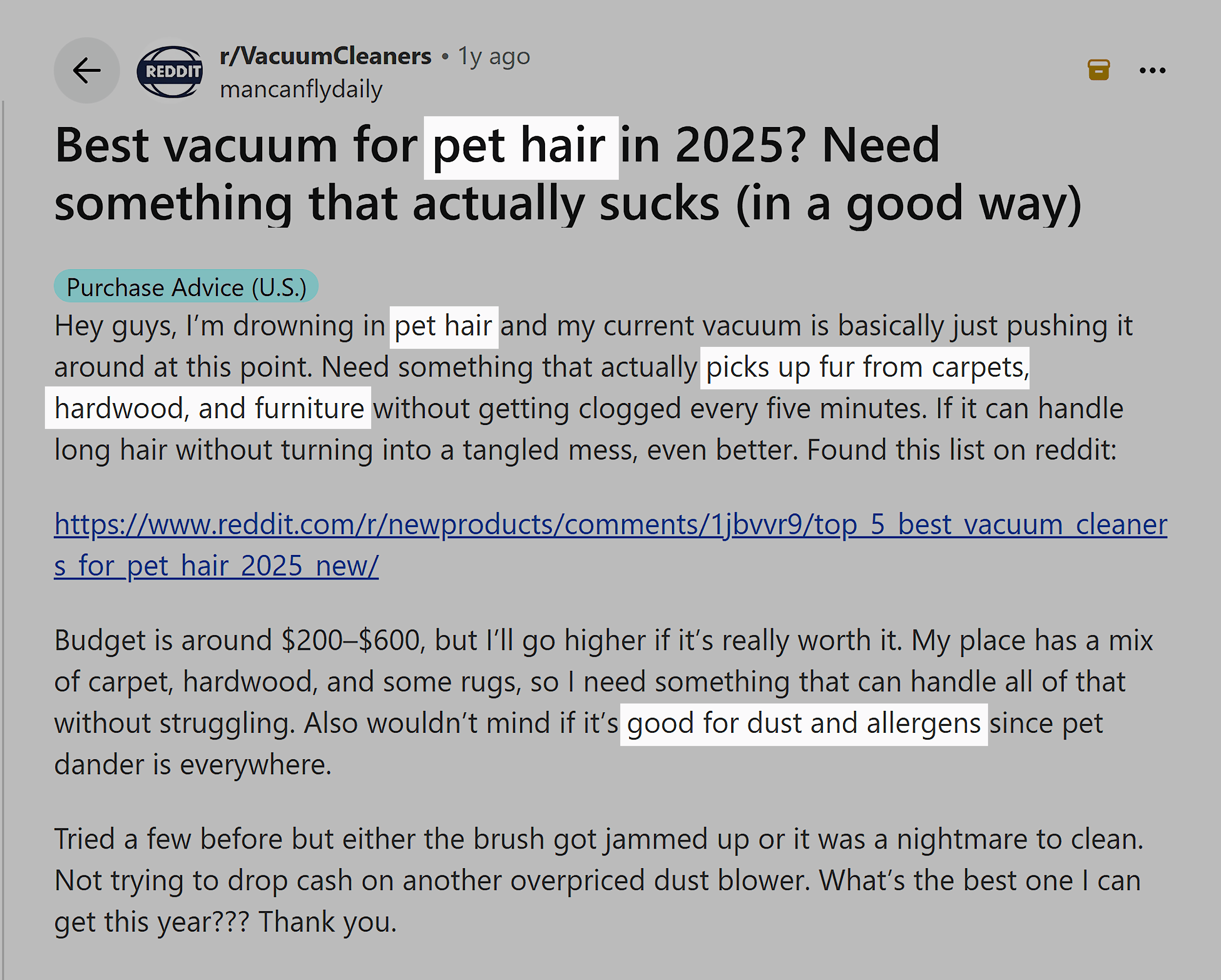
First, read forums, reviews, and social media conversations.
Learn how people talk about the problems they’re facing and the products they’re using.
Using our vacuum example, I dove into r/VacuumCleaners. There, I found recurring phrases around weight, clogging, tangles, and flooring-specific concerns.
Next, conduct keyword research on related terms.
This shows you how people actually phrase their searches.
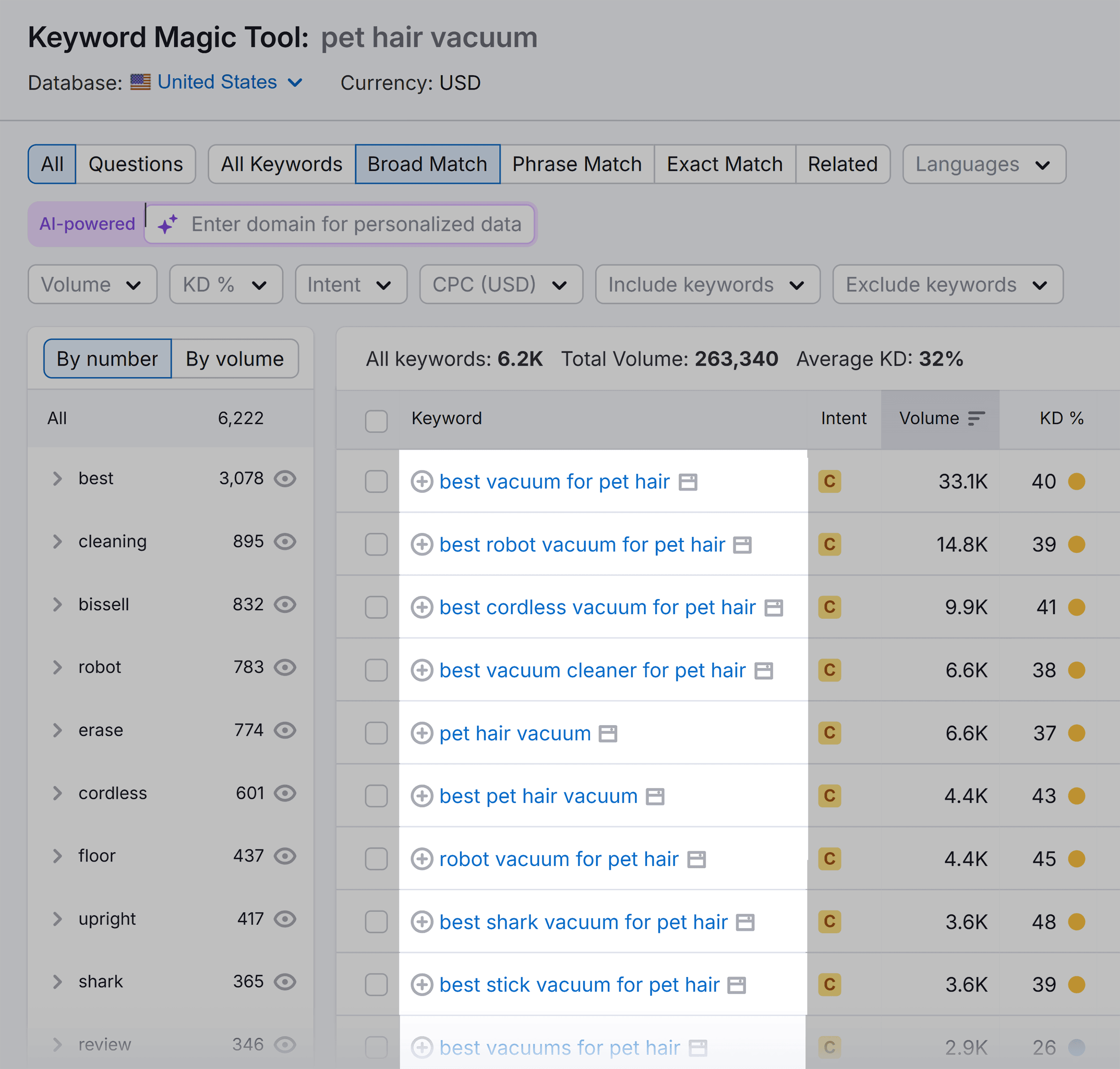
A tool like Semrush’s Keyword Magic Tool is great for this task.
Note: A free Semrush account gives you 10 searches in the Keyword Magic Tool per day. Or you can use this link to access a 14-day trial on a Semrush Pro subscription.
Enter a keyword, such as “pet hair vacuum.”
The tool will return a list of “Broad Match” queries, which contain variations of your keyword.
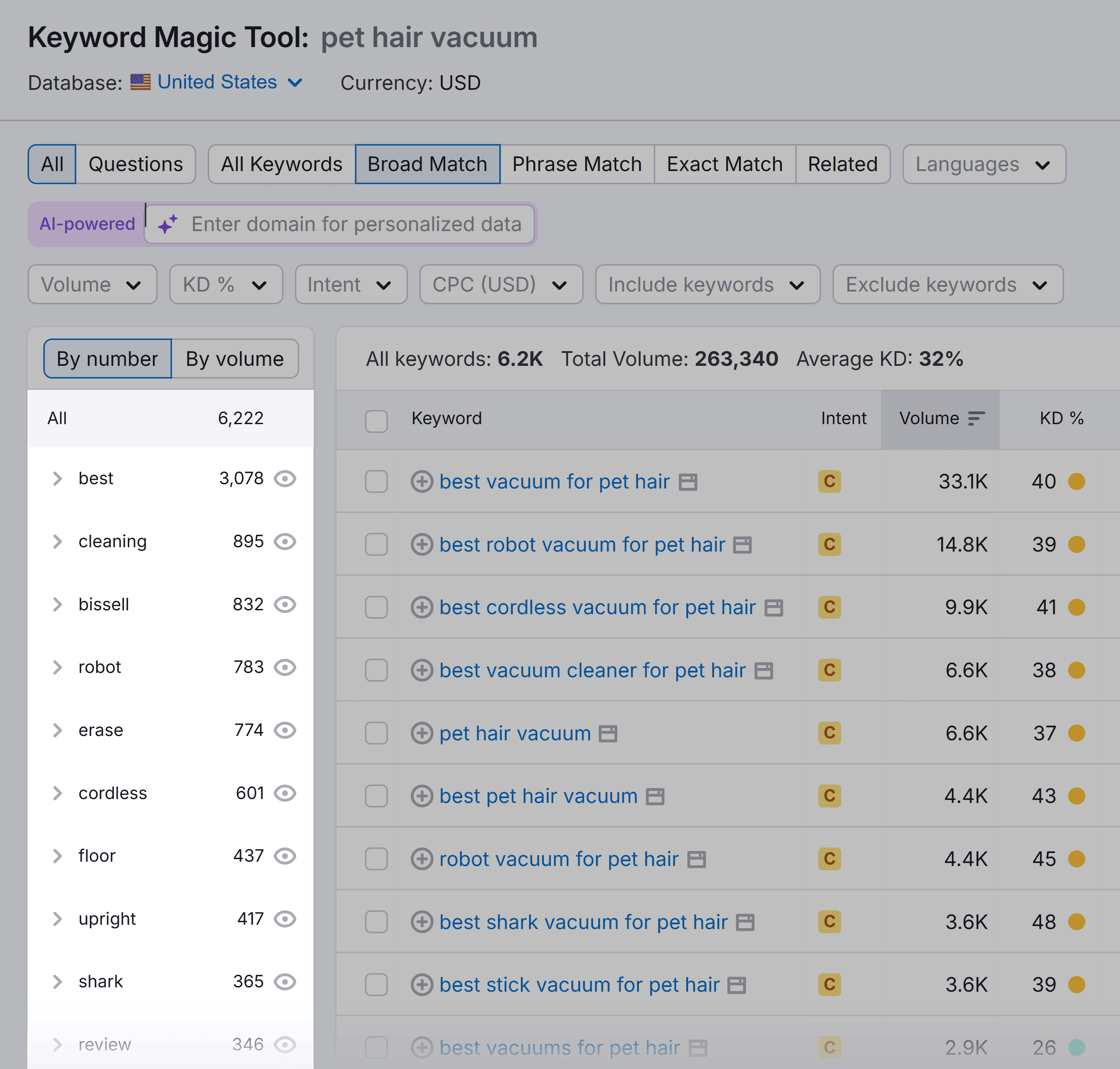
Review the “All Keywords” list on the left to find common themes.
Then, check the monthly search volume for each term.
In our example, we might use “handheld,” “carpet,” and “hardwood” as semantic keywords.
Collect a few key terms, and use them in product descriptions to explain what your product does.
You can still be creative. Just don’t sacrifice clarity.
Here’s what this looks like in practice.
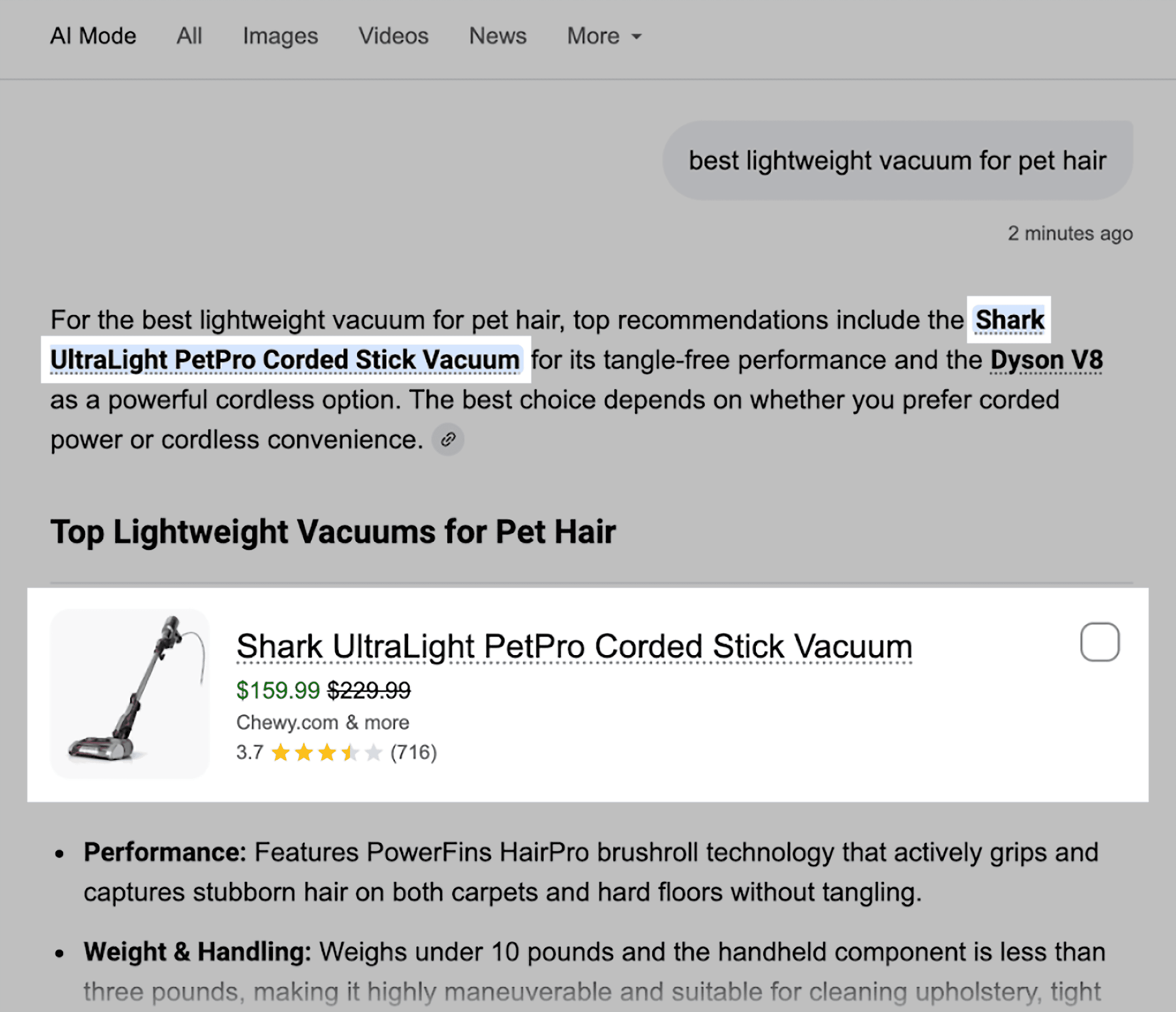
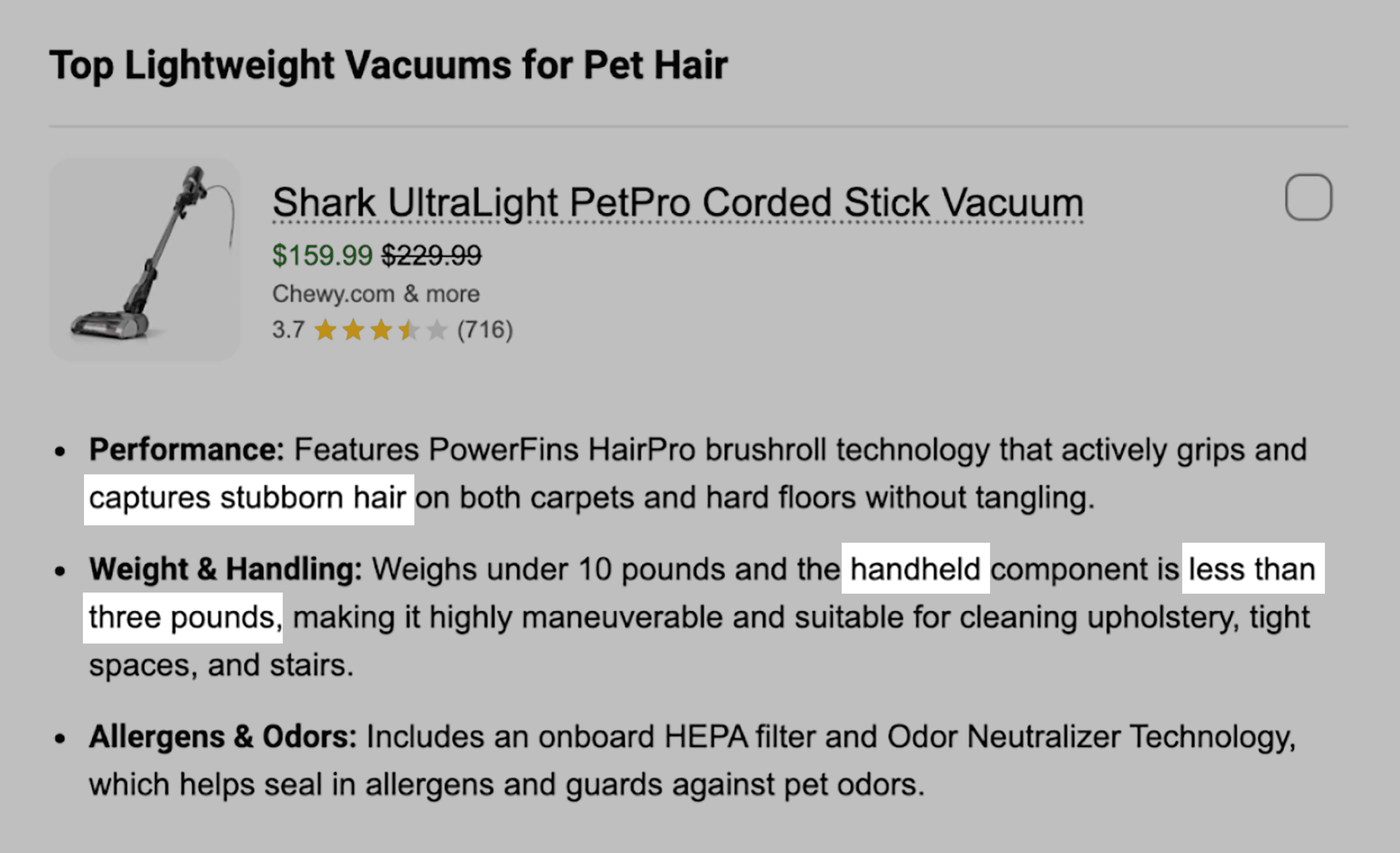
I asked AI Mode for the best lightweight vacuum for pet hair. One of the top recommendations was a Shark vacuum.
User preferences and personal context aside, AI Mode recommended this product for a few reasons:
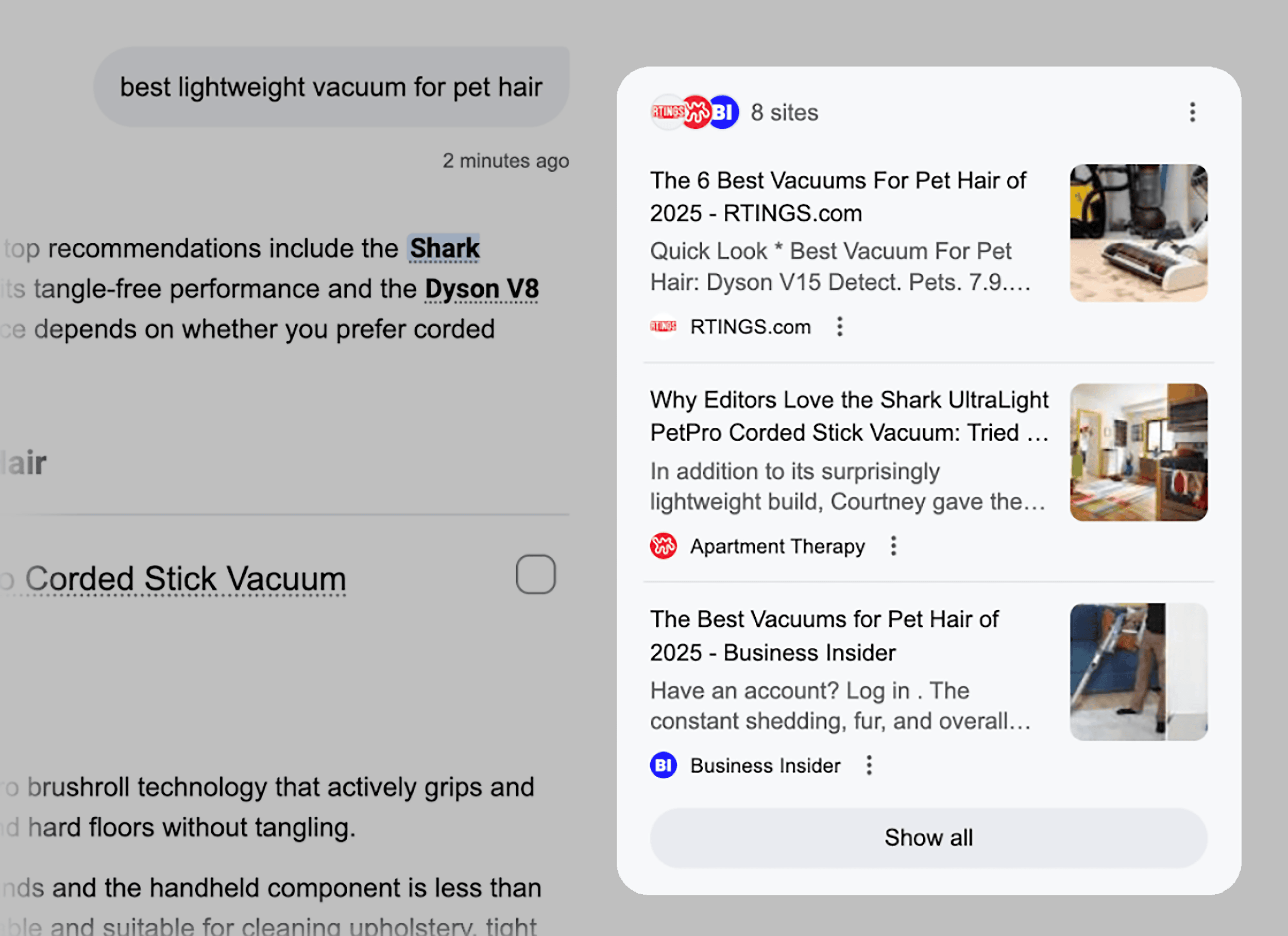
For one, it has strong consensus signals from third-party reviews and editorial sites.
(Which you can see from the sources on the right side.)
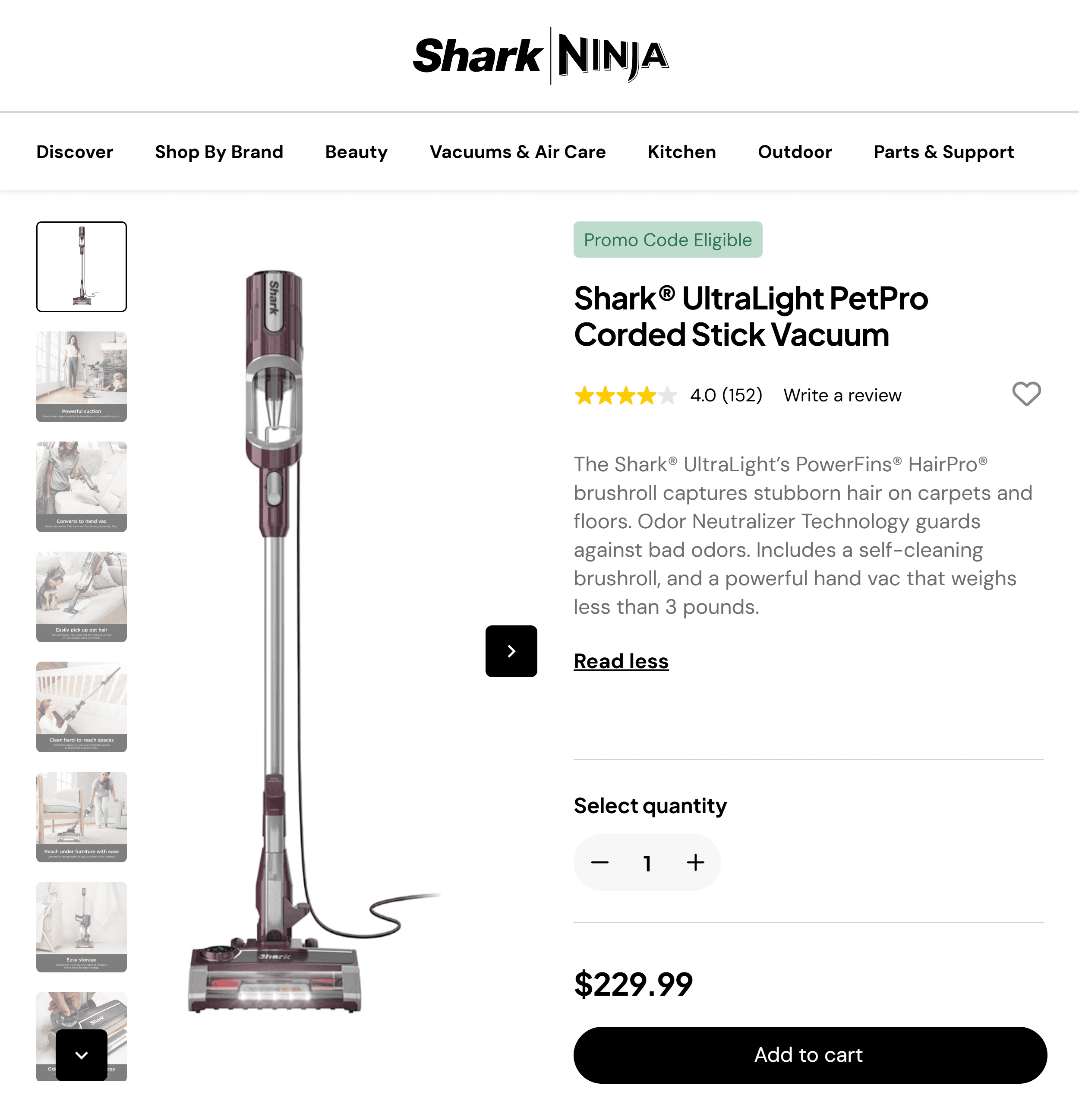
But let’s also take a closer look at the product page.
The product name alone — Shark UltraLight PetPro Corded Stick Vacuum — gives a core use case.
It’s meant for lightweight, pet-focused cleaning.
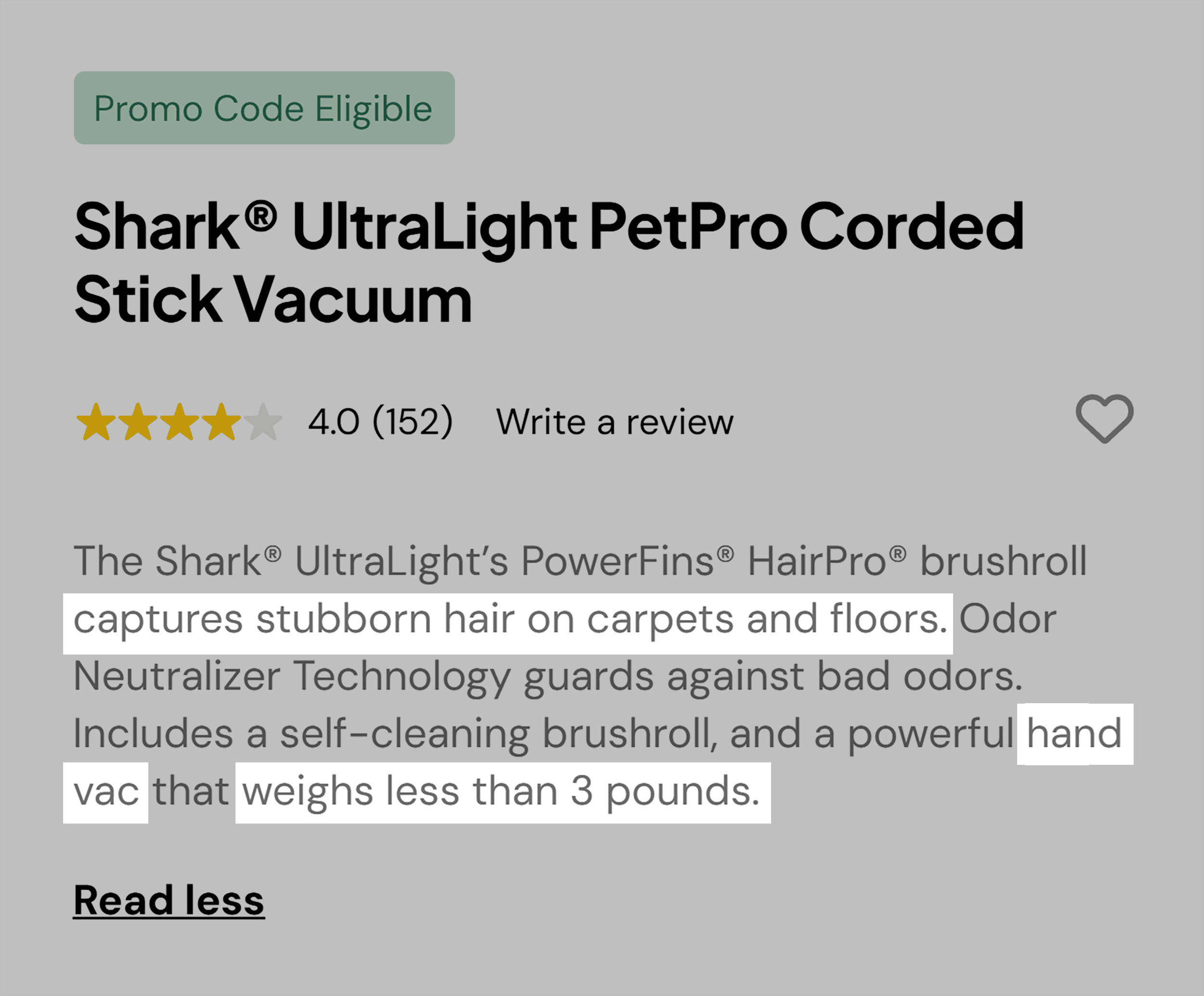
The product description reinforces that message with simple, specific language:
Captures stubborn hair
Works on carpets and floors
Hand vac option
Weighs less than three pounds
That same phrasing shows up in the AI response.
This strongly suggests AI Mode is pulling this information directly from Shark’s product description for this vacuum.
Bottom line: Customer-focused, use-case-driven language helps AI understand when to recommend your product.
This increases your chances of appearing in AI search results.
Further reading: Need inspiration? Check out some of our favorite ecommerce website examples.
2. Pricing and Availability in Real-Time Feeds
LLMs read product data from two places: your product pages and merchant feeds.
If your site has accurate structured data, AI can use that. But crawlers don’t run every minute. That means prices and stock can be stale.
That’s where a live product feed or API comes in.
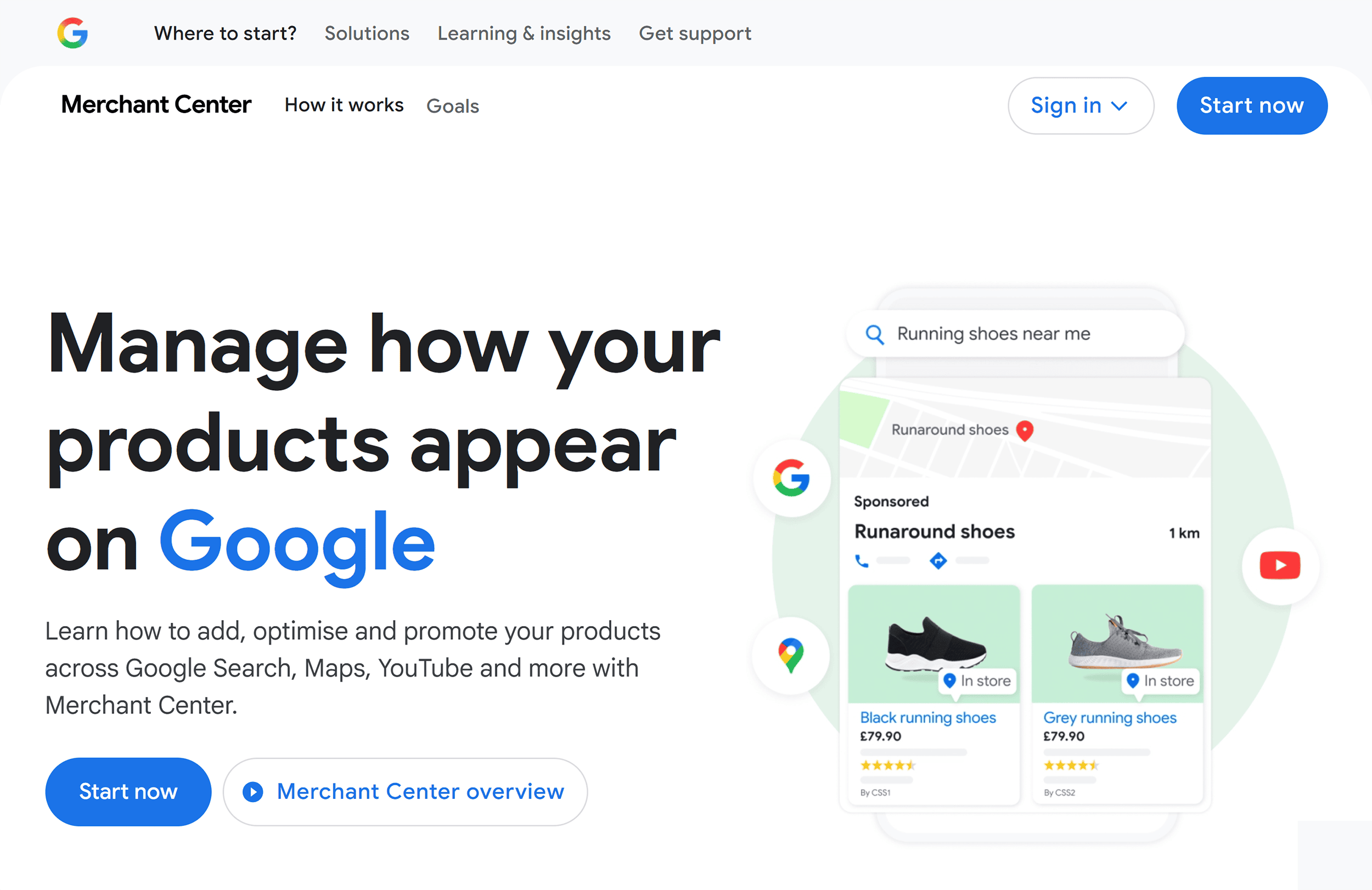
This includes Shopify’s Catalog API, OpenAI’s Product Feed Spec, and feeds submitted through Google’s Merchant Center.
Pro tip: OpenAI product feed submission is currently available only to approved partners. Fill out the Merchant Application form for consideration.
When you use these, AI search engines can fetch current prices and inventory on demand.
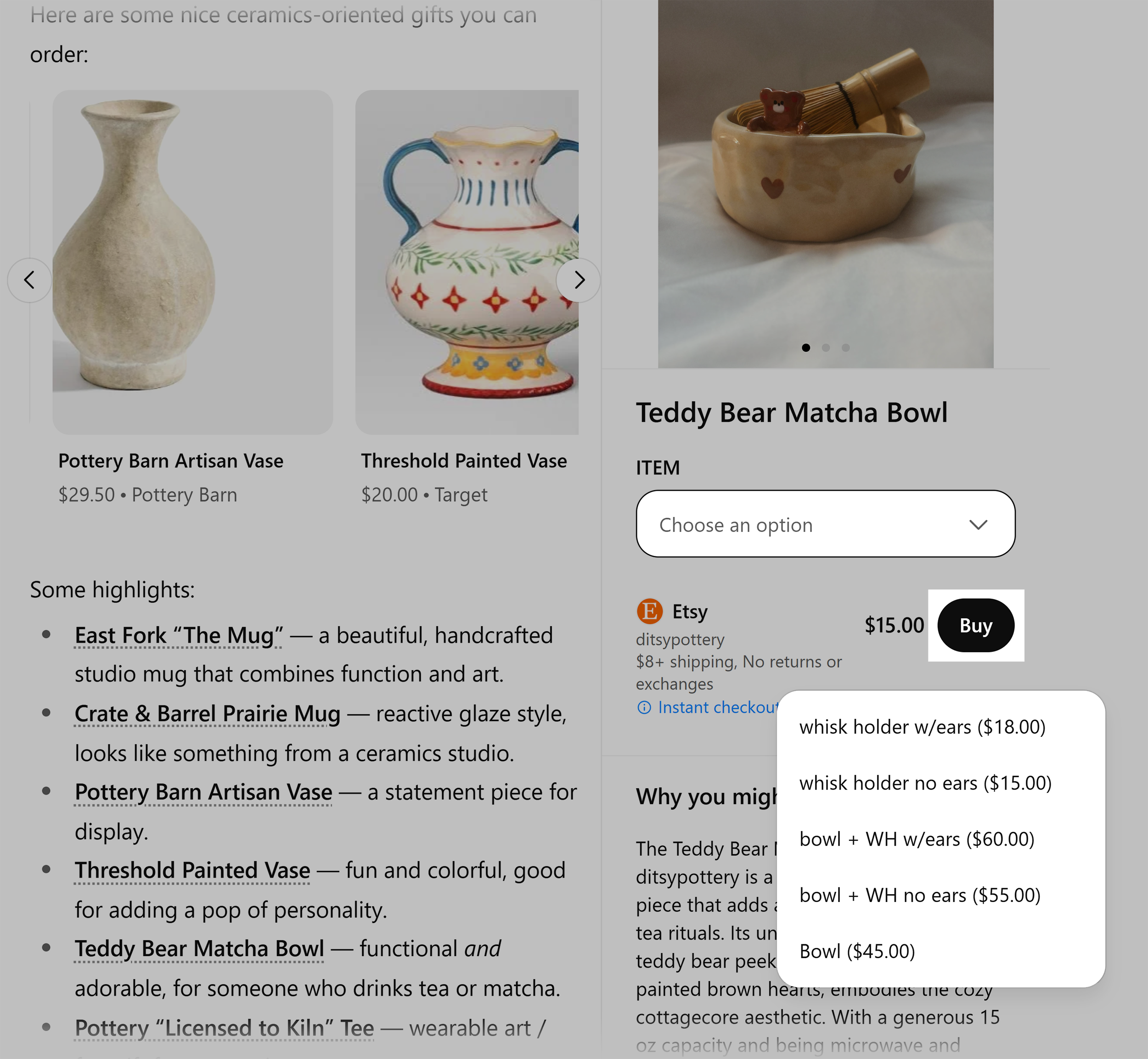
That’s the tech that powers real-time recommendations and in-chat shopping in ChatGPT and other AI platforms.
More platforms are also adding this capability.
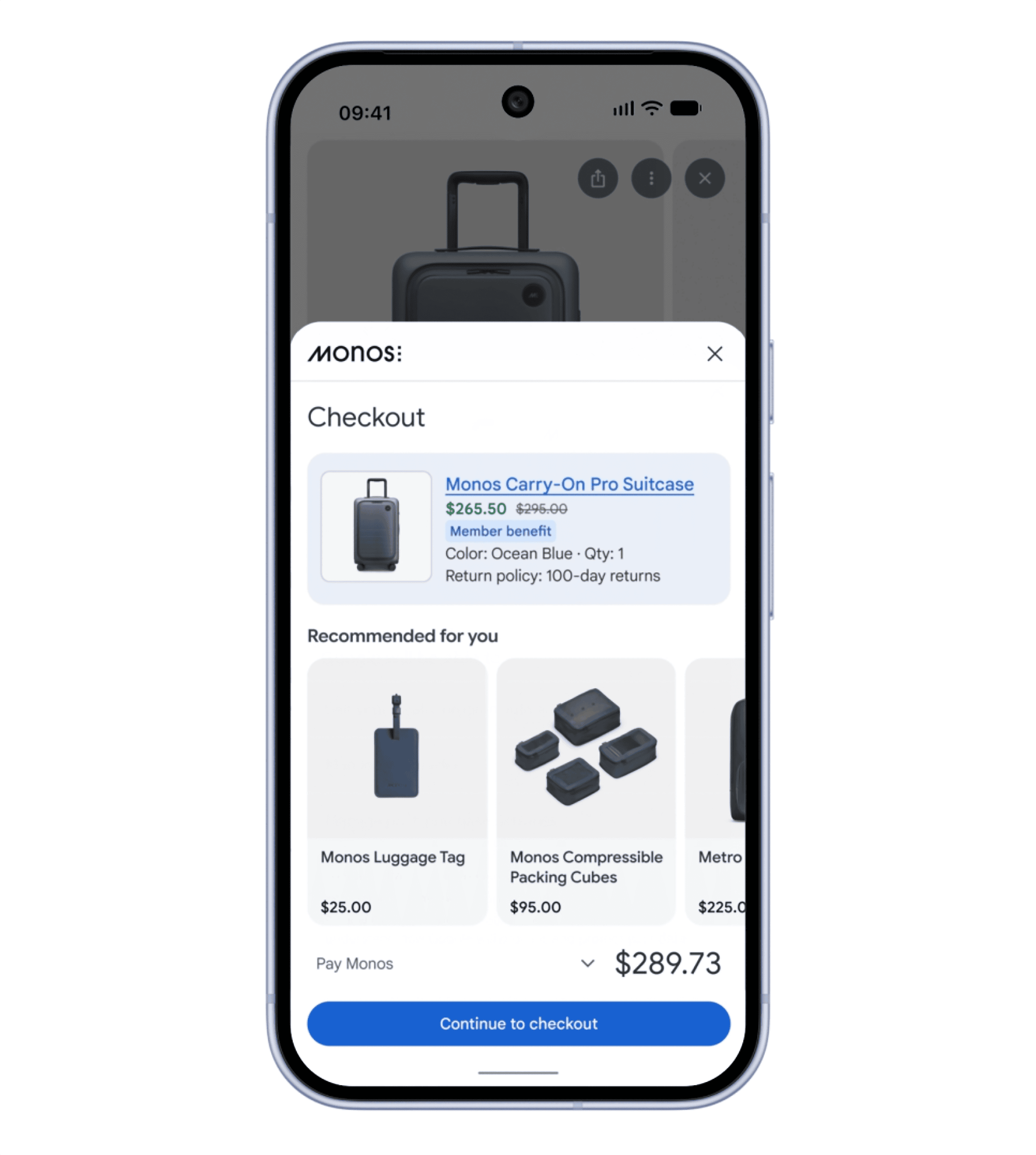
Google is rolling out a Universal Commerce Protocol.
This feature brings buy-in-chat functionality to eligible product recommendations in AI Mode and Gemini.
But what if you don’t use a product feed or API?
LLMs can still find product information on public webpages. But it may be outdated.
And that’s a problem.
AI platforms evaluate recency and consistency.
Mismatched prices or outdated stock can hurt your AI visibility. In part, because it leads to a poor customer experience.
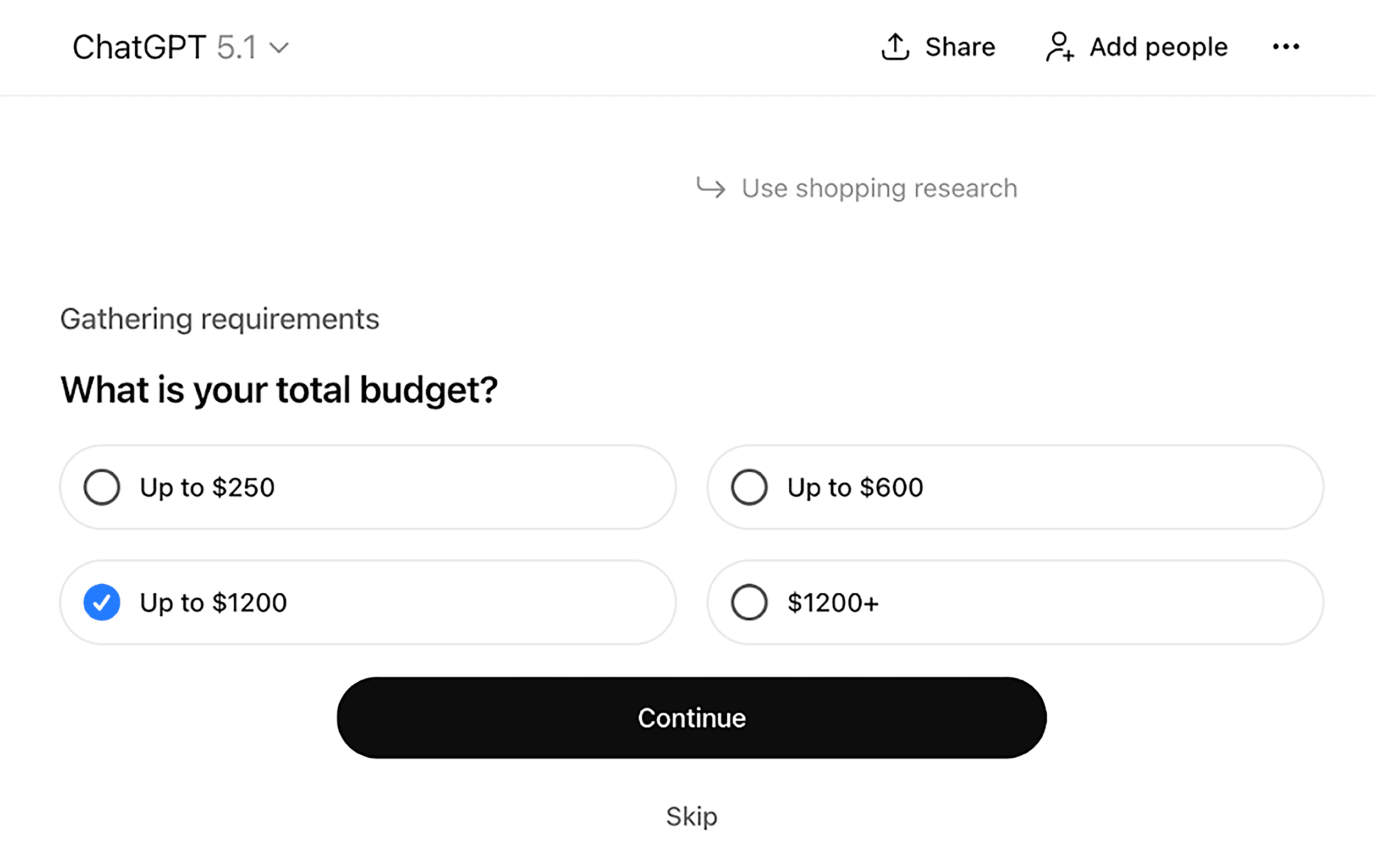
To see how this plays out in practice, I tested ChatGPT’s “Shopping research” mode.
The AI asks questions to narrow results, including how much you want to spend.
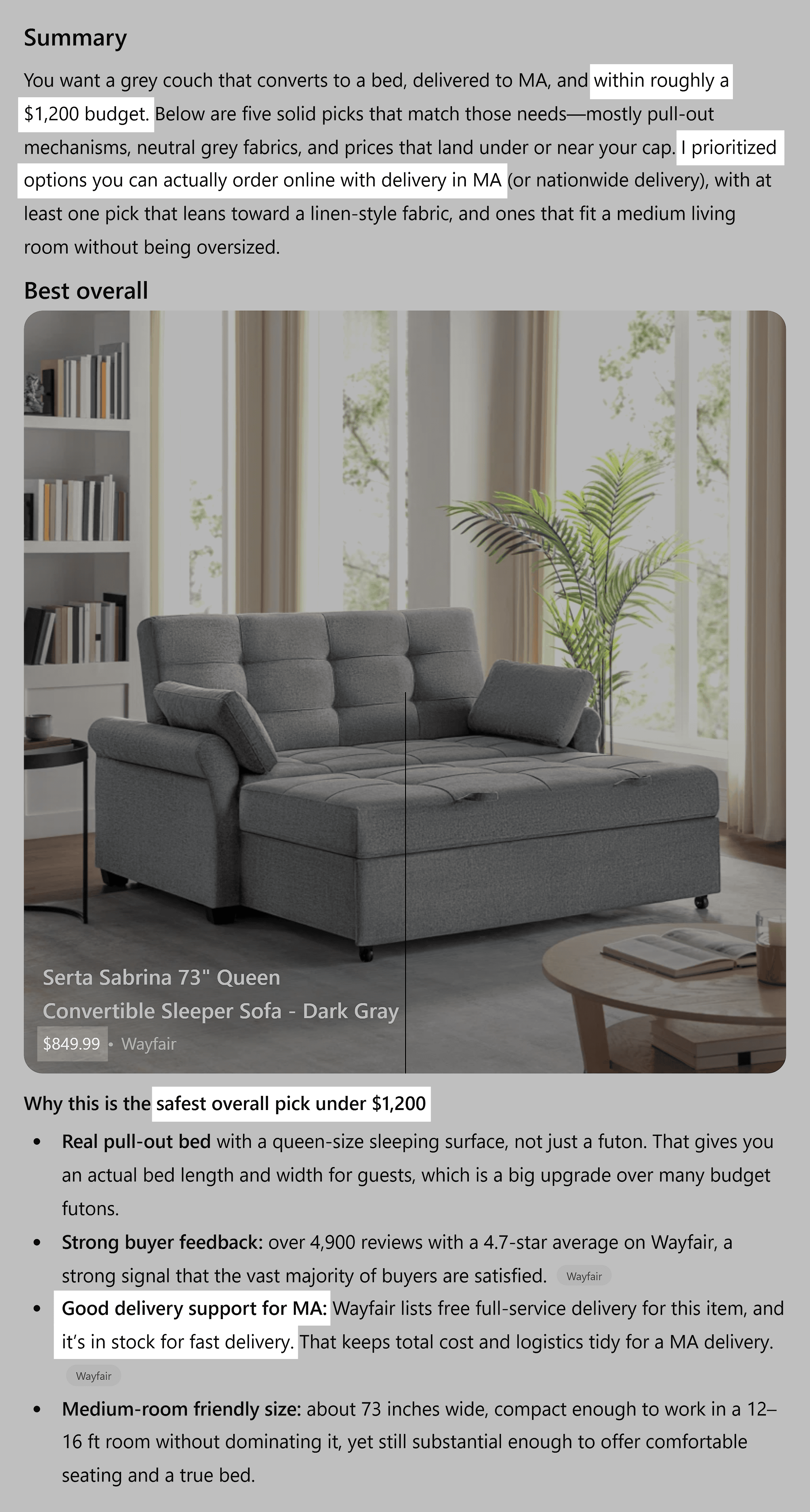
I told ChatGPT I was looking for a new couch. I specified both my budget and need for delivery to Massachusetts.
ChatGPT returned five options, all of which fit my budget and availability requirements.
The “Best overall” option even highlighted that it was “in stock for fast delivery” to my state.
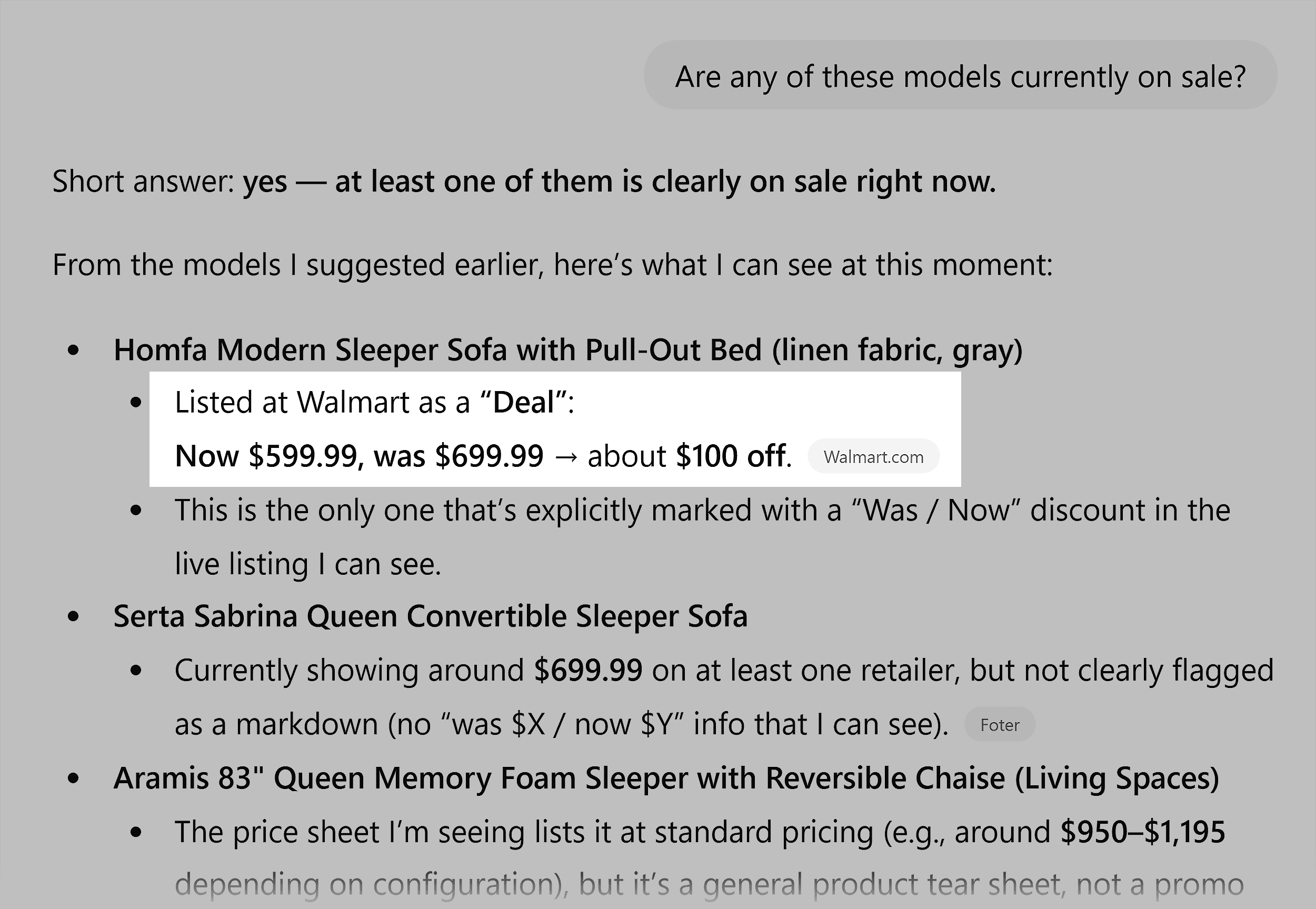
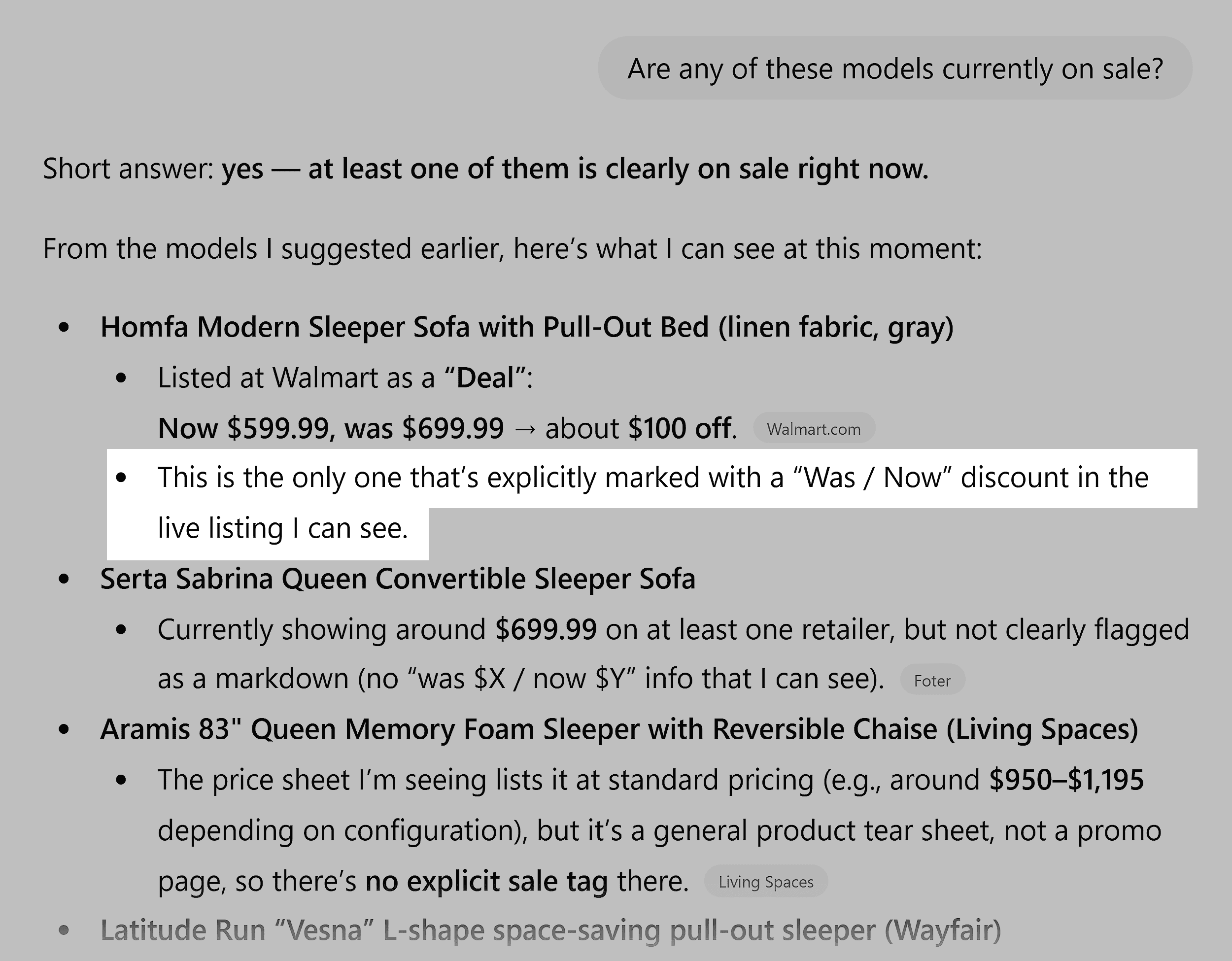
To further test how price affects results, I asked if any of the recommended couches were on sale.
It narrowed down my options and provided sale pricing.
ChatGPT only mentioned one couch as being on sale.
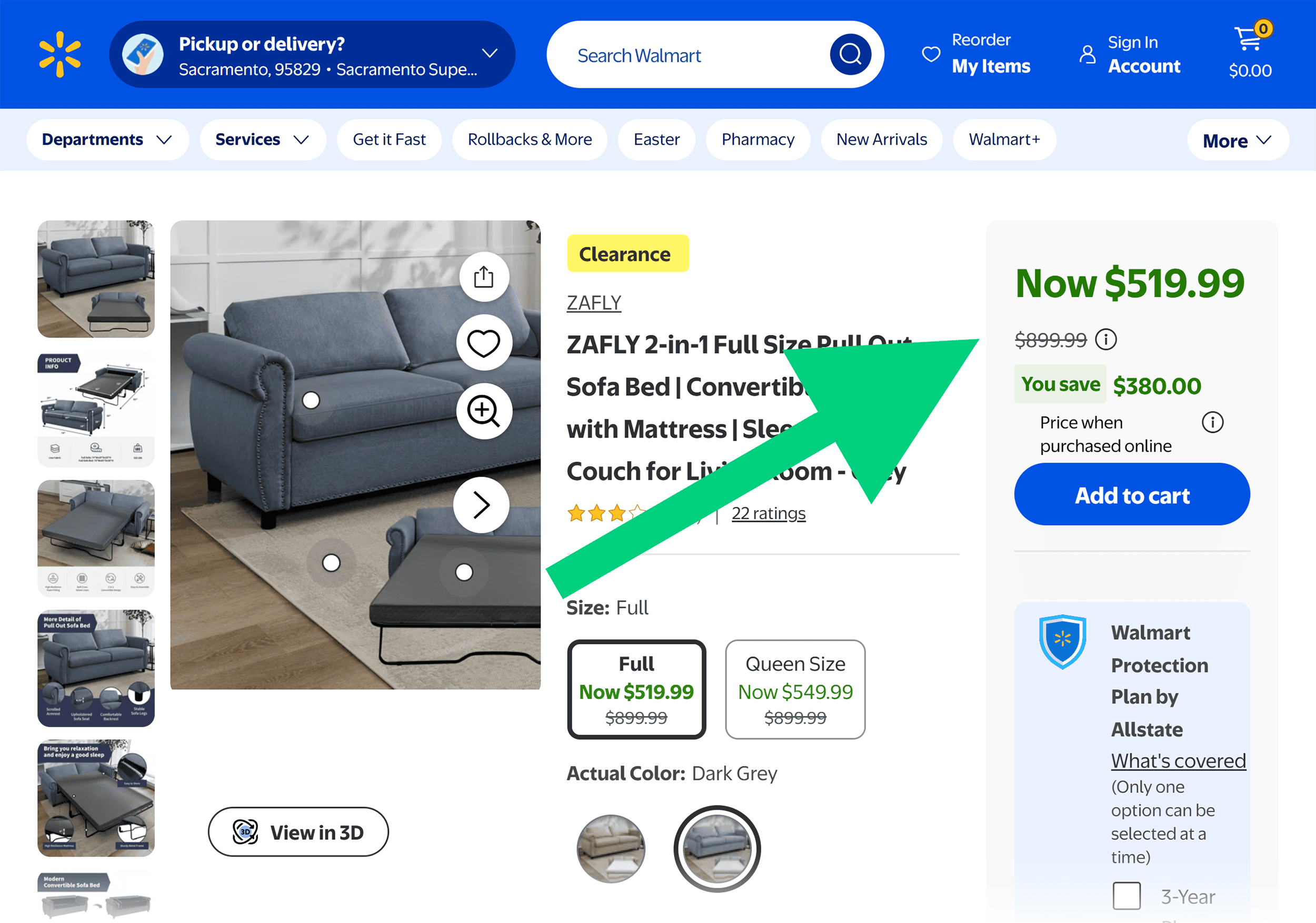
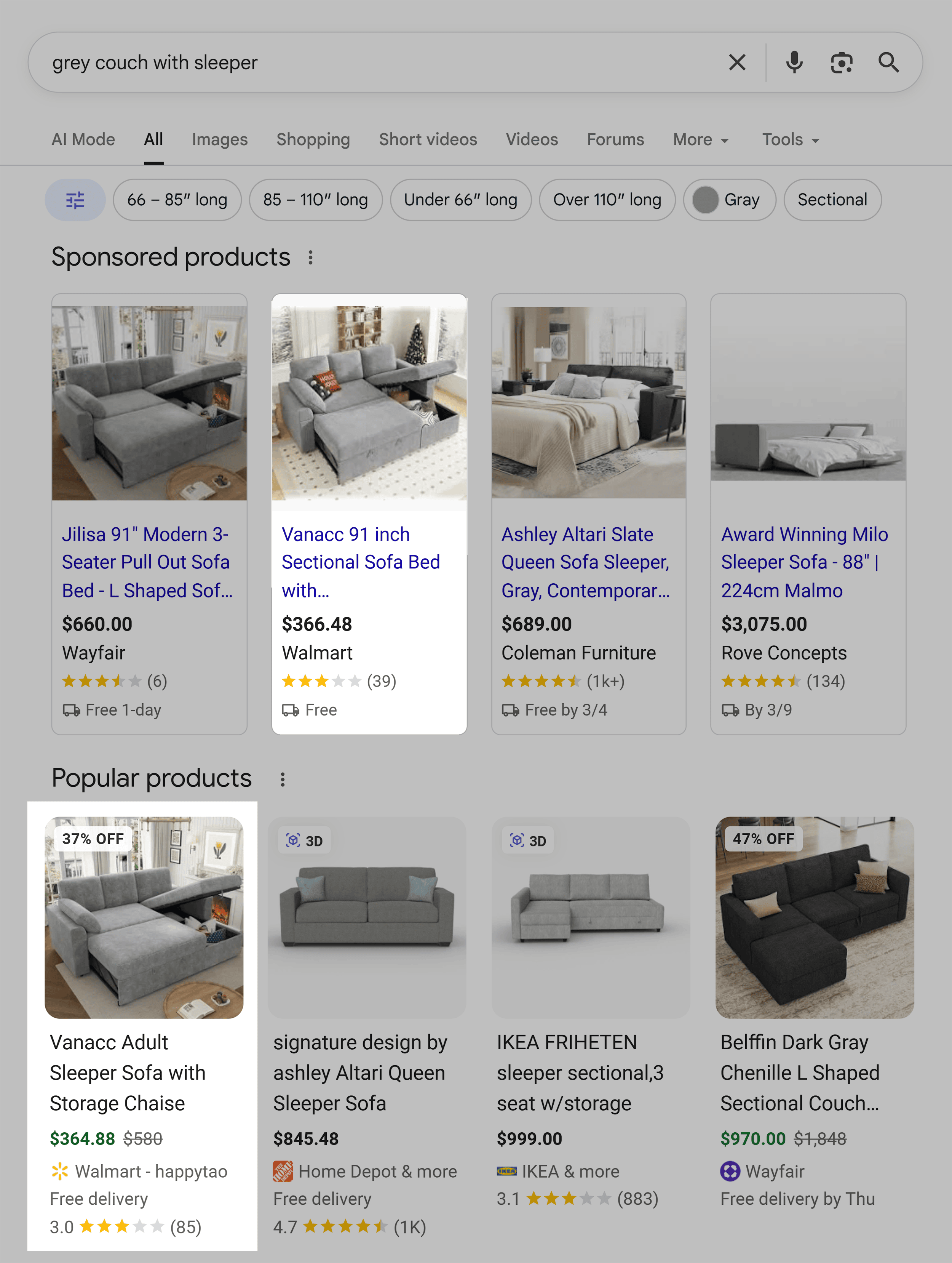
To find out why, I reviewed the product pages for each recommendation. But only one clearly highlighted both the original and sale price.
Walmart’s product pages boldly showcase the previous price versus the discount.
In its response, ChatGPT specifically mentioned that Walmart displays this info on its product page.
Walmart also submits its product feeds to platforms like Google Merchant Center.
So its pricing (both sale and original) is clear and current across platforms.
Product feeds and APIs keep your price and inventory fresh.
When AI systems have access to this data, they can recommend your products when users narrow options by price, availability, or discounts.
3. Ratings and Reviews
Many AI systems display ratings and reviews in product recommendations.
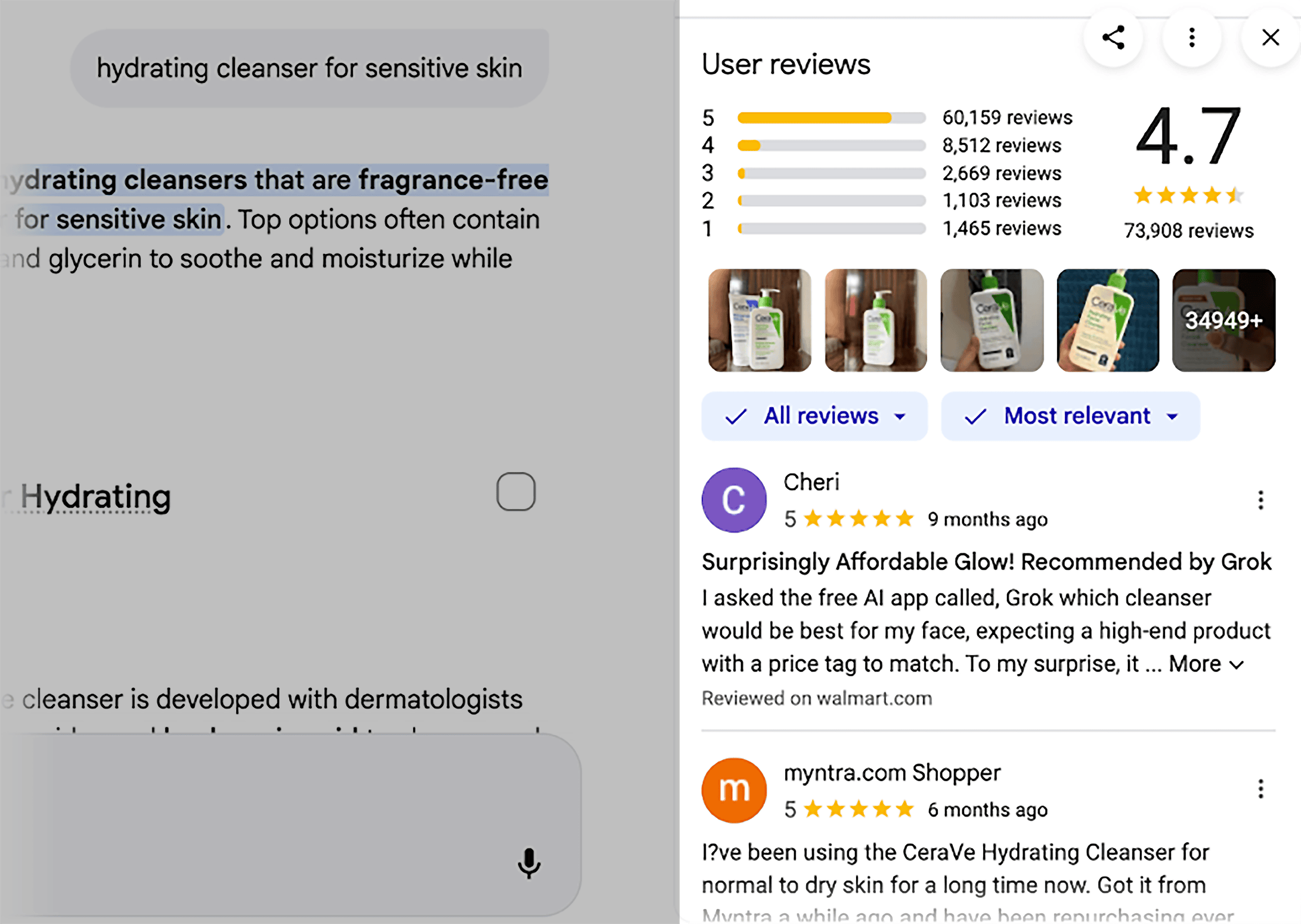
In AI Mode, you can click a product recommendation and see reviews directly in the sidebar.
ChatGPT also includes information from reviews.
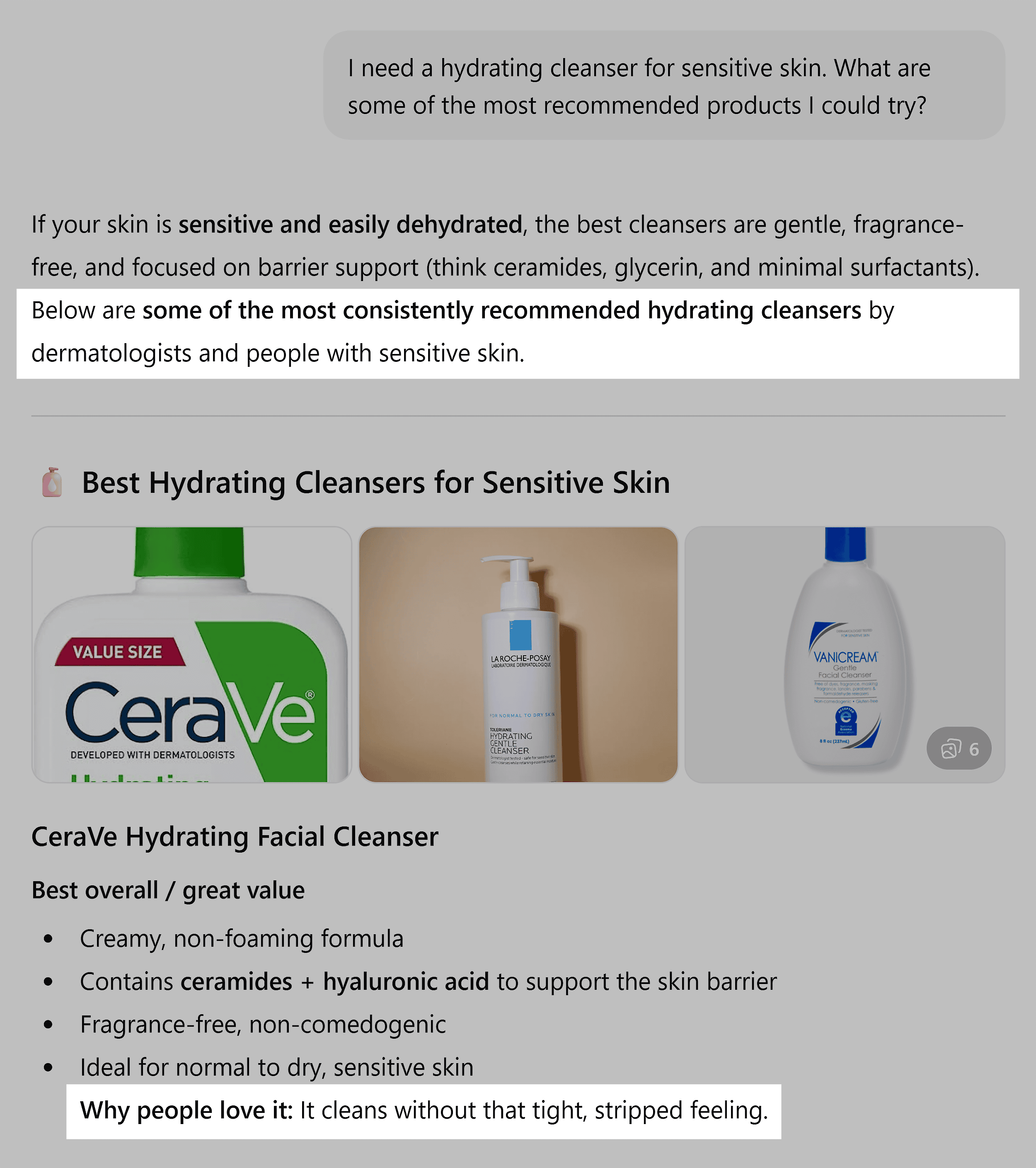
It often surfaces them as part of the response:
But LLMs do more than show you reviews. They also weigh reviews and ratings when choosing recommendations.
ChatGPT often includes labels like “Budget-friendly” or “Most popular” based on reviews.
OpenAI has confirmed that answers may include summaries of the themes most commonly mentioned in reviews.
That could mean pros, cons, and use cases pulled directly from reviews.
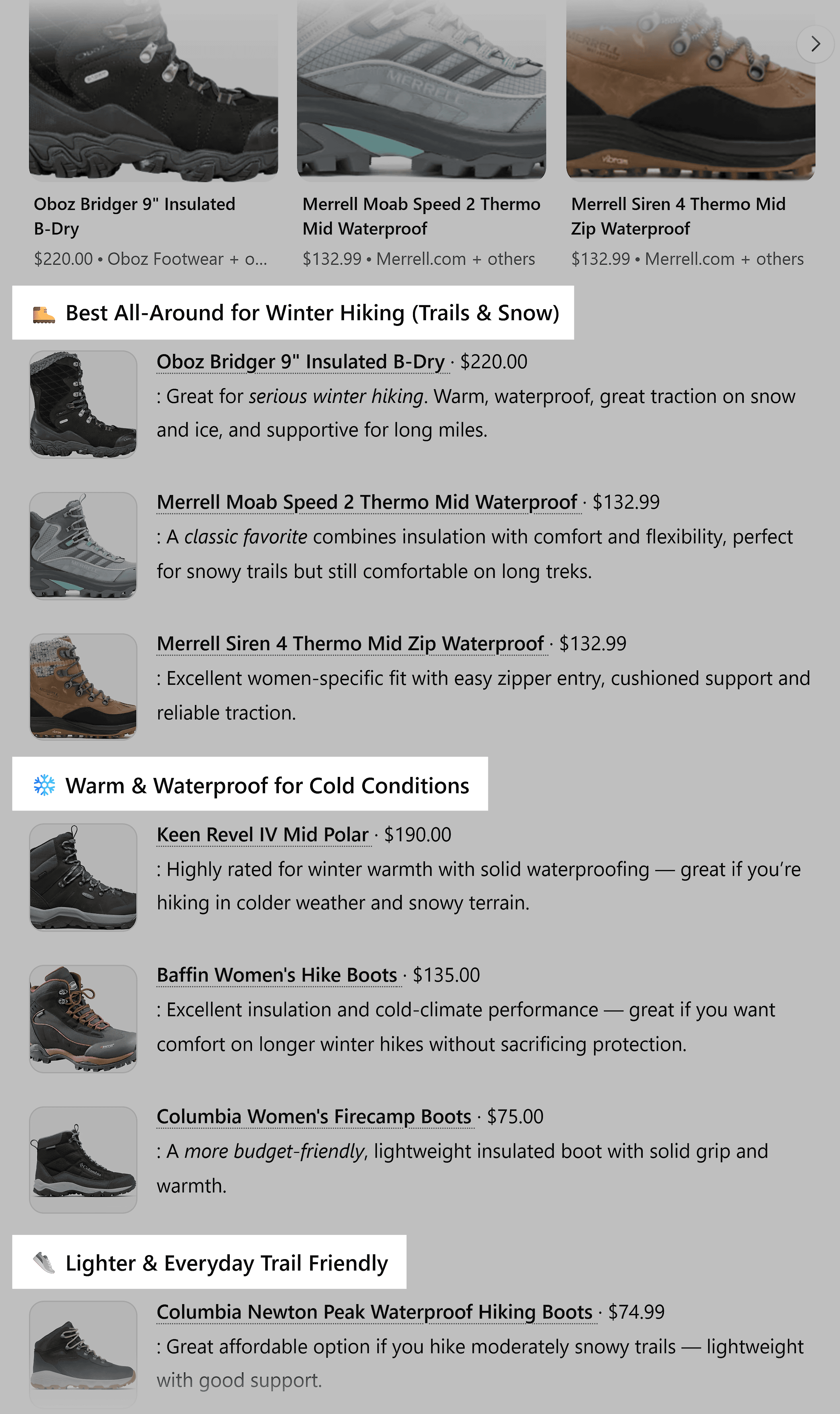
Here’s how that looks in practice when I search for warm winter hiking boots:
Ultimately, reviews on your product page don’t just affect whether your product appears in AI search.
They can also influence how it’s positioned.
When AI systems analyze reviews, they look for consistency:
Repeated mentions of specific use cases
Commonly praised features
Patterns in star ratings
Shared language around benefits or problems
The more clearly those patterns emerge, the easier it is for AI to confidently recommend — and describe — your product.
This applies to reviews on your own product pages and on third-party sites.
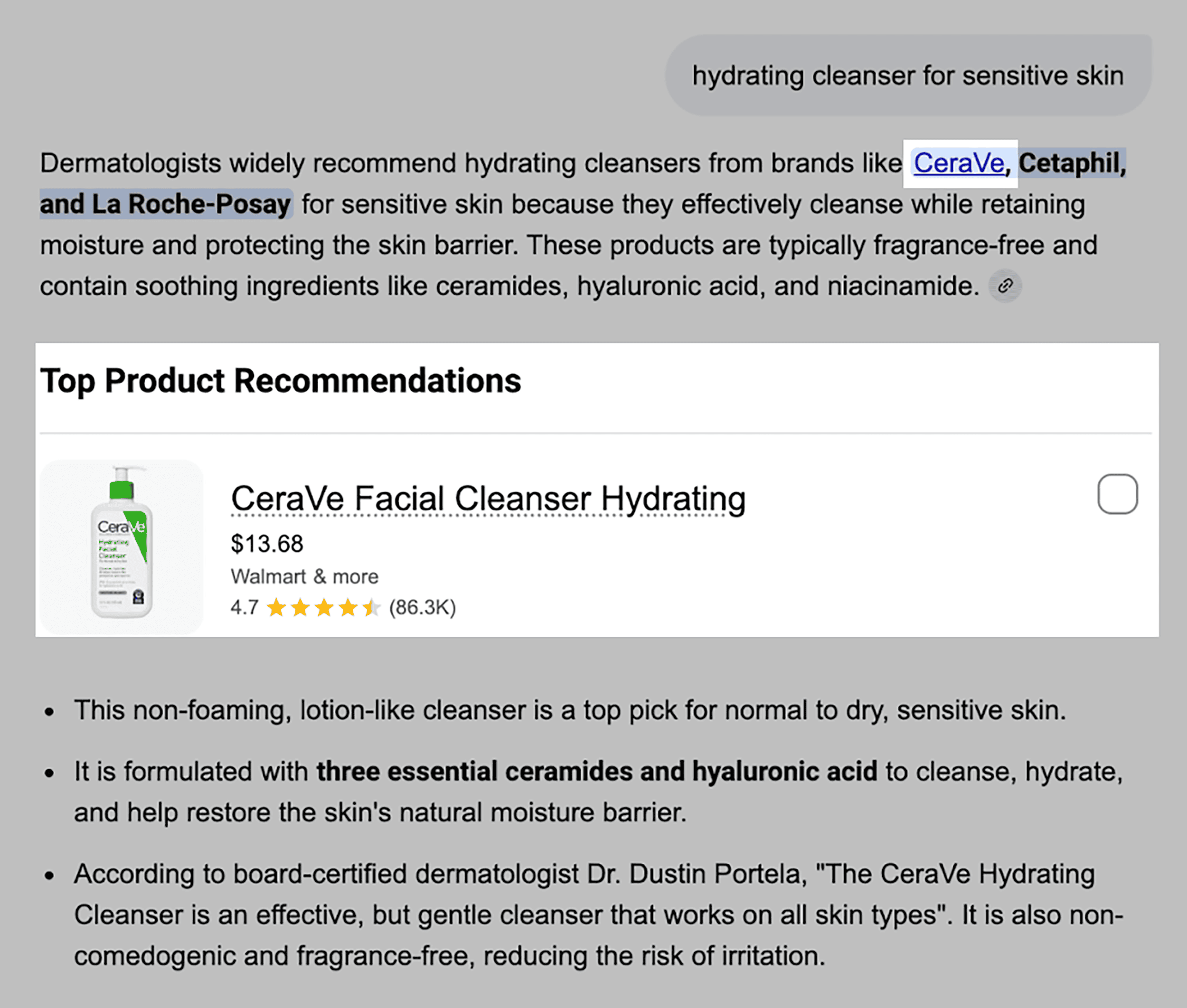
When I asked AI Mode for a hydrating cleanser for sensitive skin, the first recommendation was a product from CeraVe.
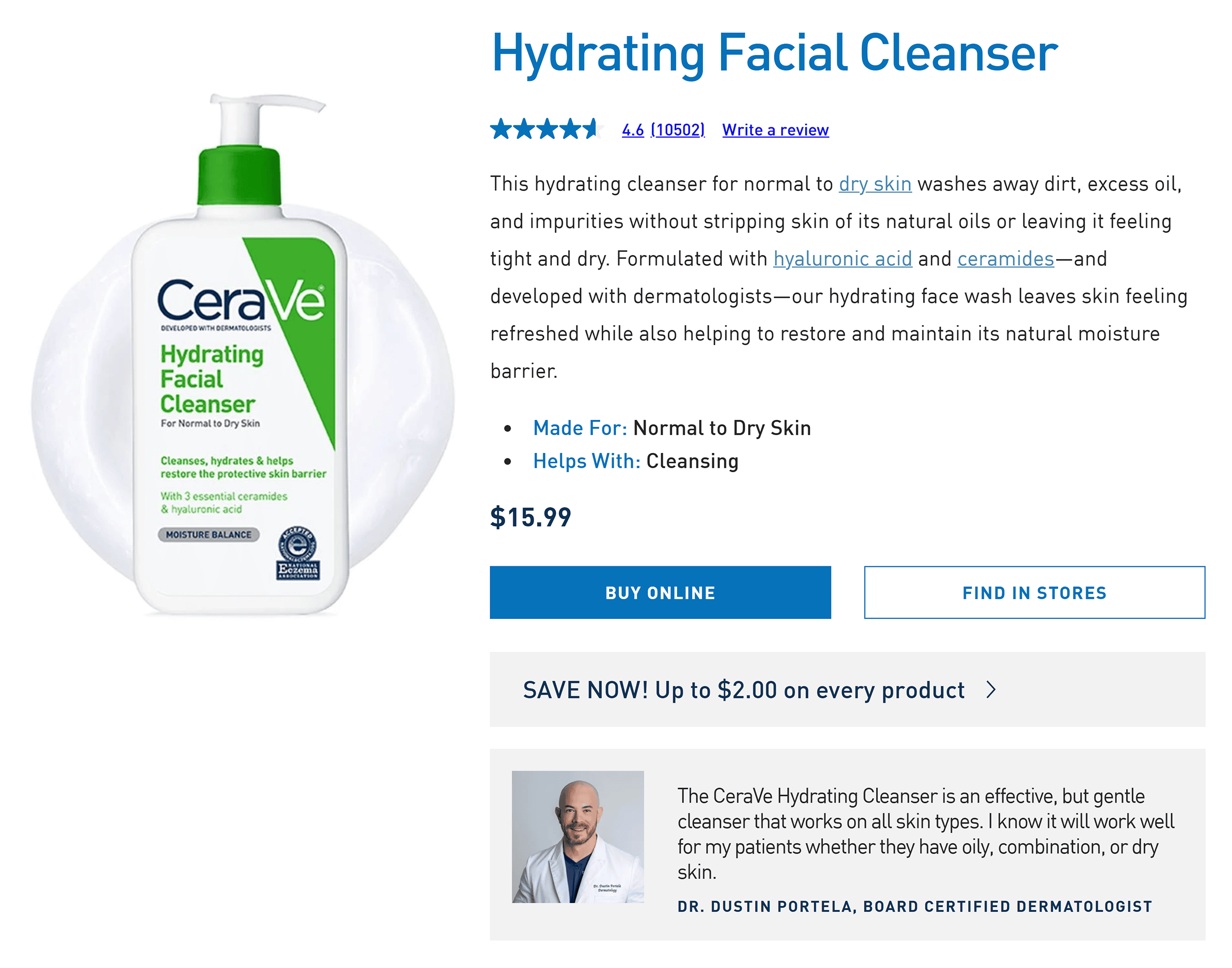
Interestingly, the product description itself doesn’t explicitly emphasize “sensitive skin.”
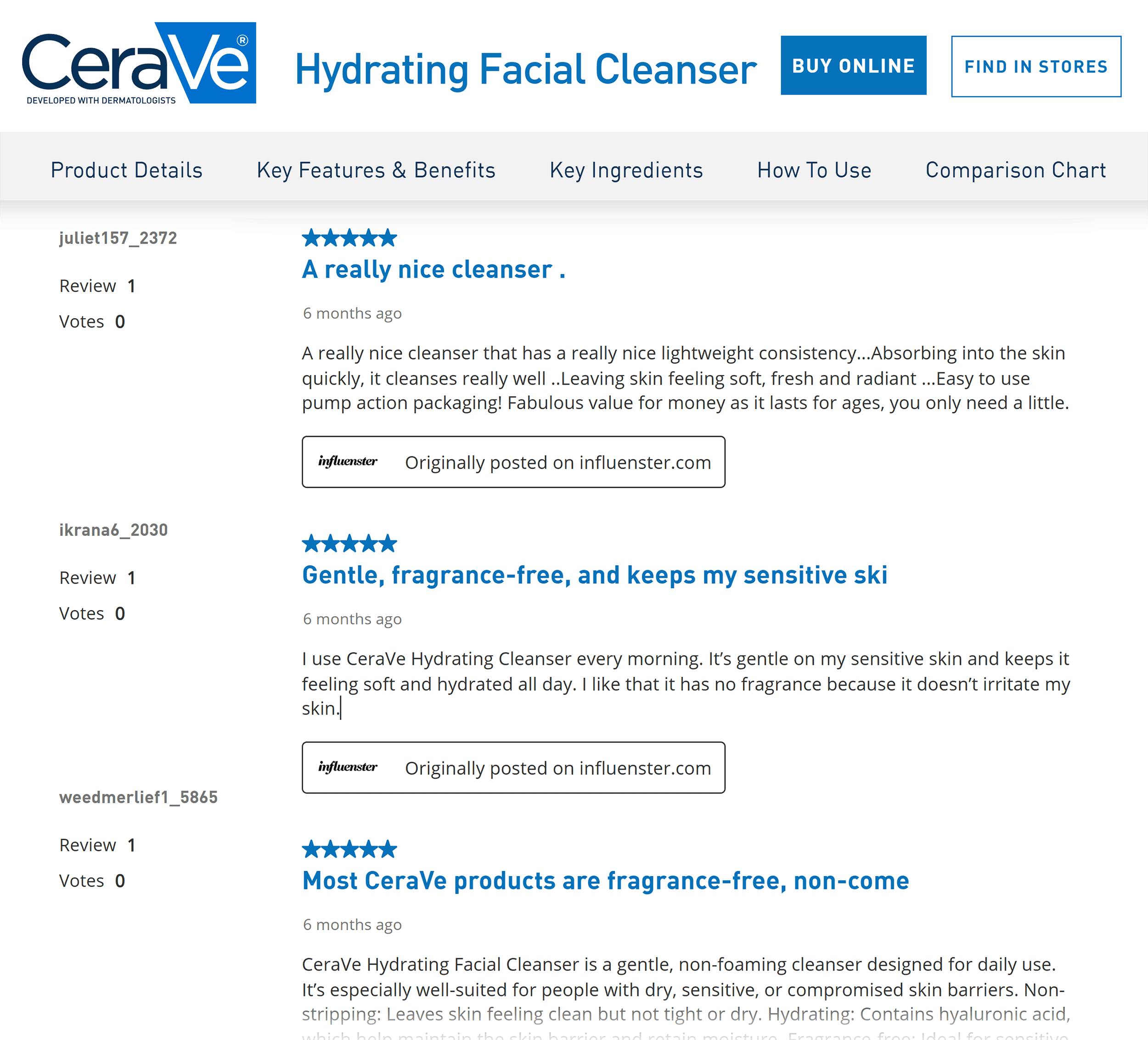
But the reviews on CeraVe’s product page do.
Here’s what I noticed:
Reviews are tagged with commonly mentioned phrases
One of the most prominent tags is “sensitive skin”
There are over 100 reviews referencing sensitive skin — most of them positive
Having reviews on every product page is a best practice that increases trust and authority.
Encourage customers to leave detailed feedback by:
Prompting for use cases in review forms
Asking follow-up questions after purchase
Offering light incentives (like a coupon) in exchange for honest reviews
Note: The most important thing is that these reviews are real. Fake or AI-generated reviews may temporarily improve your brand’s visibility in AI search. But they are never worth the long-term risk to your reputation.
4. Contextual Use Cases
AI search looks for explicit connections between what a product is and why someone needs it.
So, your entire product page should explain when, why, and in what situations a product makes sense.
This requires a shift in how you think about product marketing.
Instead of asking, “What can this product do?”
Ask, “In what specific scenario would someone actively look for this?”
Start by identifying who buys your product and what triggers that purchase. If you don’t already have this insight, customer interviews are your fastest path.
Look for:
The situation that prompted the search
The alternatives they considered
The constraint that mattered most (travel, space, safety, performance, etc.)
Once you have this, choose one or two clear, specific use cases to feature on each product page.
Don’t just list all the possible ways your product can be used.
AI isn’t great at matching vague versatility.
Instead, focus on the use cases that come up repeatedly in customer conversations. That way, AI can match your product to a specific intent.
Let’s look at an example for an electronics brand.
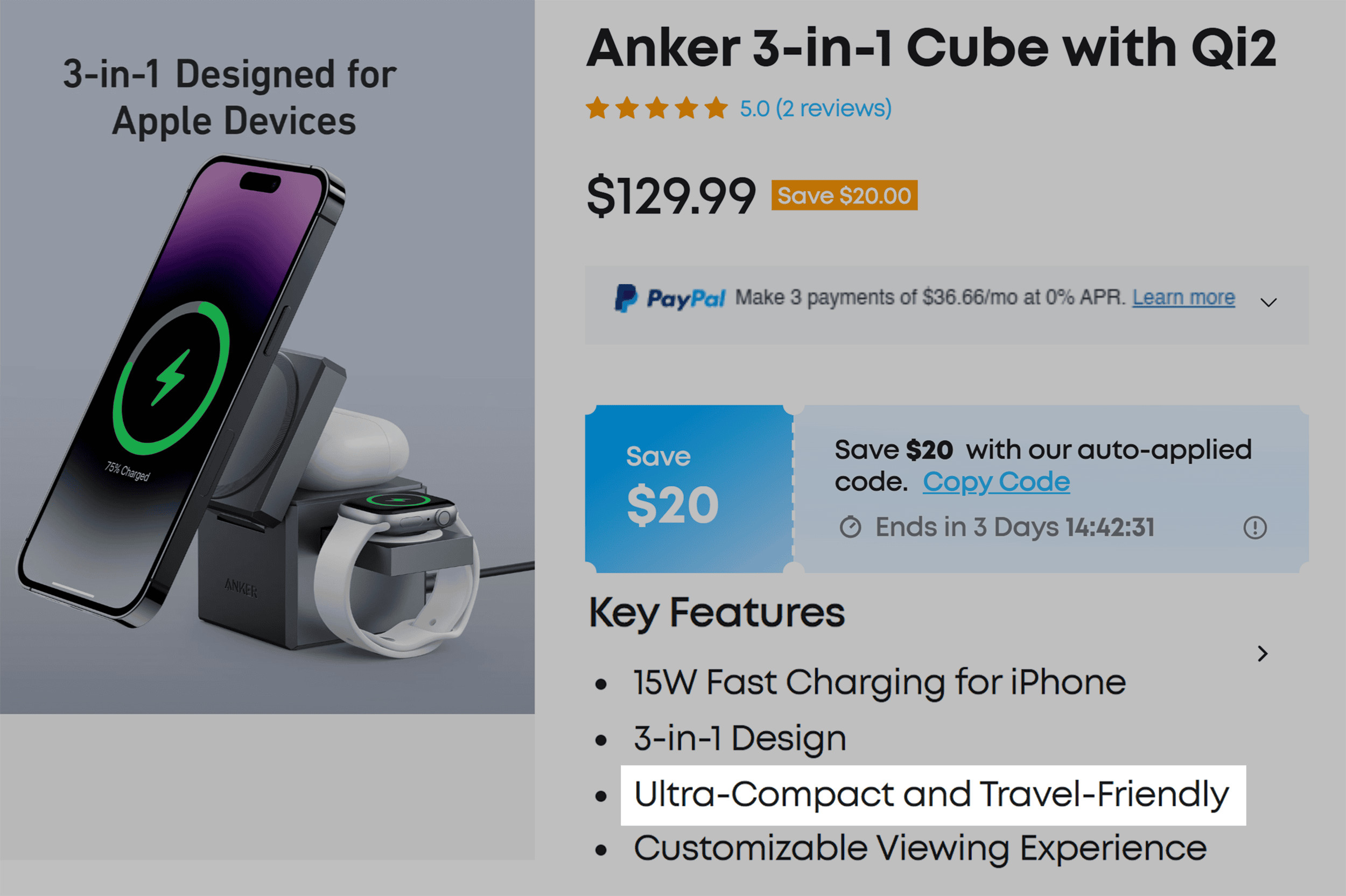
This product page for Anker’s 3-in-1 mobile charger states it’s “ultra compact and travel friendly.”
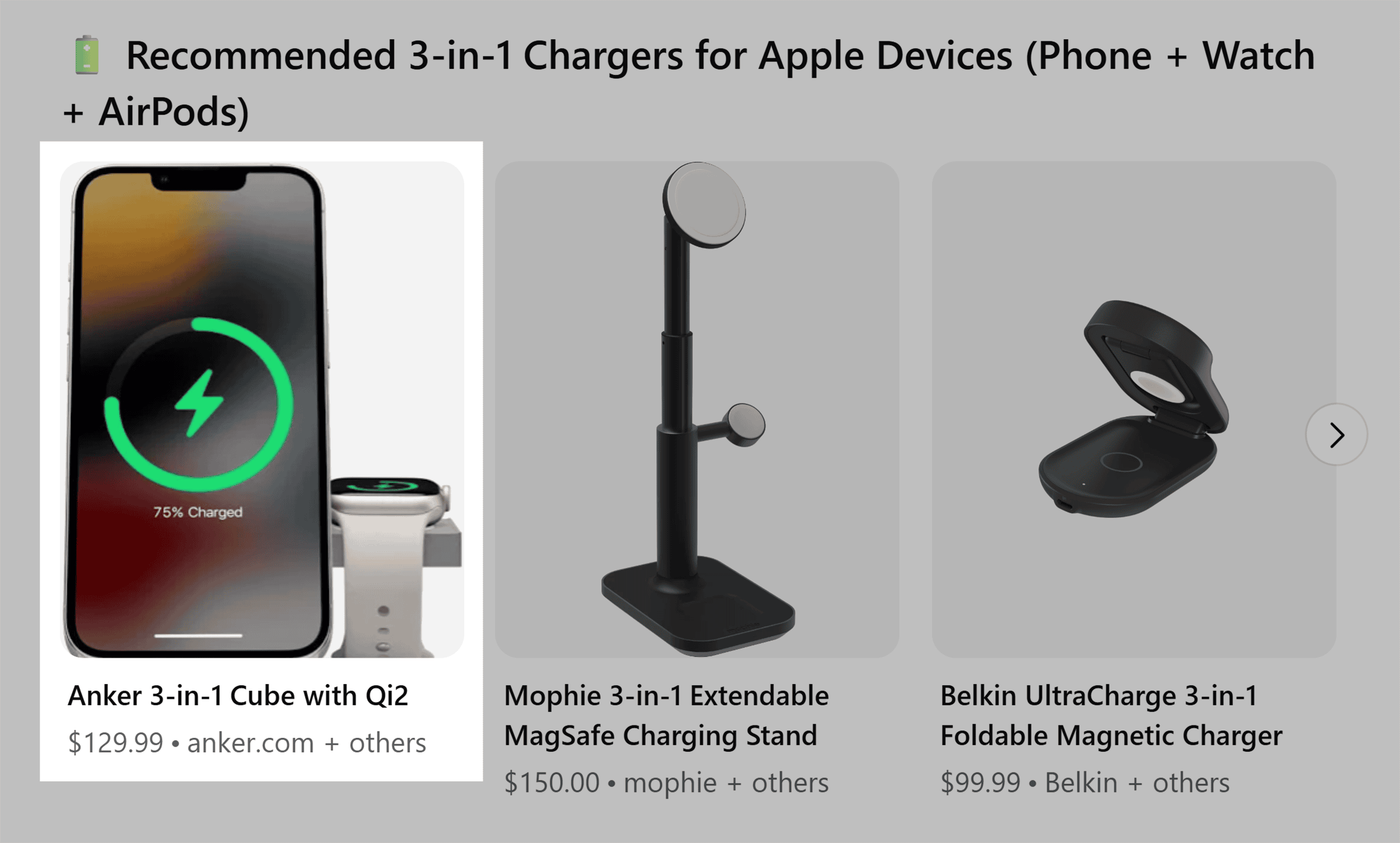
When I search for travel-friendly chargers on ChatGPT, Anker’s 3-in-1 device is the top recommended product.
Obviously, this little charger is a great option for more than just travel.
But by calling out that use case on the product page, it makes it easier for LLMs to recommend it in related queries.
5. Awards and Certifications
LLMs prioritize trustworthy, verifiable information when recommending products.
One of the strongest ways to demonstrate that trust is to feature third-party validation on your product pages.
This includes:
Industry awards and “best of” recognitions
Third-party testing results
Safety and quality certifications
Sustainability or ethical production badges
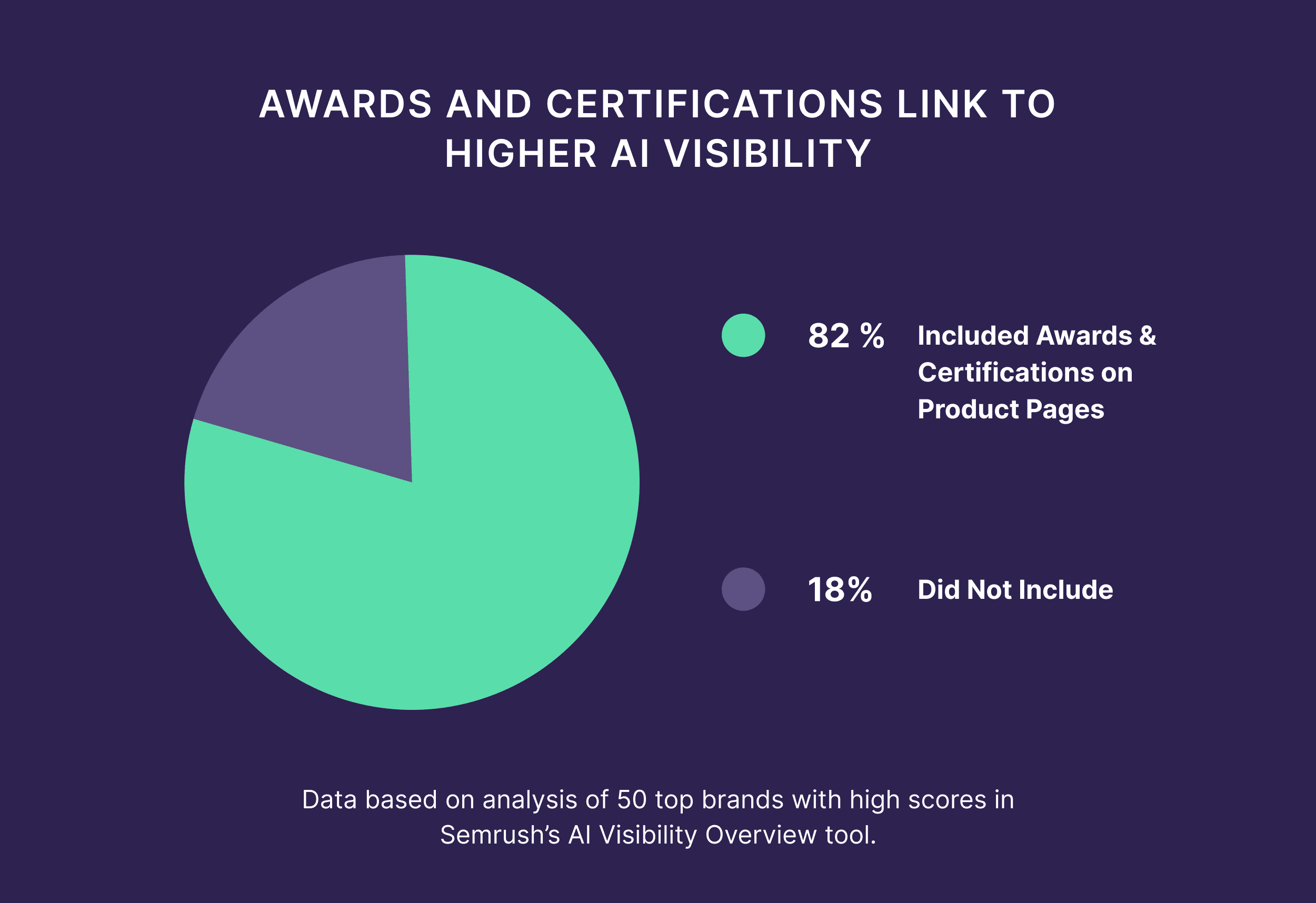
To see how much awards affect AI visibility, I analyzed 50 ecommerce brands in Semrush’s AI Visibility Overview tool.
This included Samsung, Patagonia, Everlane, Caraway, and others.
First, I identified brands with high AI Visibility scores.
This is a Semrush metric that measures how often brands appear in AI-generated answers.
I focused on brands scoring above their industry average. (This varies by industry, but is generally between 60 to 90.)
Next, I looked at how many of the top-ranking brands feature awards and certifications on their product pages.
And I found something very interesting:
82% of the brands with medium to high AI visibility prominently feature awards and certifications on their product pages.
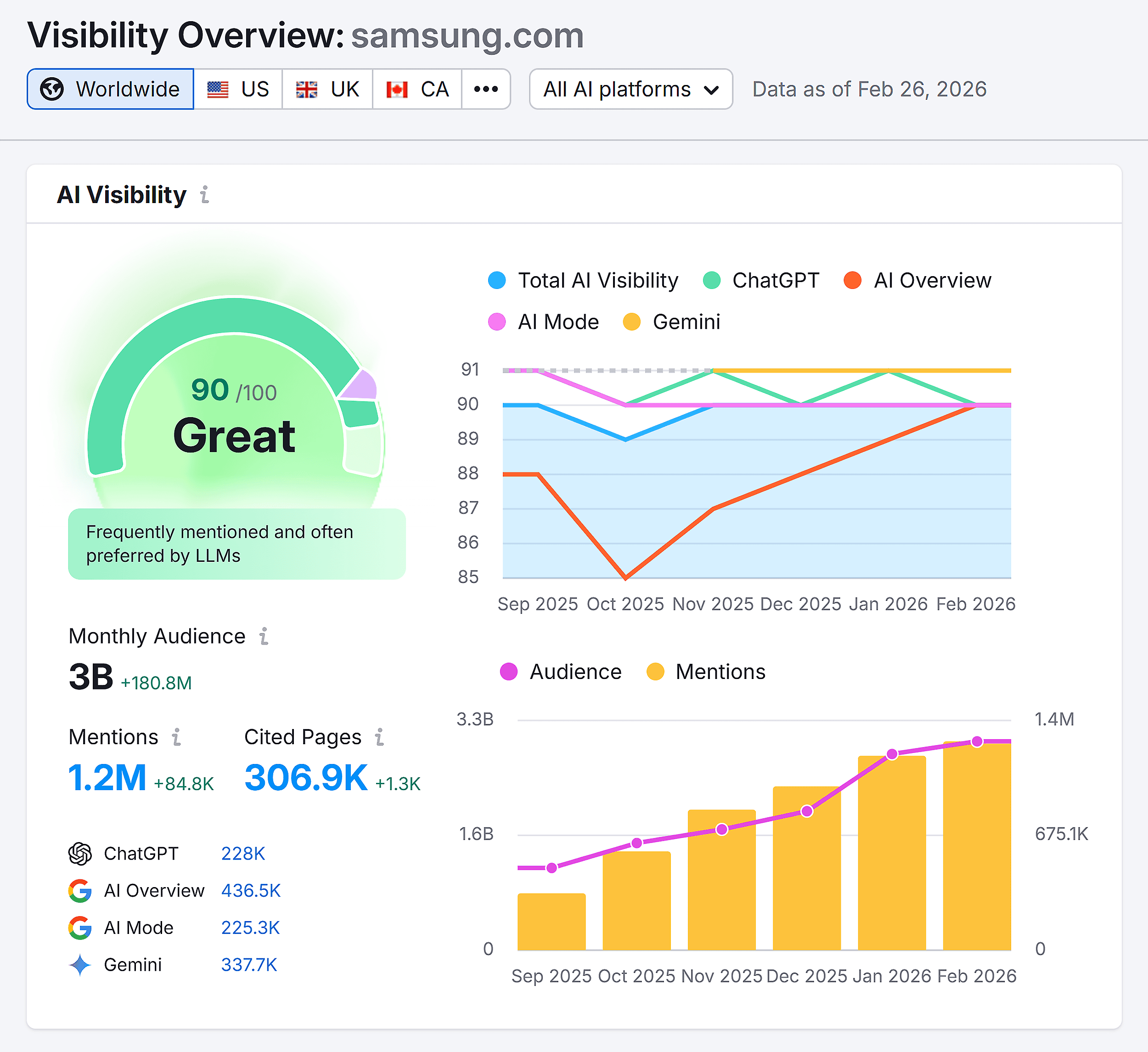
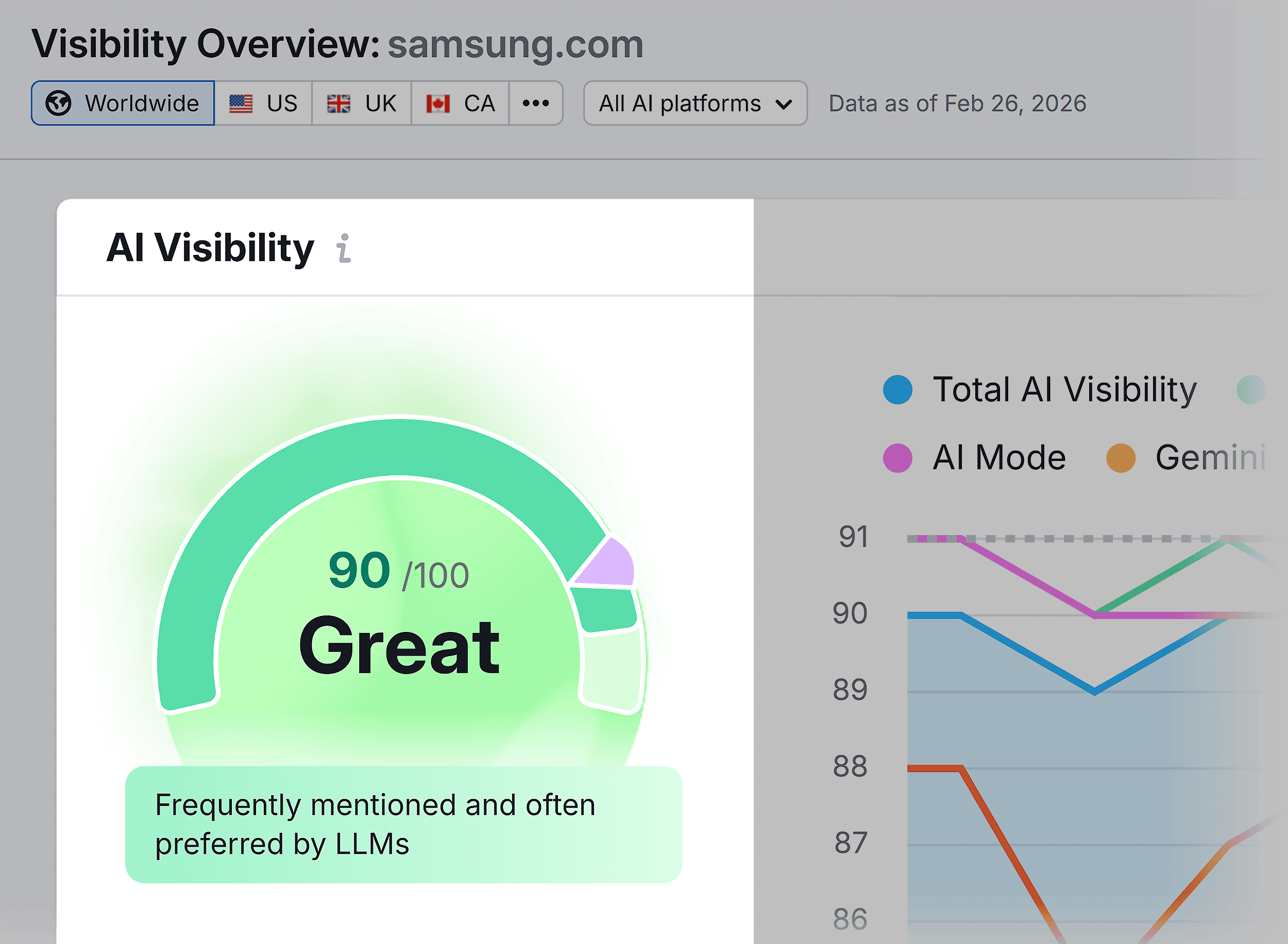
For example, Samsung has an AI Visibility score of 90.
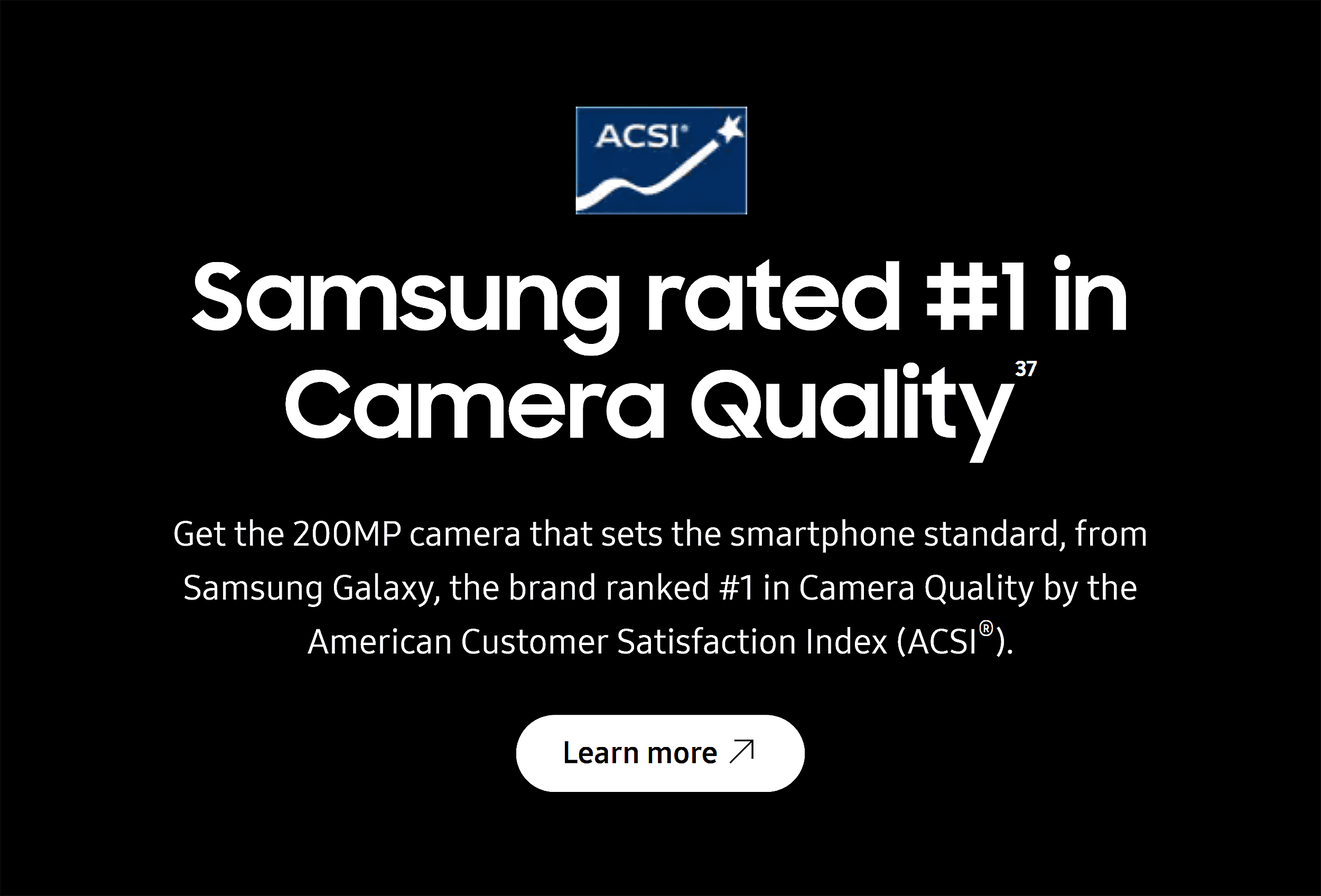
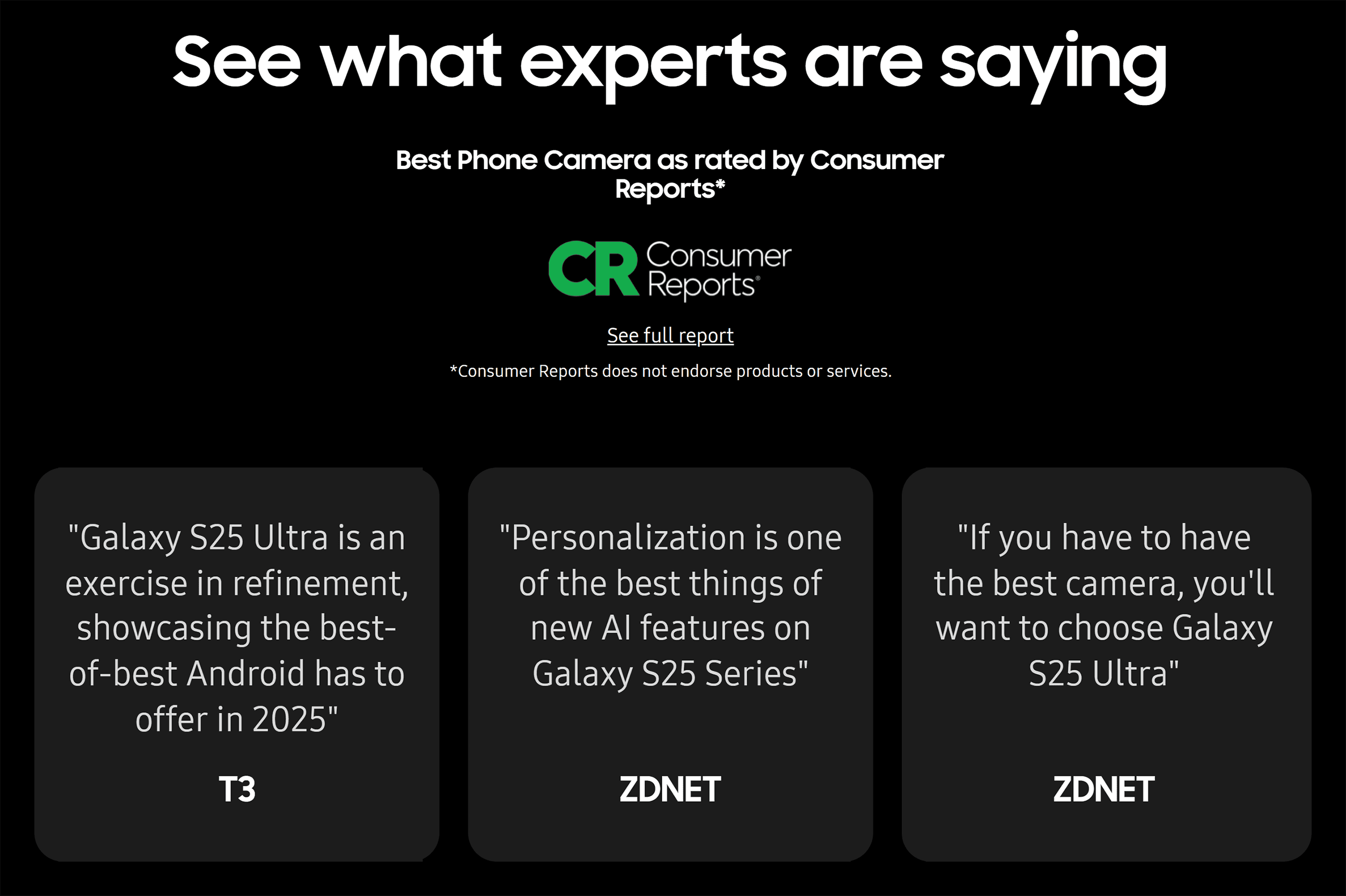
And its product pages feature multiple awards.
Like being “rated #1 in camera quality” by the American Customer Satisfaction Index.
And winning “Best Phone Camera” by Consumer Reports:
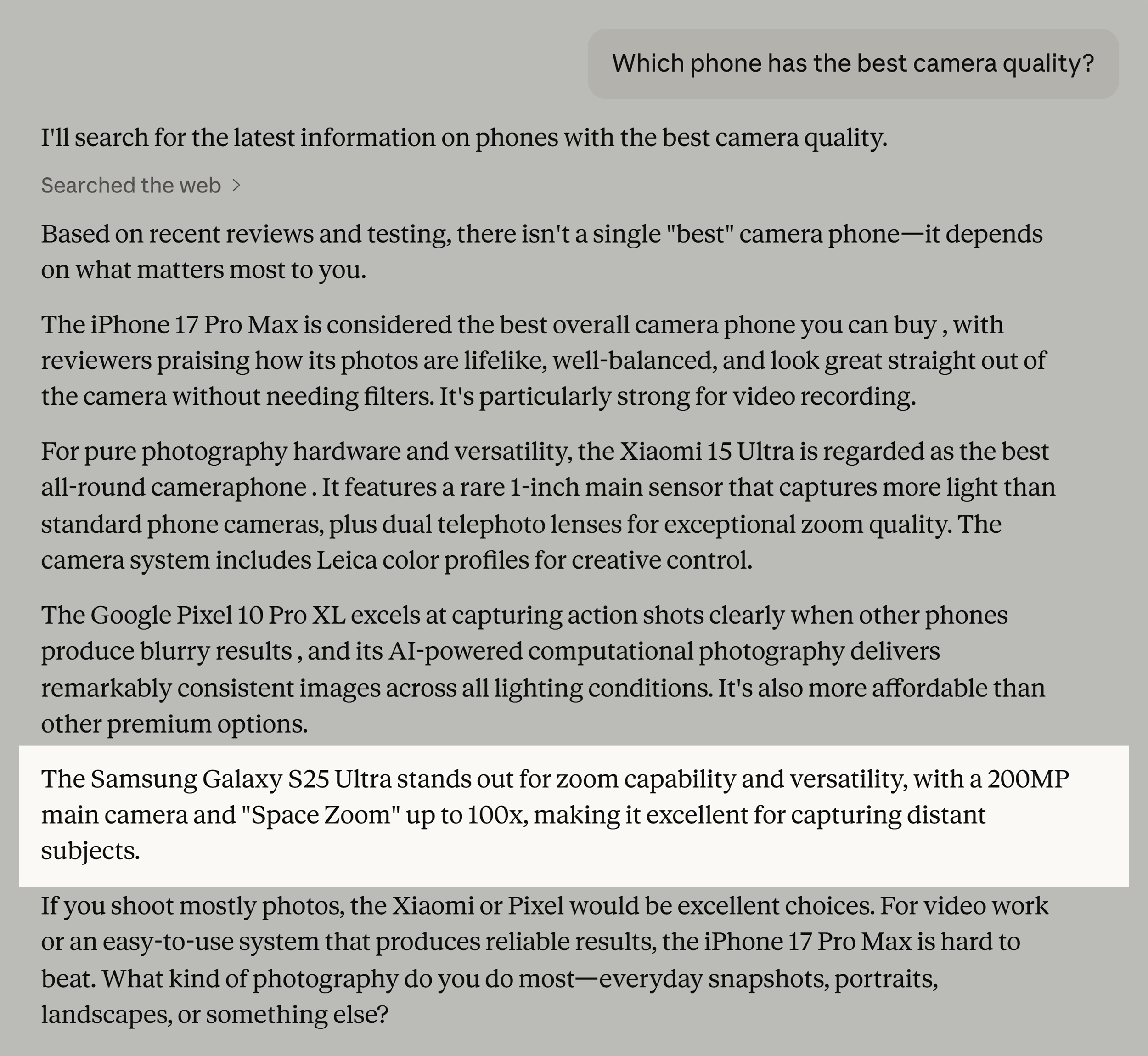
When I asked Claude which phone has the best camera quality, the Samsung Galaxy was one of its top recommendations:
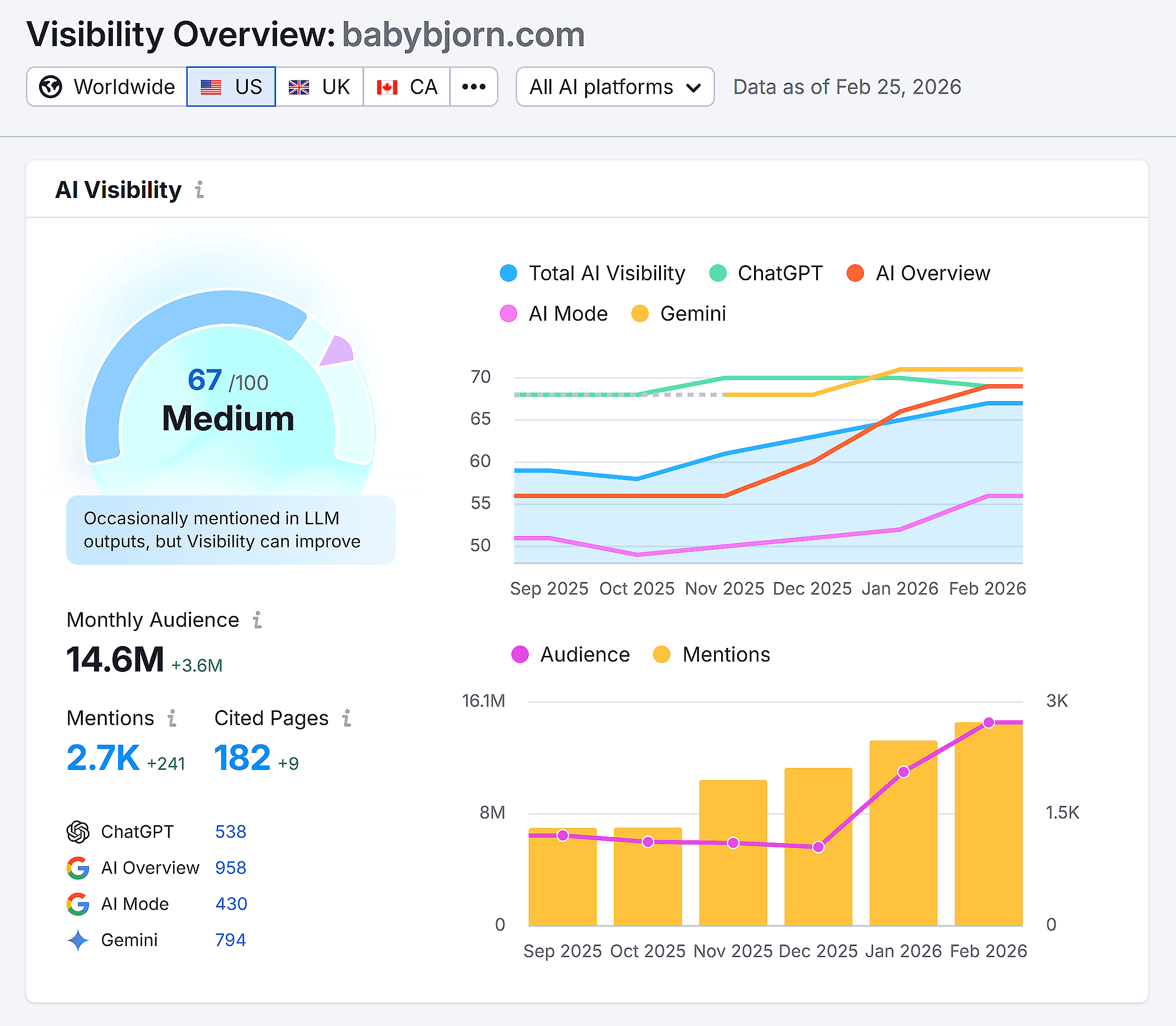
BabyBjorn has an AI Visibility score of 67.
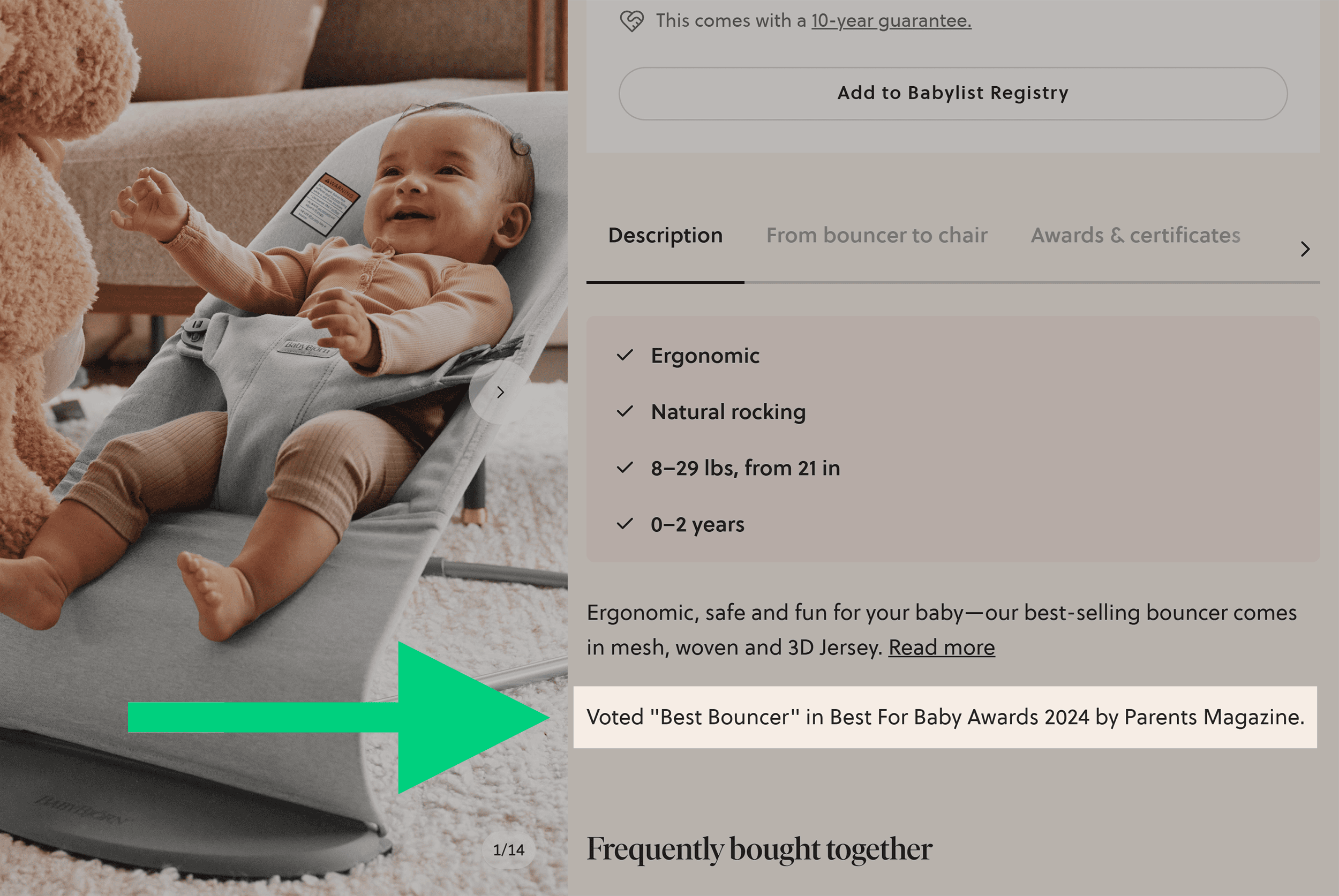
A quick look at its product pages reveals certificates and awards on every product page.
Like this one that references a “Best Bouncer” award from Parents Magazine:
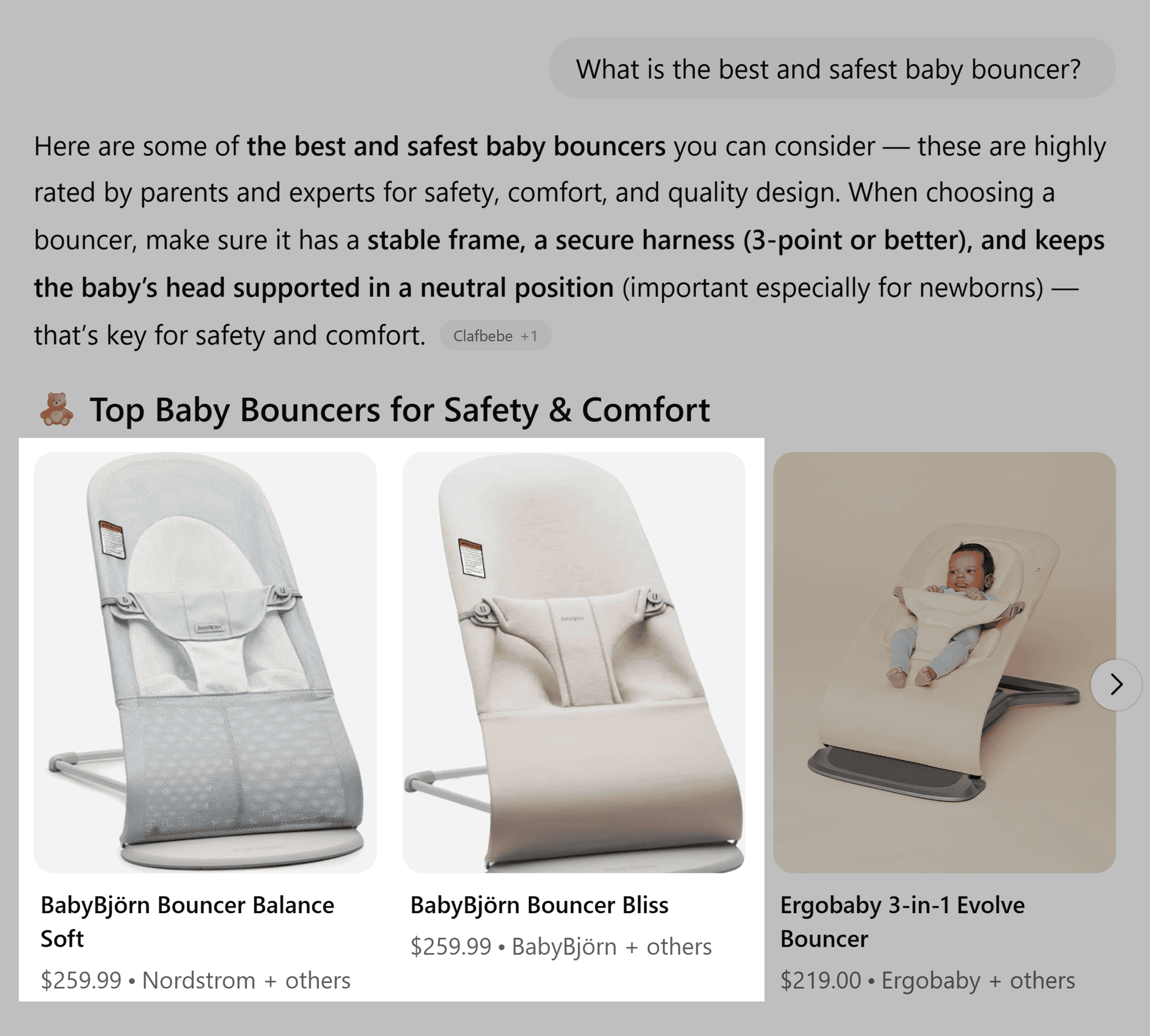
When I asked ChatGPT to recommend the “best and safest baby bouncer,” BabyBjorn was the #1 pick:
Now, this is correlation, not necessarily causation. And awards and certifications are not the only factor.
But they can make a difference for product page visibility in LLM search.
If you already have awards and certifications, showcase them prominently on your product pages.
If you don’t, create a strategy to earn them.
Target industry-specific certifications (safety, quality, sustainability) and awards from reputable organizations.
This includes relevant certifications and “best” awards through PR outreach.
6. Structured Attributes and Schema Markup
Structured attributes are pieces of product information that machines can easily understand.
This includes things like:
Price
Dimensions
Materials
Ratings
Availability
Color
Size
Warranty details
These attributes are vital components of a product page.
Use tables, bullet lists, or specification sections to clearly structure them for machines and customers.
They should also be in your structured data and product feeds.
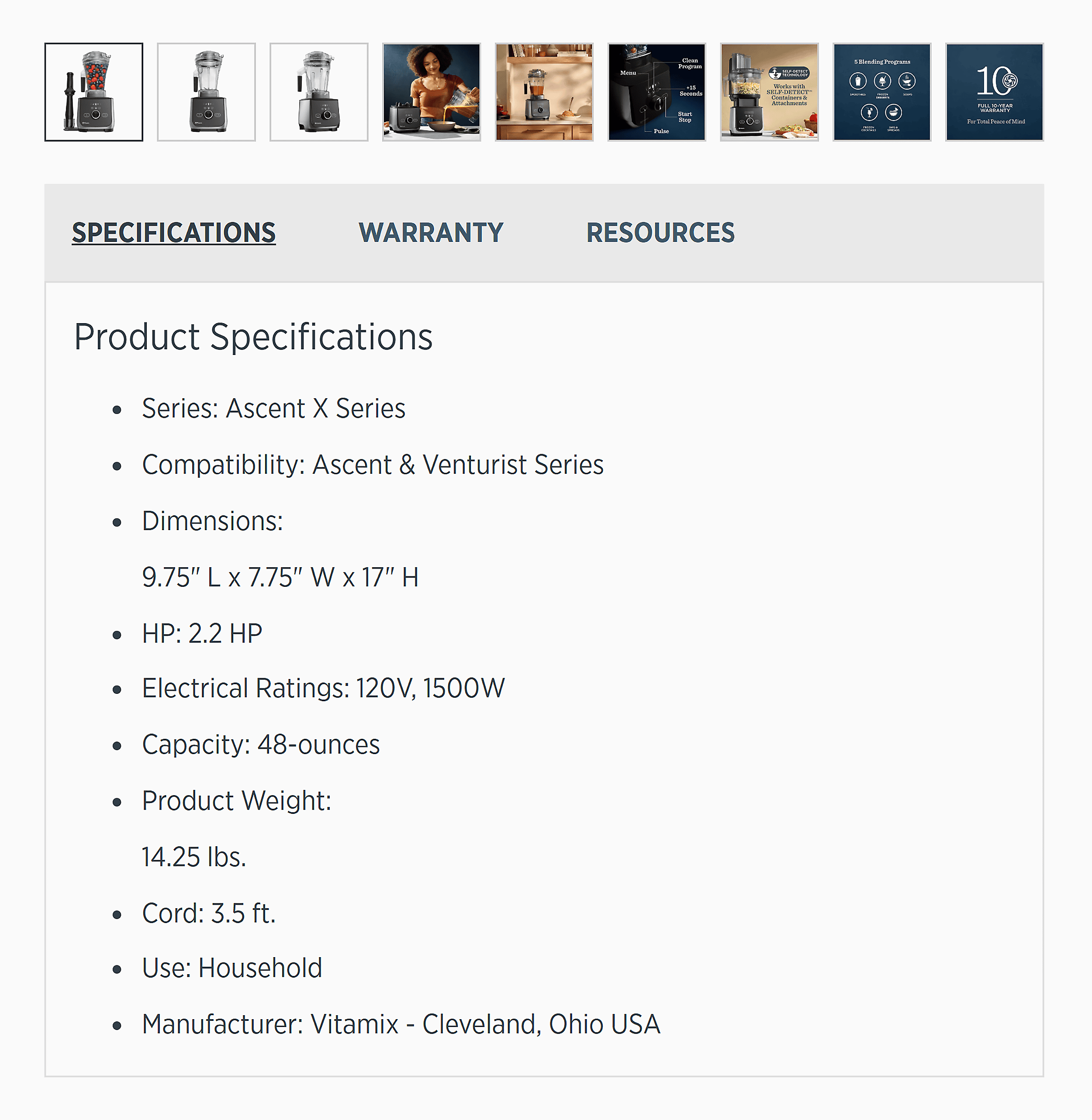
For example, health company Vitamix features a “Specifications” section on its product pages:
We can’t say definitively that schema affects LLM visibility (yet).
But major AI search engines confirm they rely on structured attributes to understand and recommend products.
What OpenAI says: “When determining which products to surface, ChatGPT considers structured metadata from first-party and third-party providers (e.g., price, product description).
Depending on your needs, some of these factors will be more relevant than others. For example, if you specify a budget of $30, ChatGPT will focus more on price, whereas if price isn’t mentioned, it may focus on other aspects instead.”
It’s also still a best practice for traditional SEO.
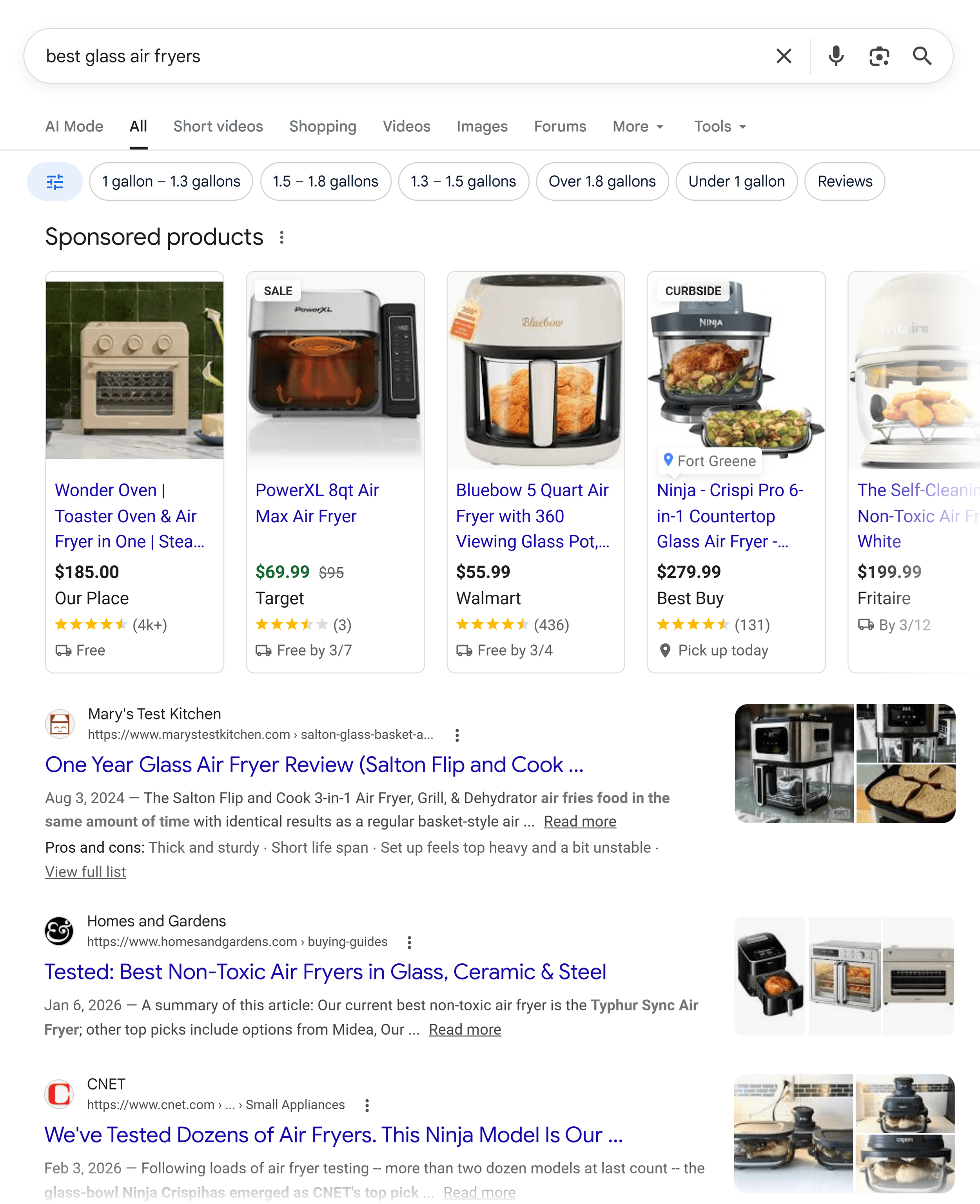
Plus, it’s no secret that structured data helps products appear on Google’s main page and Shopping tab.
It’s what allows users to refine results, see ratings, and check prices right on the first page of Google.
But here’s where it gets interesting.
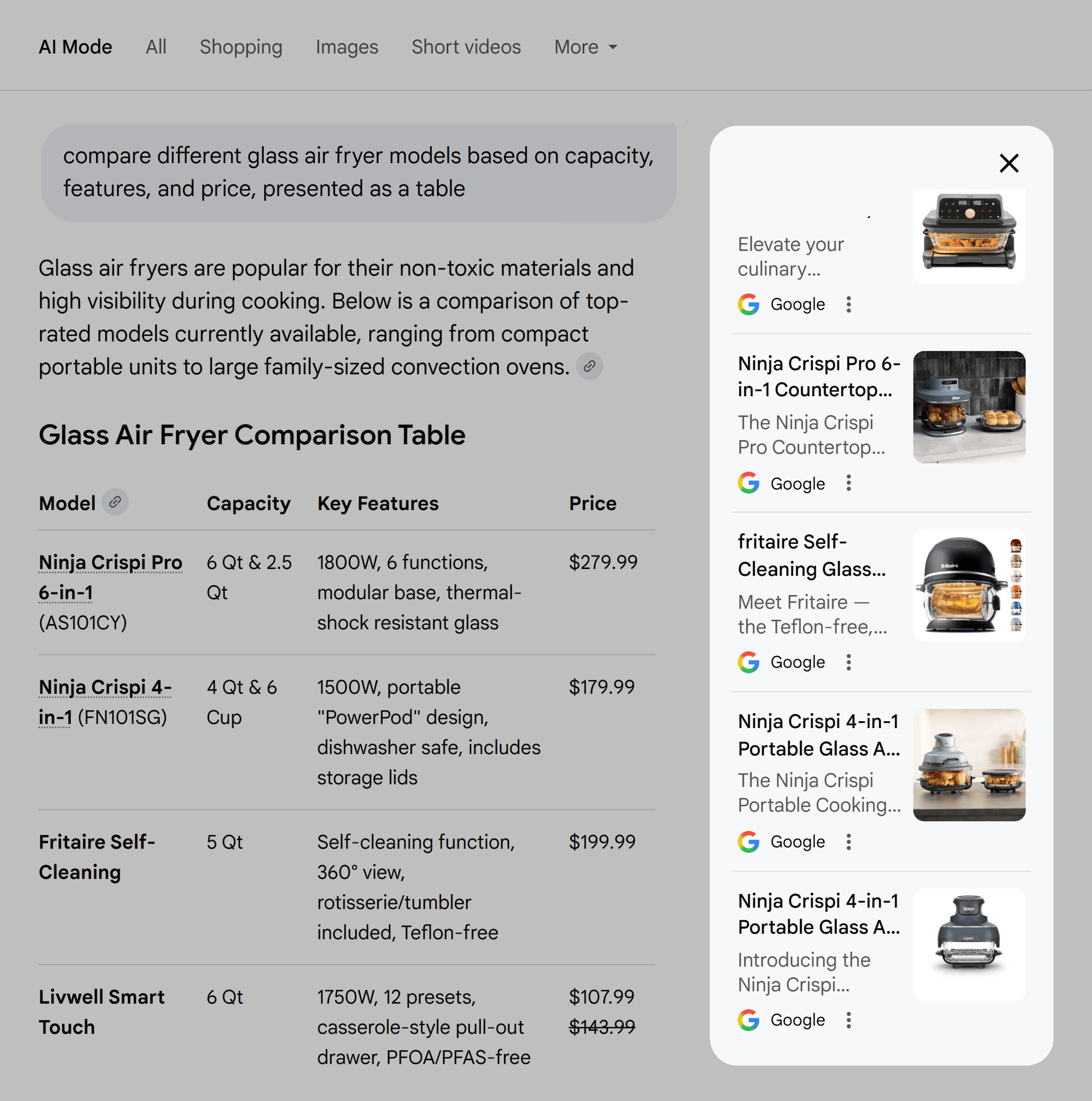
When I conducted a search in AI Mode, Google’s own shopping cards were the main sources.
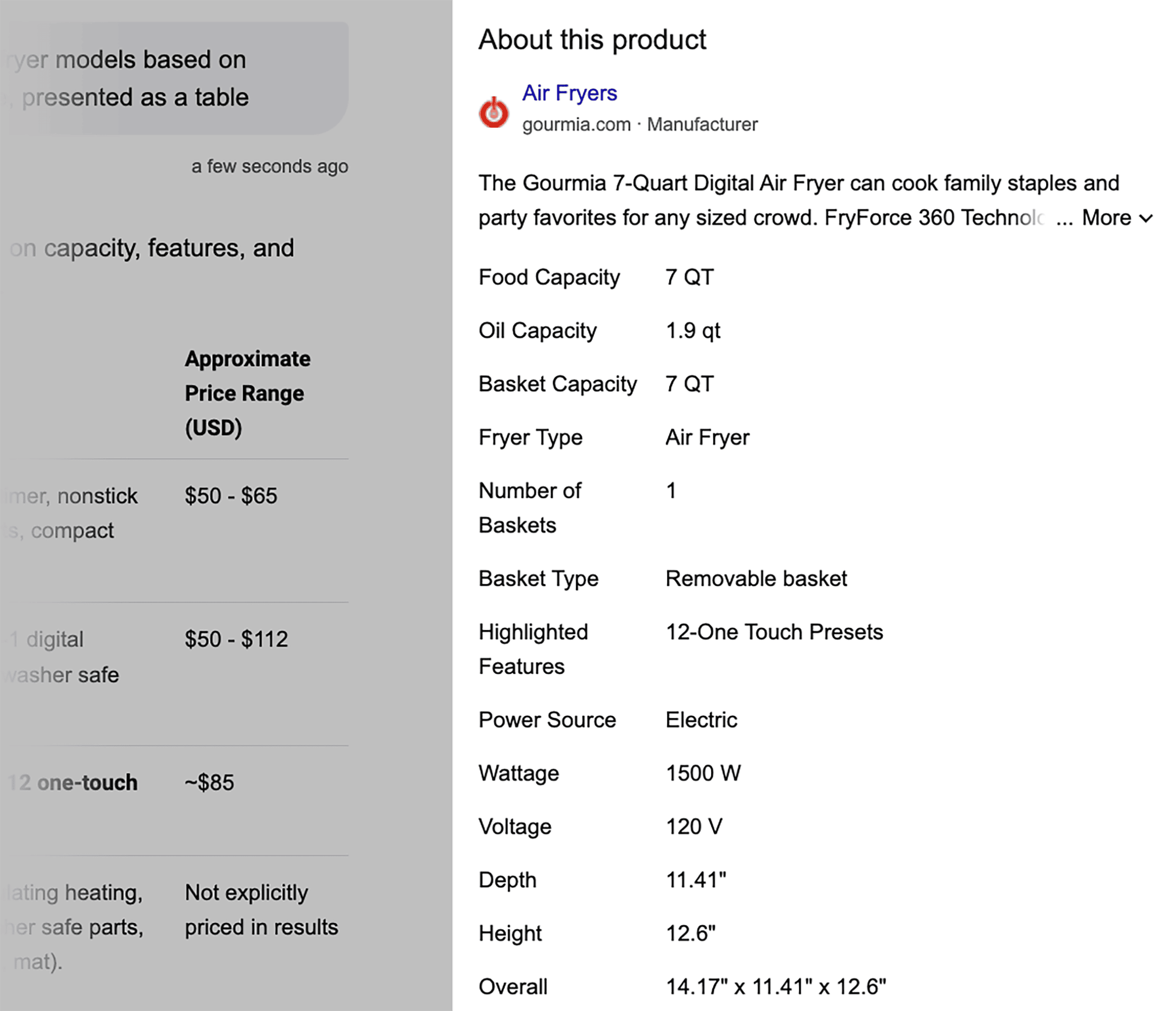
Clicking into one of those sources, I saw even more of that search-friendly structured data.
And where does all this information come from?
You guessed it: the original product page.
That same structure is what enables Google’s AI responses to display live pricing, availability, sales, and comparisons.
Clear, consistent schema simply gives search engines and LLMs more to work with.
That context helps AI more confidently recommend your product in related queries.
AI Visibility Essentials for Product Pages (By Industry)
The elements above matter on every product page.
But AI evaluates product pages differently depending on the category.
In this section, we’ll break down the category-specific product page details that AI looks for across six common ecommerce industries.
Fashion Brands
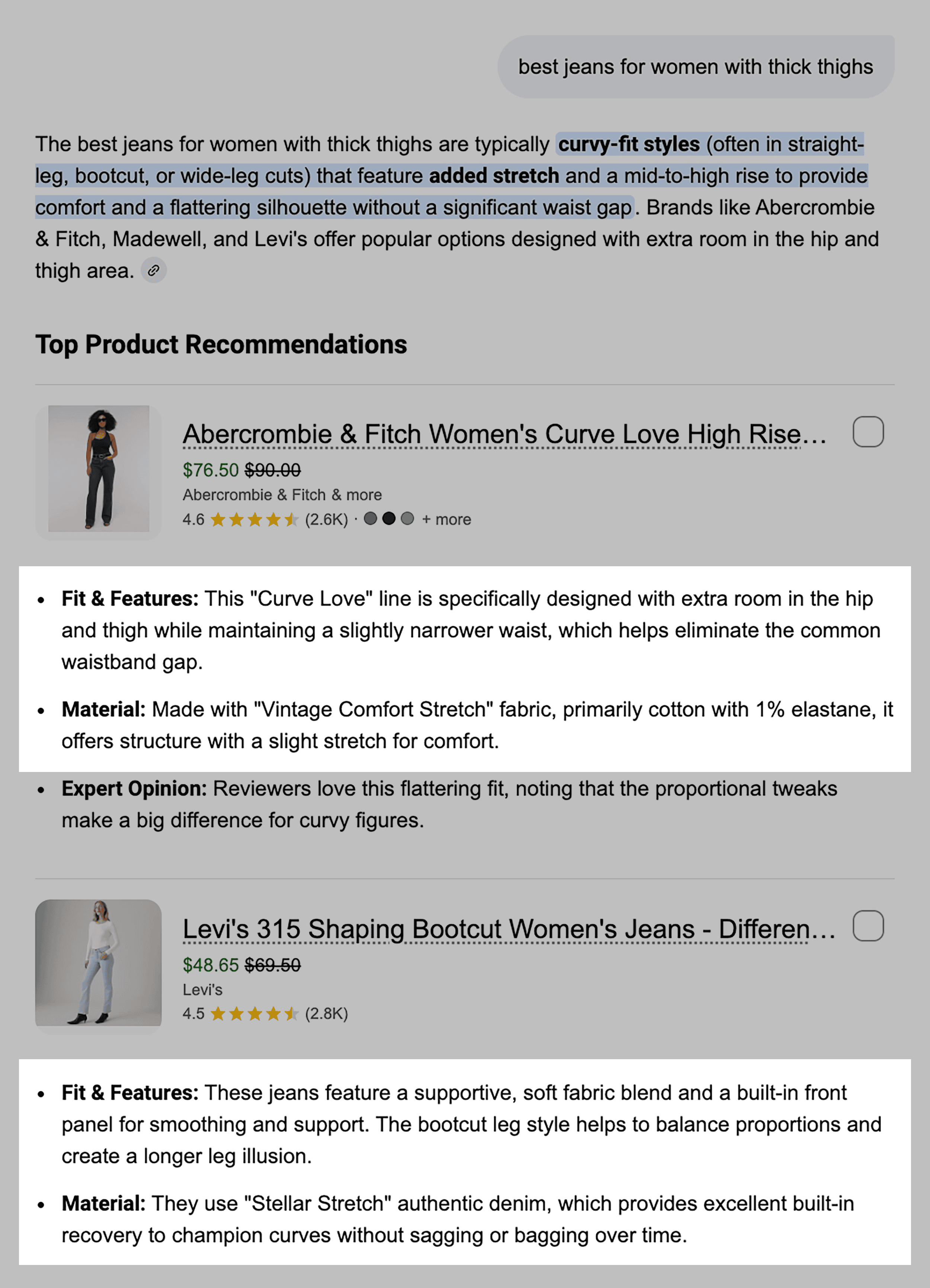
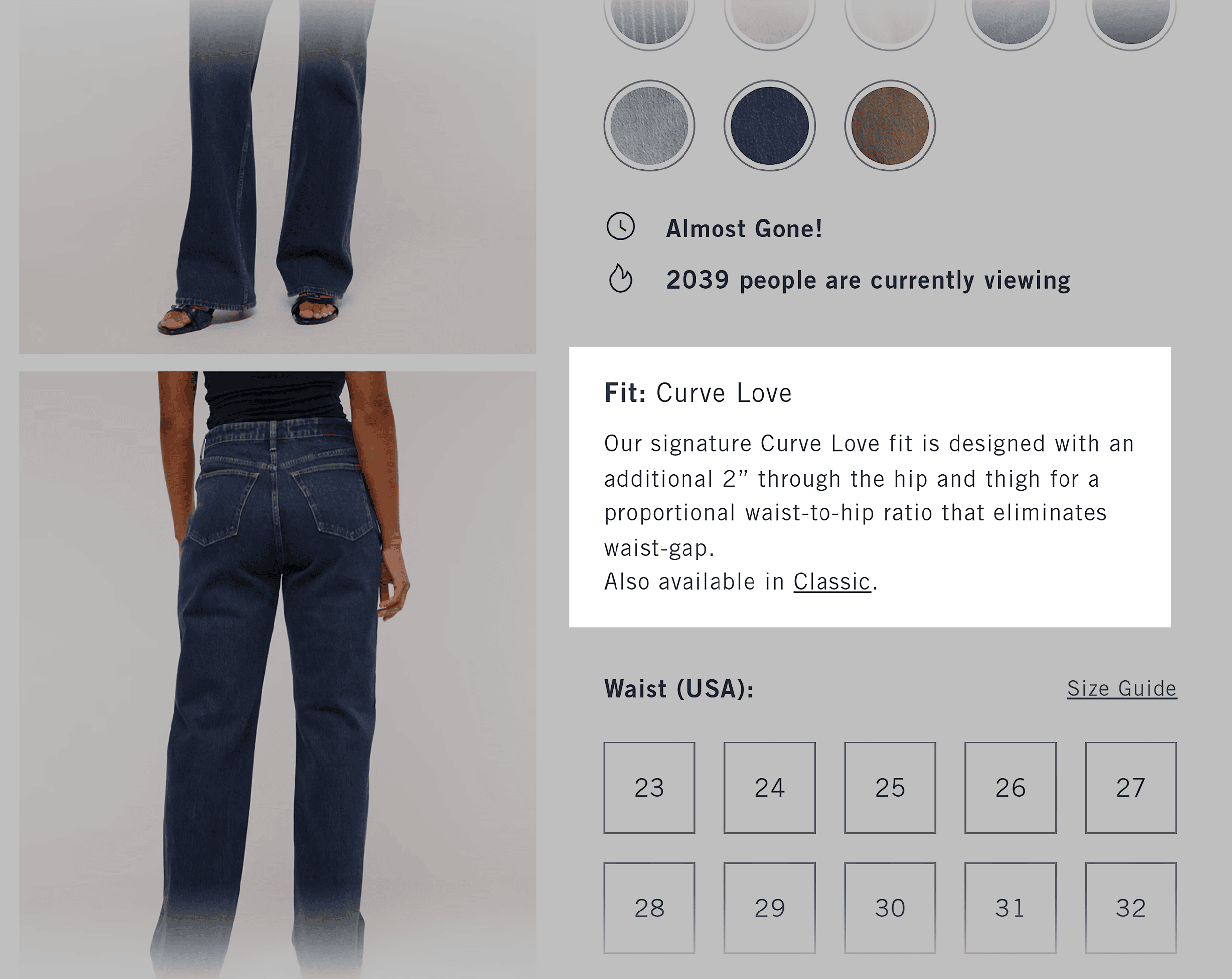
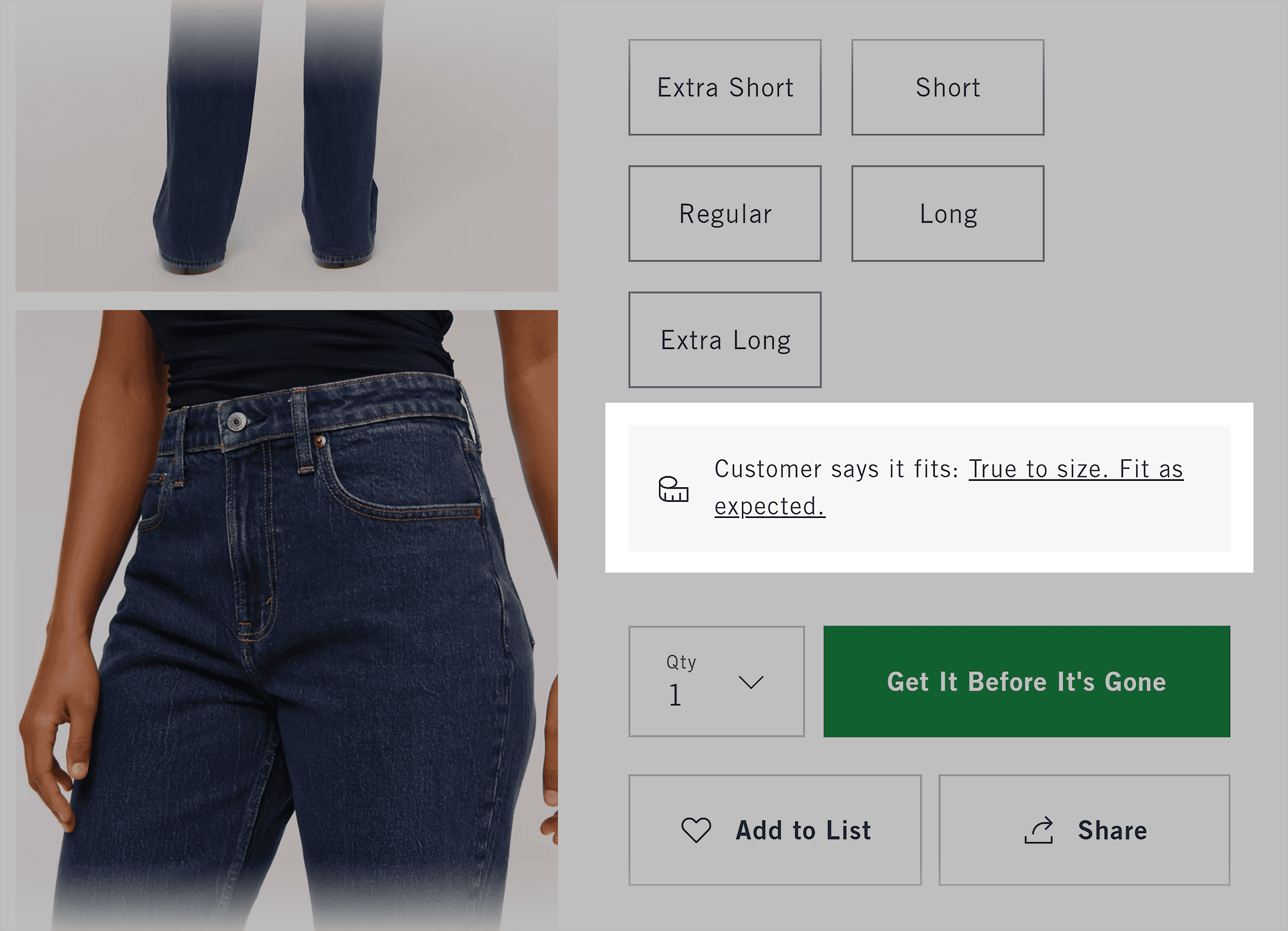
Ask any AI engine for clothing recommendations, and you’ll notice something consistent: the results highlight fit, materials, and comfort.
Clearly, the most important product page elements for fashion brands are:
Clear sizing and conversion charts
Material and care information
Customer fit data
Sustainability certifications and ethical production badges
Fashion queries are also highly specific to the individual shopper.
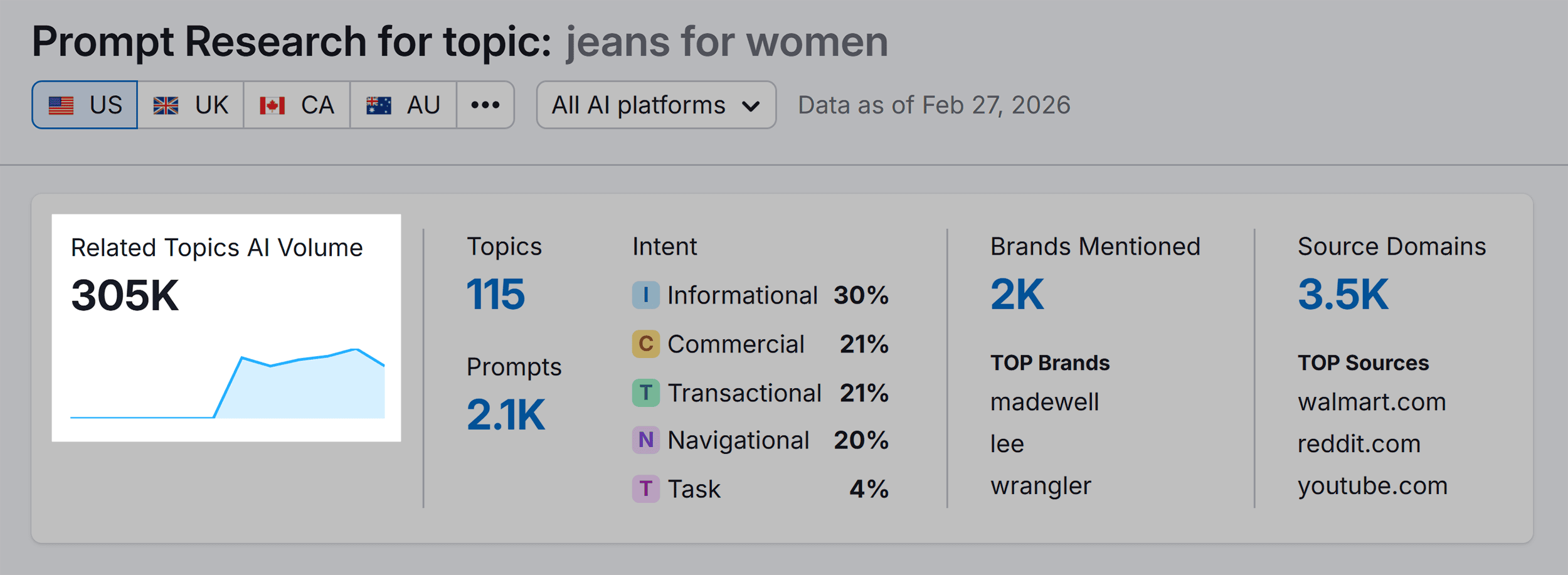
To see how AI handles these searches, I used Semrush’s AI Visibility Toolkit.
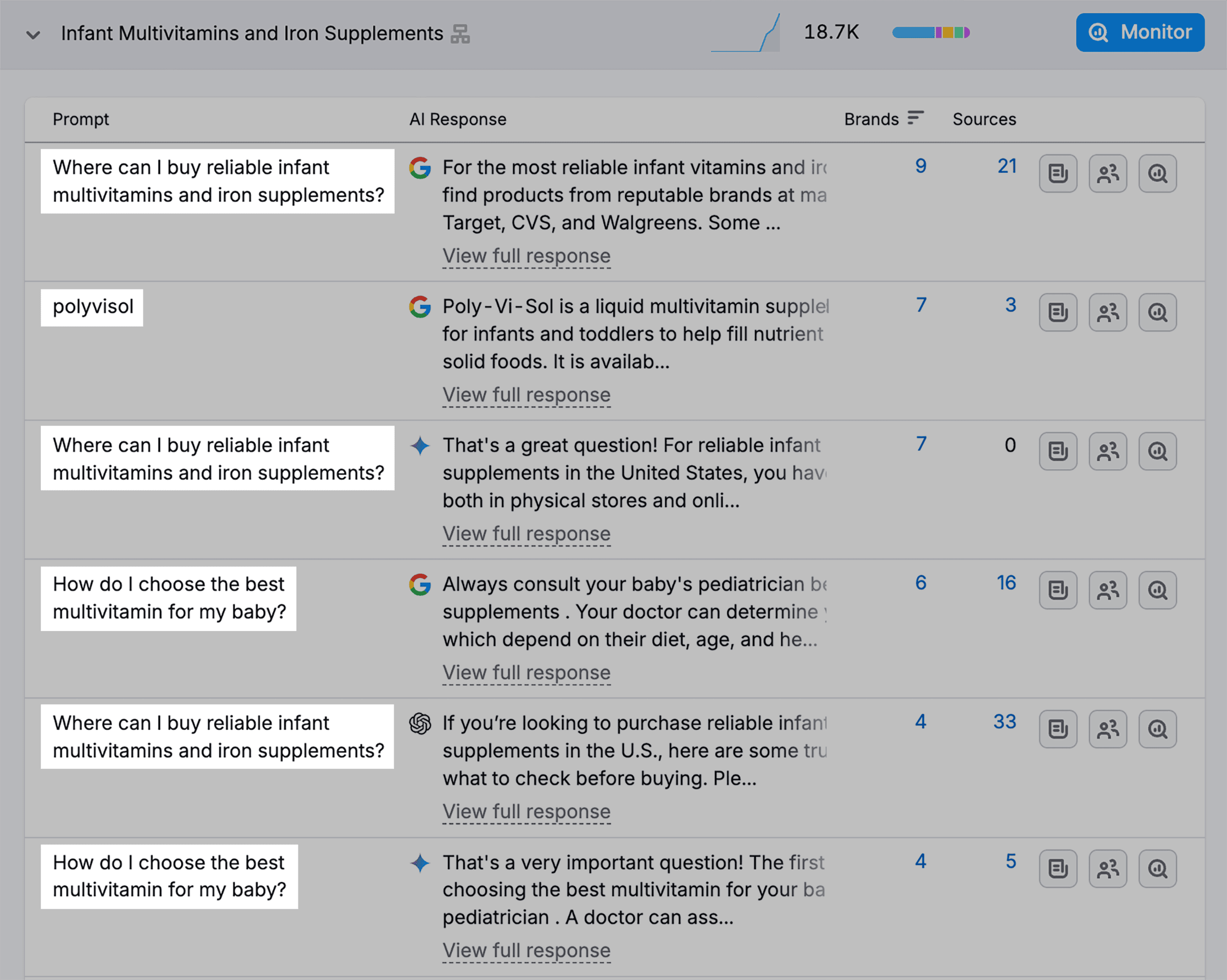
I analyzed the topic “jeans for women” using Semrush’s Prompt Research tool.
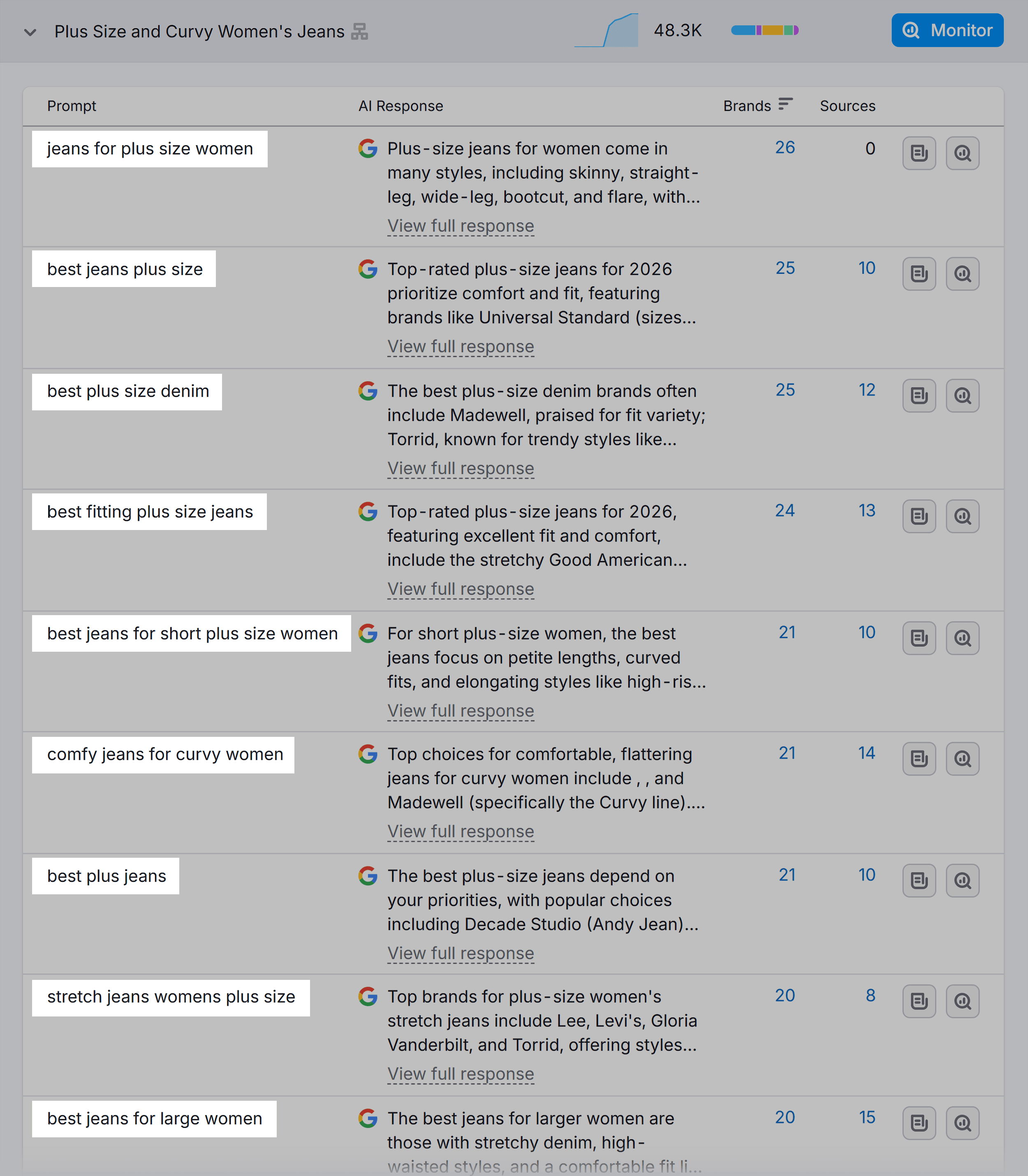
What’s revealing is the variety of queries under this topic.
Take “Plus size and curvy women’s jeans” for example.
Even within this niche, searches vary widely:
“Best plus size jeans for big thighs”
“Best curvy fit jeans”
Most comfortable jeans for curvy women”
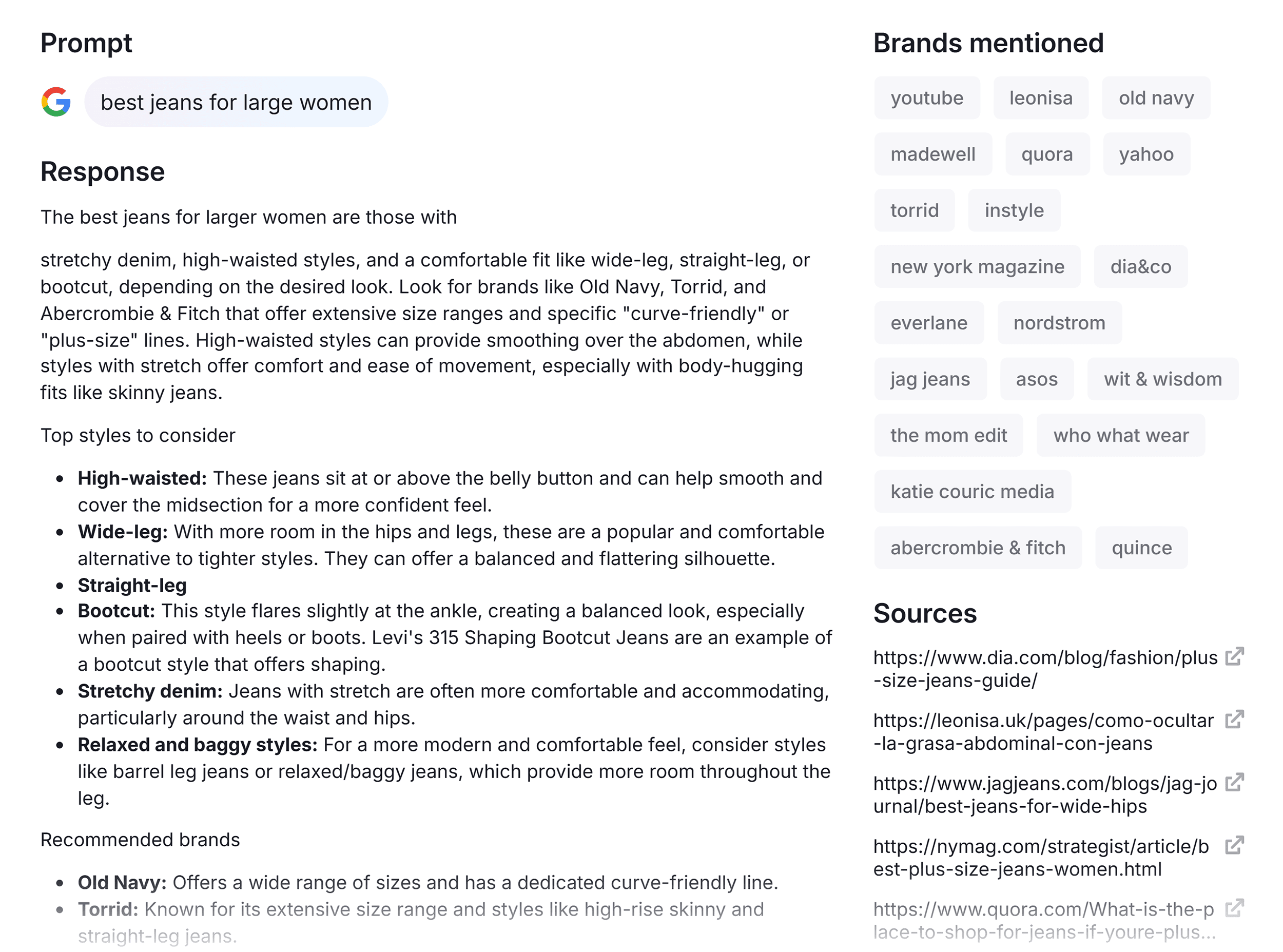
Across all these queries, the AI responses consistently emphasize the same details:
High-rise styles
Stretch denim
Tummy control
Specific silhouettes like bootcut
These details are pulled directly from product pages and customer reviews:
For AI to match products to these specific queries, it needs structured details on your pages.
This is something Abercrombie & Fitch does well.
They display clear fit guidance and aggregated customer fit feedback prominently on product pages.
Health and Wellness Products
Nothing is more important to health and wellness brands than trust and safety.
That’s why non-negotiables for product pages in this industry include:
Full ingredient composition
Clear dosage and instructions
Contraindications and allergen warnings
Source transparency
Clinical studies or certifications
Searches for health products are often deeply personal and complex.
Many start with a product type and the demographic it’s best for.
For example, the topic of “infant multivitamins” includes these common searches:
“Where can I buy reliable infant multivitamins?”
“How do I choose the best multivitamin for my baby?”
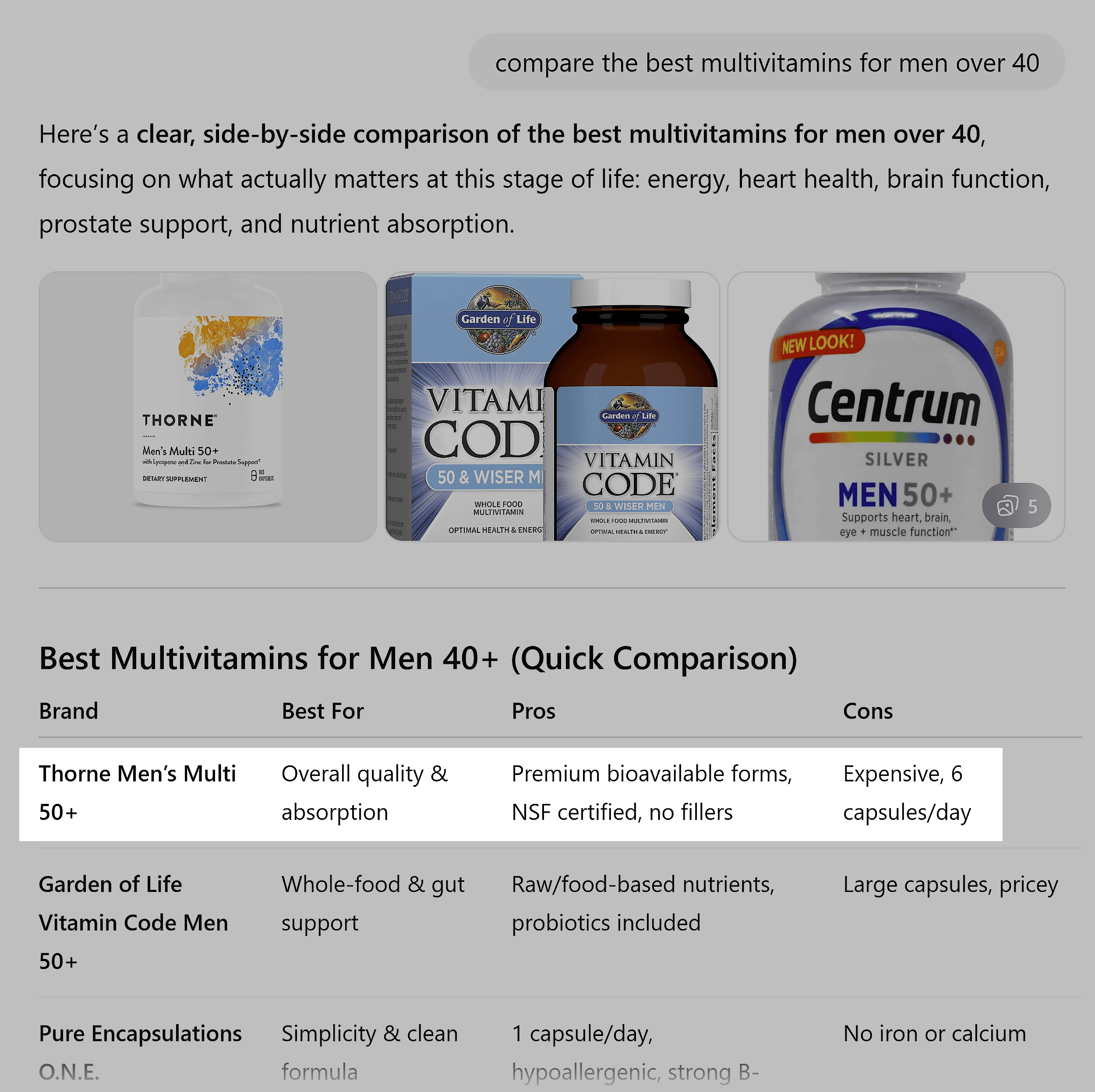
In their responses, AI models pull from ingredient lists, dosage information, and certifications.
Brands that perform well for wellness-related AI queries follow the same pattern.
They provide detailed information about ingredients, sourcing, and production on their product pages.
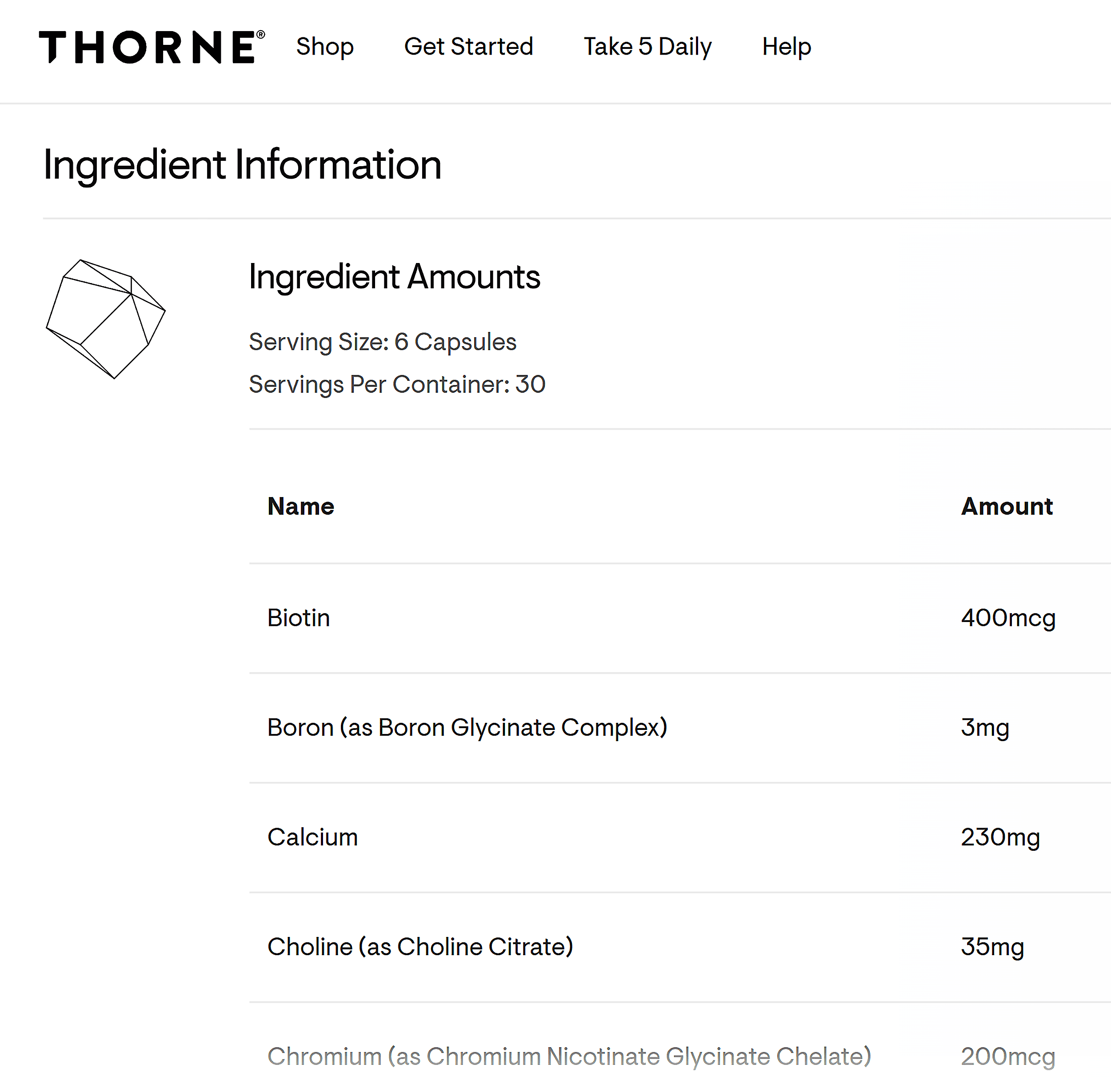
This is what helps popular health company Thorne get recommended often in AI search results:
Their product pages list ingredients in detail:
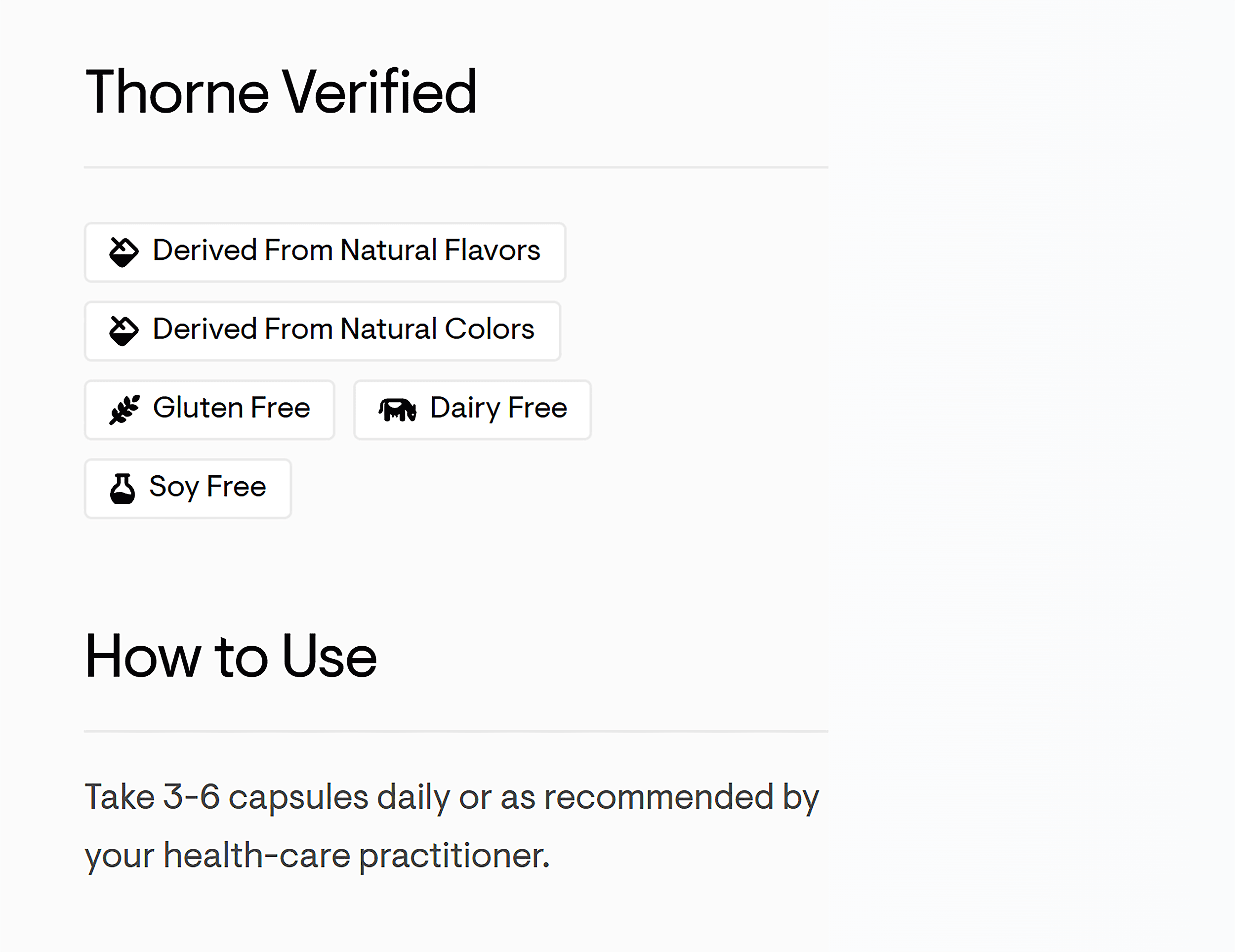
They also include dosage instructions and verifications of the product quality.
All in a clear, machine-readable format.
Electronics
When it comes to electronics, AI loves to quote specs.
Battery life, screen resolution, charging speed, refresh rates, and more are all pulled into responses.
So every electronics product page should include the essentials:
Full technical specs
Compatibility information
Setup or installation guides
Safety and efficiency certifications
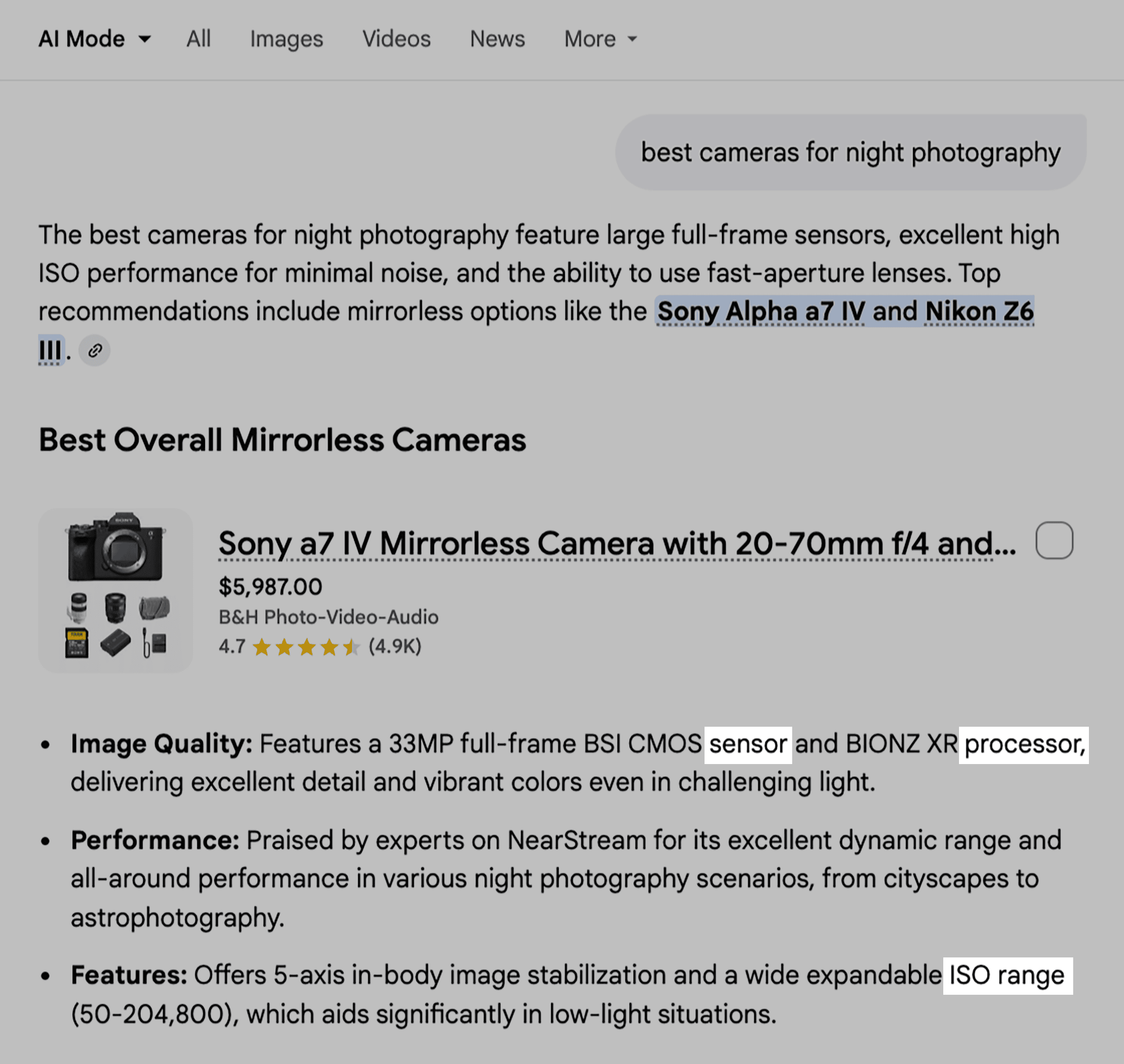
For example, even a simple search — “best cameras for night photography” — returns spec-heavy recommendations.
Structured specs give AI systems what they need to compare products.
This is important on your own site and third parties.
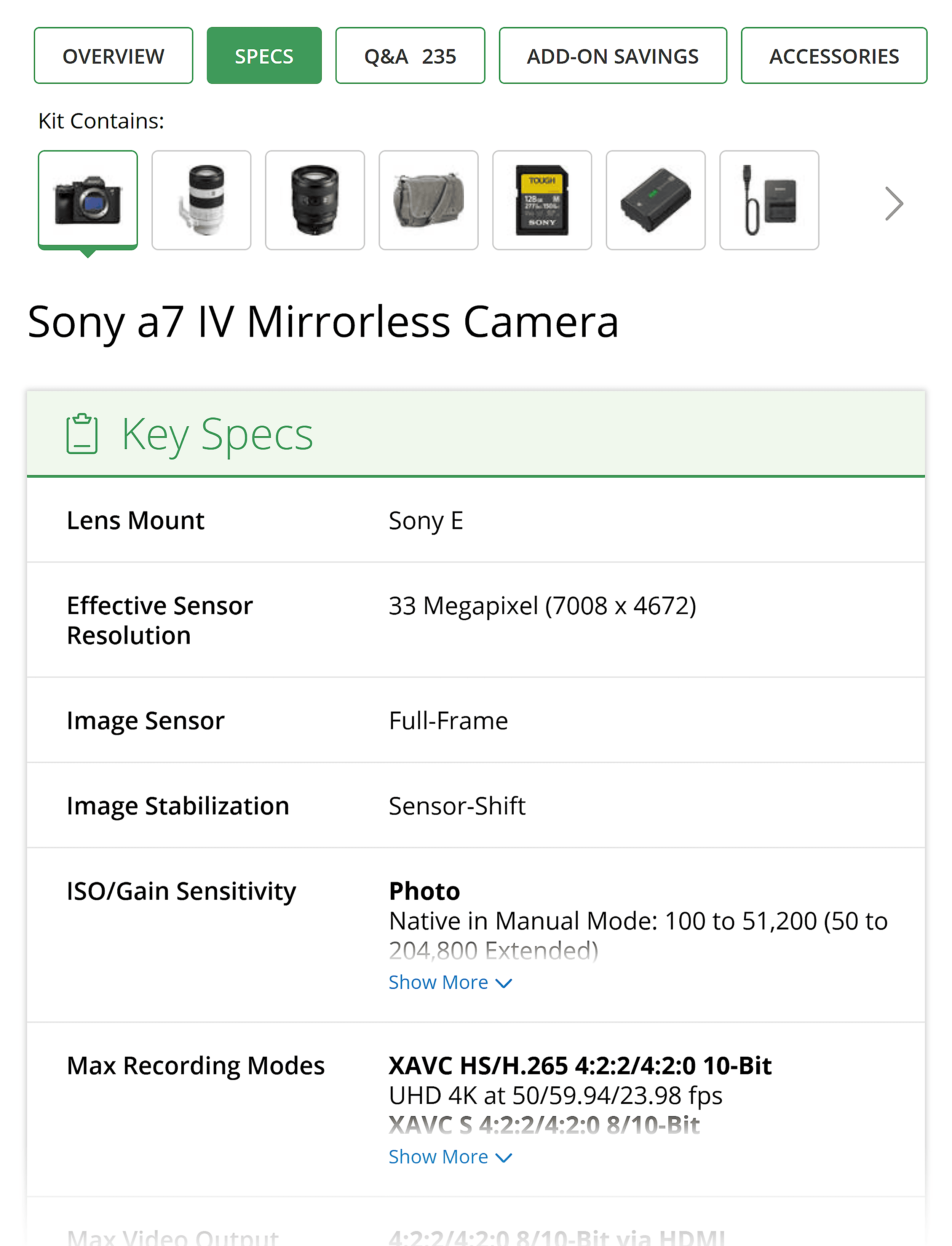
Brands like Sony excel here.
They ensure their product and retailer pages feature technical details that are consistent and in-depth across platforms.
Home and Furniture Brands
Furniture shopping comes with one big question: Will it fit?
AI knows this, which is why technical details dominate recommendations.
Your home and furniture product pages need:
Clear dimensions and room size recommendations
Assembly requirements (tools, time, difficulty)
Materials and care details
Quality and sustainability certifications
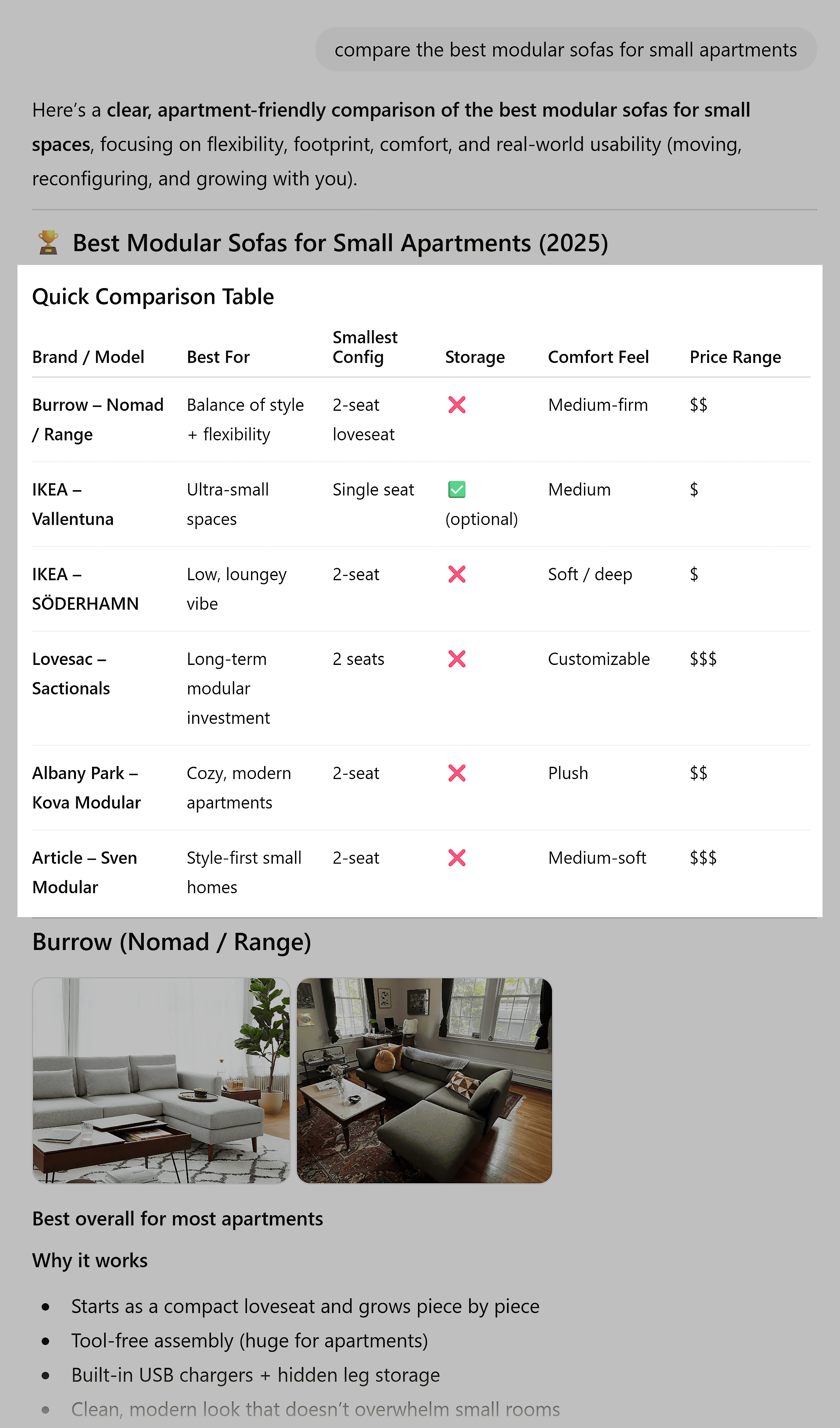
For example, in a search for modular sofas for small apartments, ChatGPT mentions configurations in its answer:
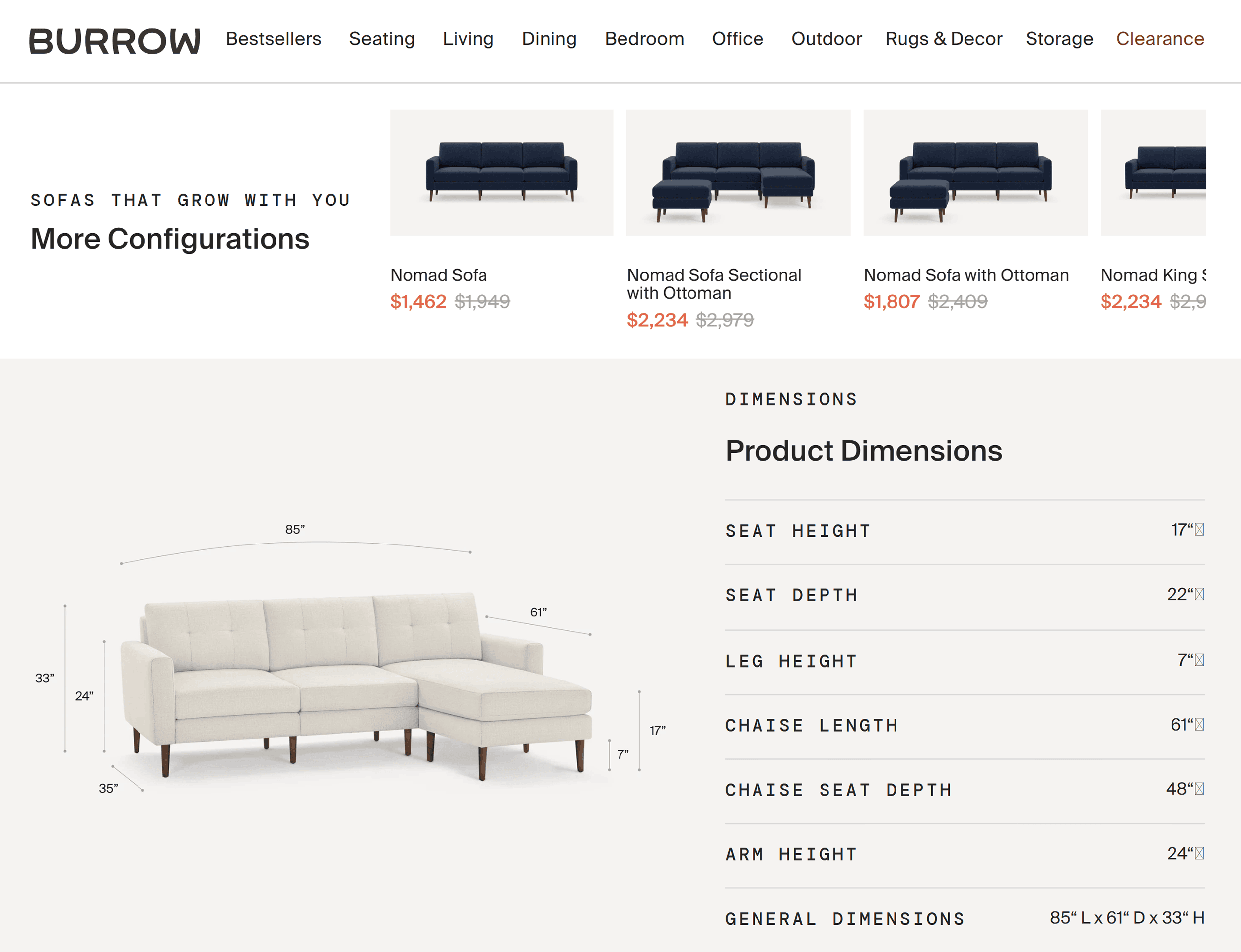
One of its top recommendations is a couch by home brand Burrow.
While many factors go into this, its product page is definitely one of them.
It features different configurations of their modular sofas. Plus, the dimensions of each.
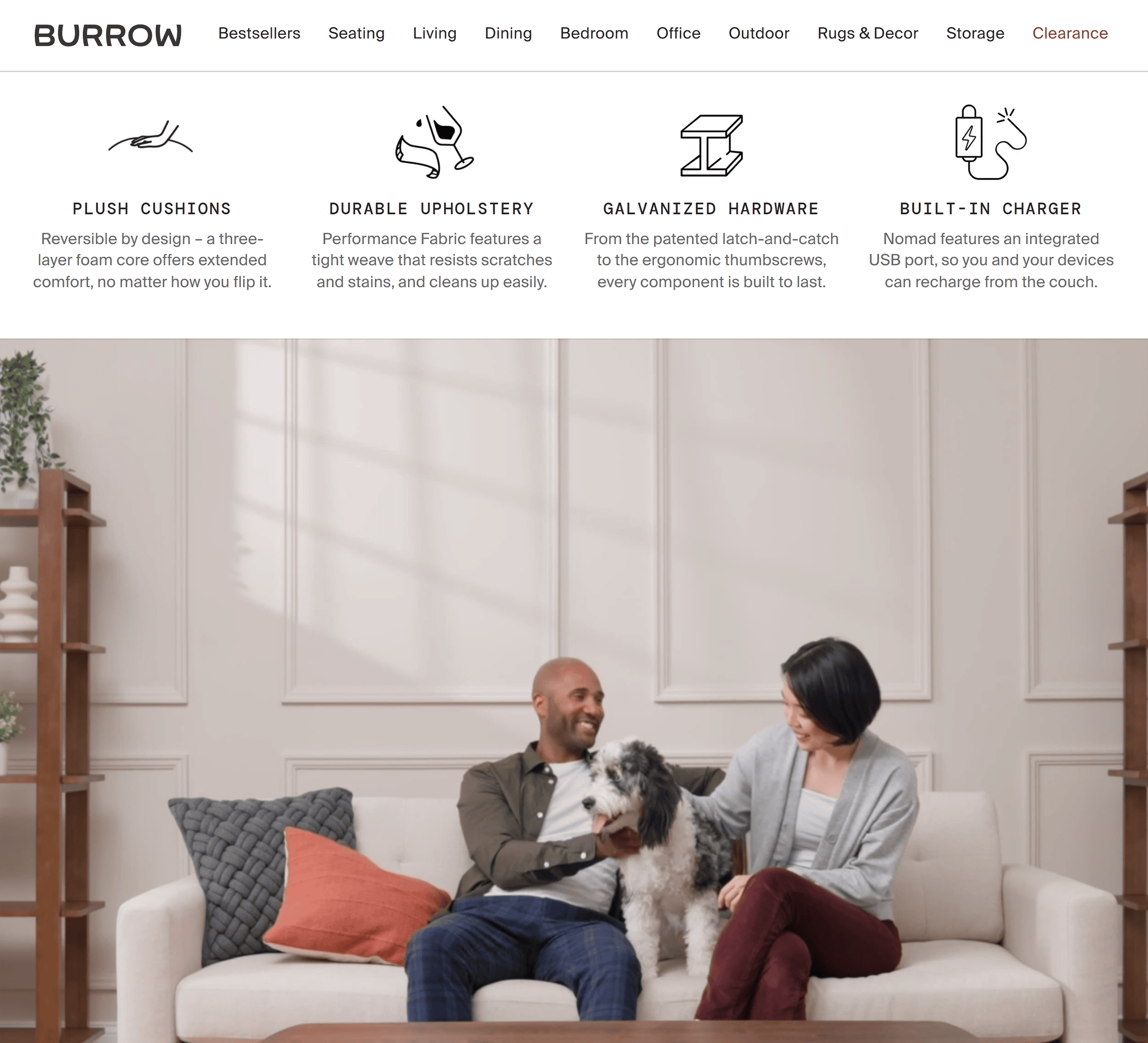
It also contains other vital information that users might ask AI systems, such as detailed materials and fabric care.
Outdoor and Sports Equipment
Customers need to know whether your products will survive their outdoor adventures.
Which is why AI takes these elements into account:
Weather ratings and technical materials
Performance specs (capacity, weight, range)
Use-case scenarios
Safety certifications or features
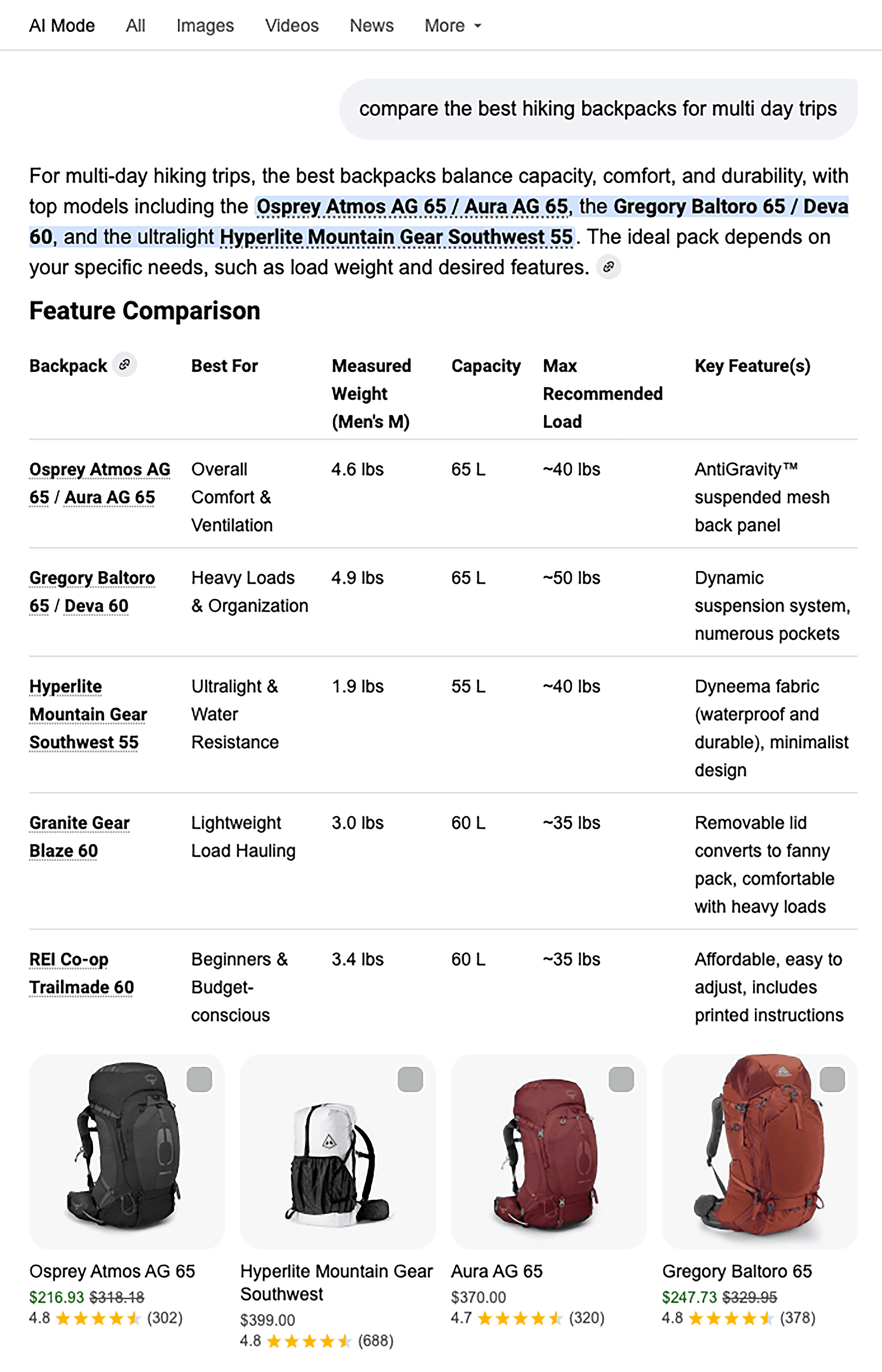
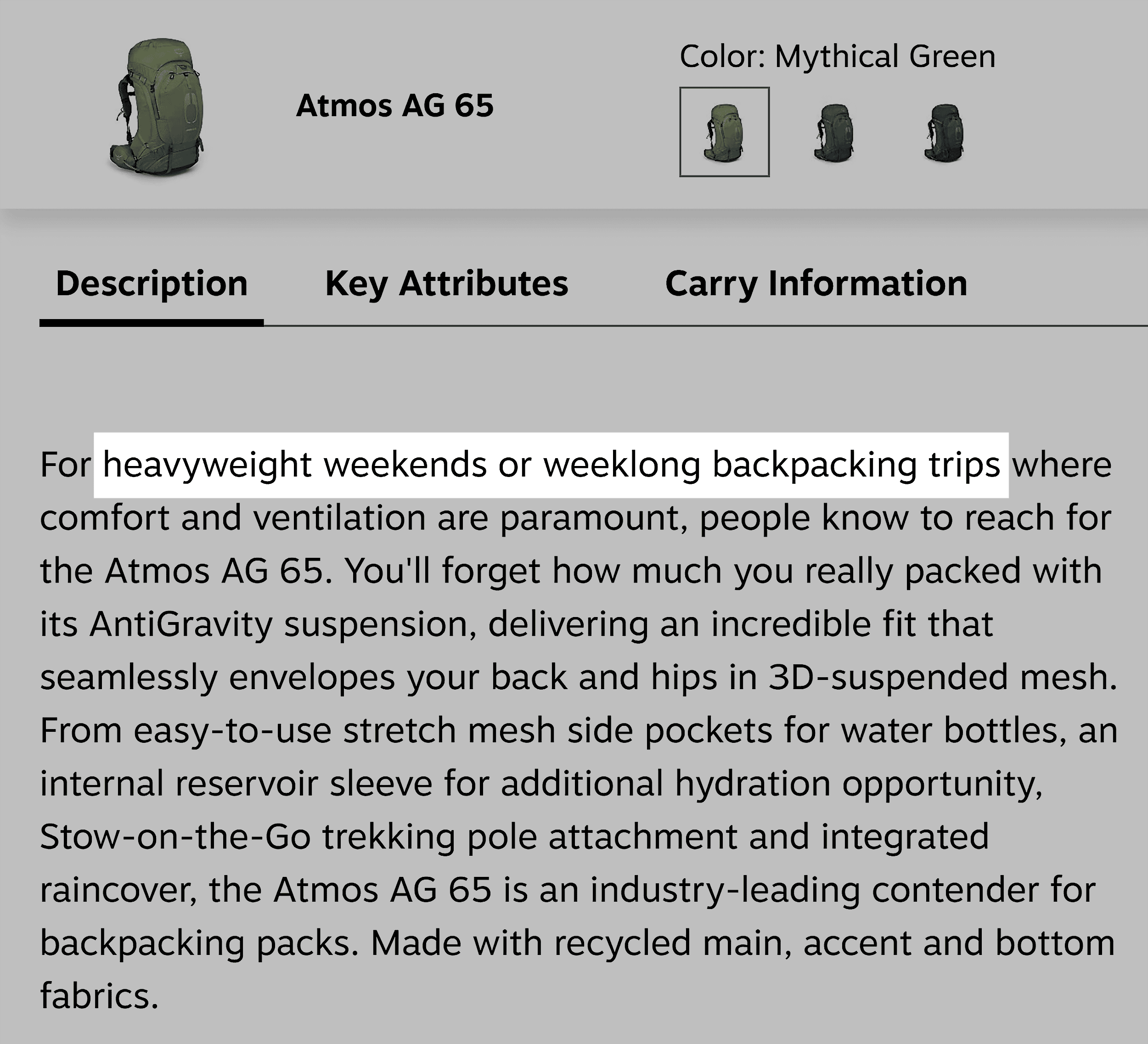
Let’s say your customers ask about hiking backpacks. They’ll see AI models highlight key features, max load, and materials.
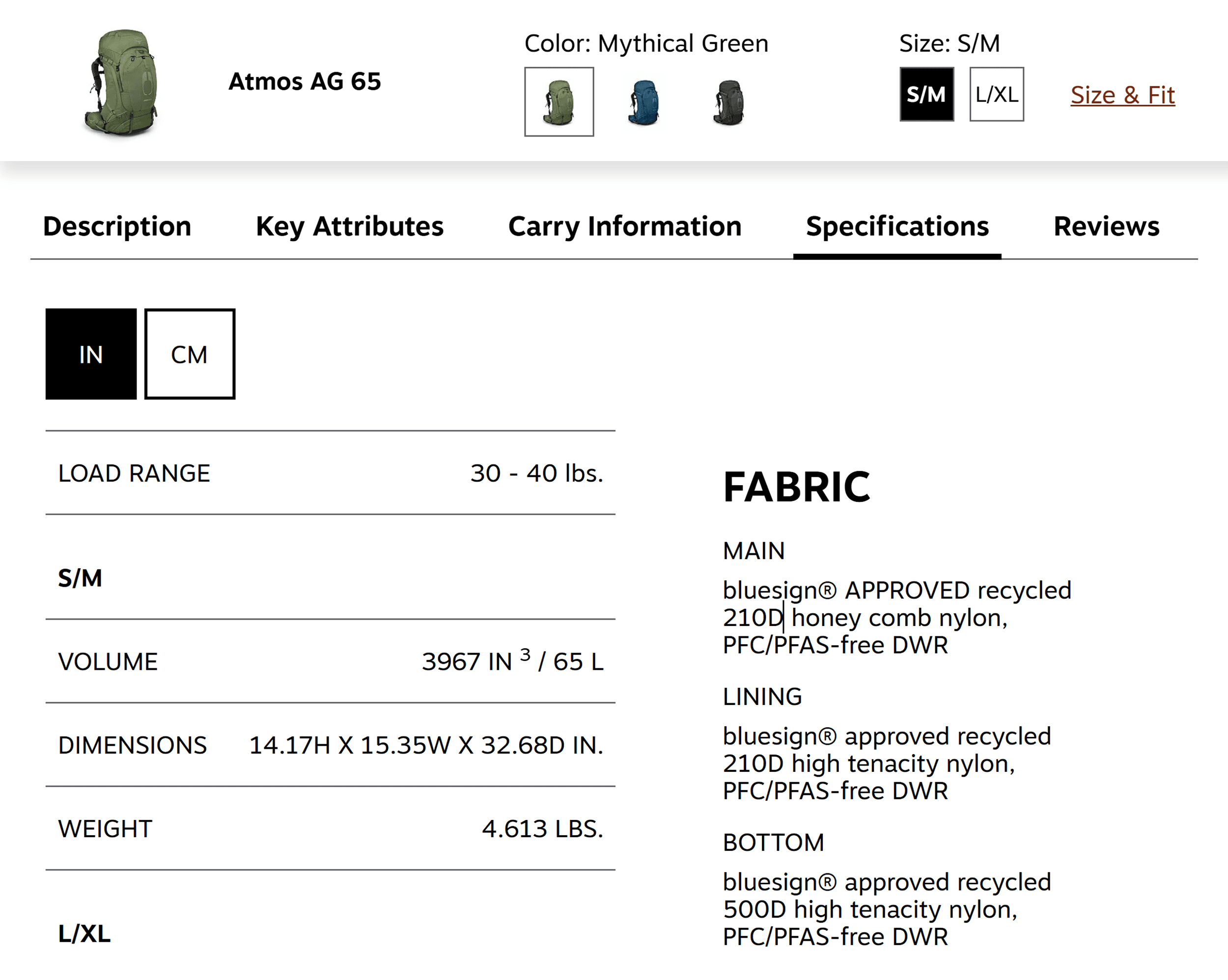
Osprey’s backpacks are regularly recommended by AI.
This is because they clearly state use cases like “week-long backpacking trips”:
They also include features that make it ideal for common use cases: materials, weight, volume, dimensions, and load range.
Baby Products
Baby products trigger some of the most safety-sensitive AI recommendations.
AI models look for structured, verifiable details when recommending anything for infants.
If you sell baby products, here’s what your product page should include:
Age and weight suitability
Safety certifications (like OEKO-TEX, GREENGUARD)
Ergonomic or developmental benefits
Material and care instructions
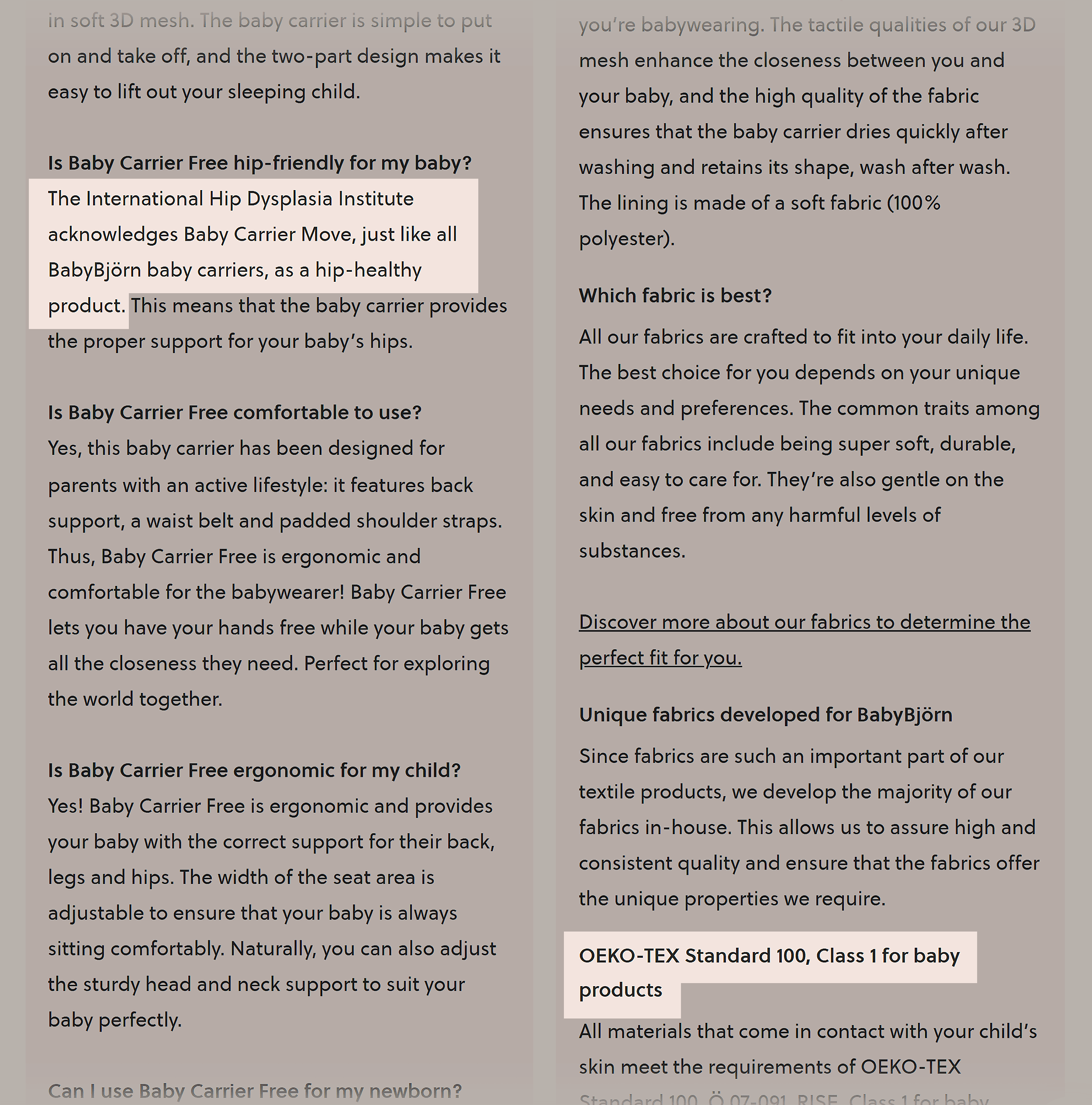
For example, BabyBjorn includes safety certifications on its product pages.
And goes deep into safety information.
This includes how the fabrics are developed, and the appropriate age and weight for safe use.
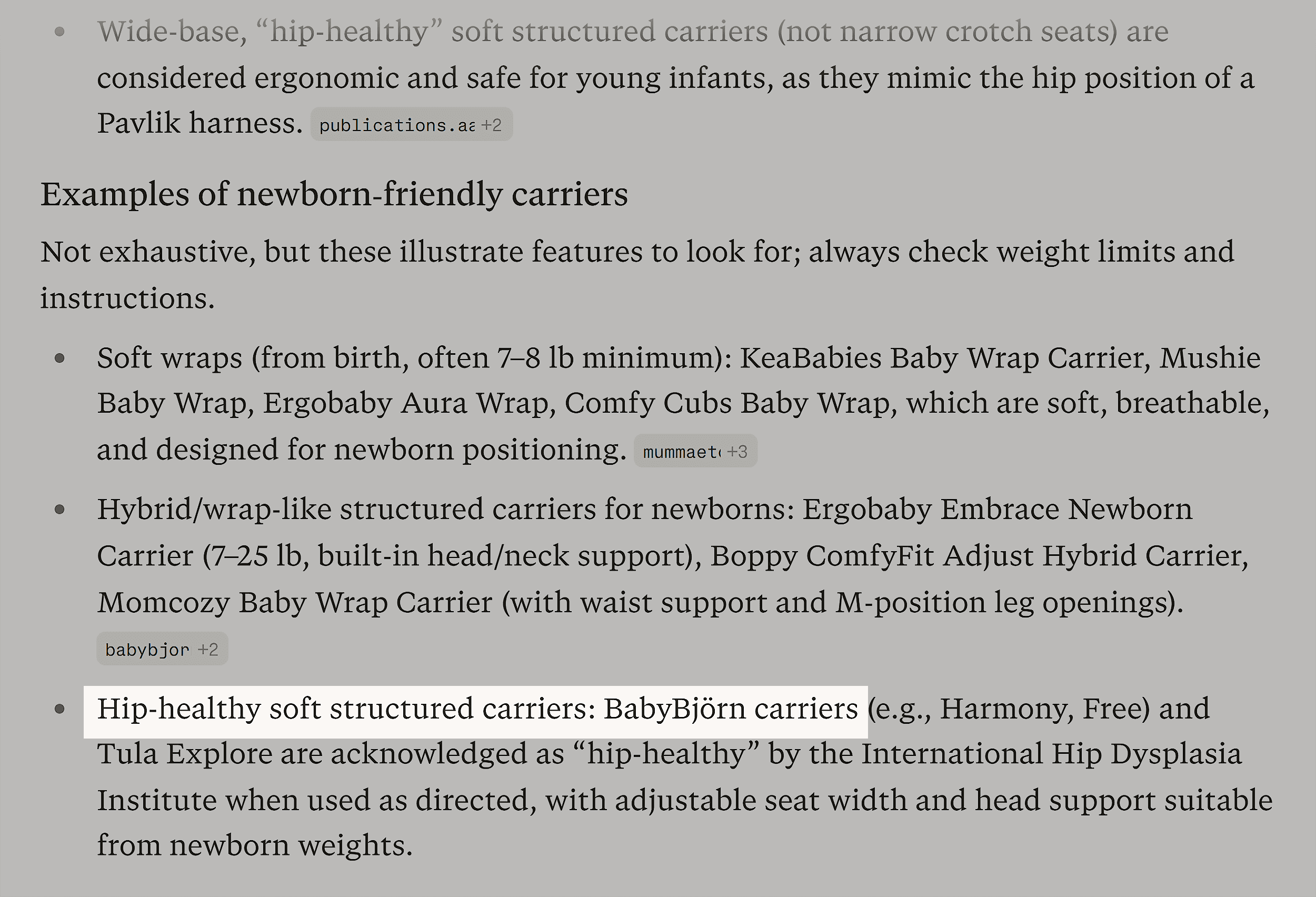
When I asked Perplexity for the safest baby carrier on the market for newborns, BabyBjorn was among its top recommendations.
It also specifically mentioned the “hip healthy” certification featured on BabyBjorn’s product page.
Increase Your Product Page Visibility in AI Search
If you want AI to recommend your products, the best place to start is your product pages.
Small improvements compound quickly.
Clear descriptions. Structured data. Real reviews. Verifiable trust signals.
Together, they shape how AI understands — and surfaces — your products.
But product pages are just the start.
First, download the Product Page AI Optimization Checklist. It tells you exactly what to review, update, and add to make your product pages AI-friendly.
Then, learn how to build an AI ecommerce SEO strategy that improves your visibility across the entire buyer journey.
AI visibility is possible for your products. Keep testing, keep tracking, and keep growing.
The post How to Optimize Your Product Pages for AI Visibility appeared first on Backlinko.
We use cookies to ensure that we give you the best experience on our website. If you continue to use this site we will assume that you are happy with it.