




Key Takeaways
- The 4 Ps (product, price, place, and promotion) are tools marketers use in combination to shape how a product (or range of products) is positioned, promoted, and sold to a specific group of customers. Together, they’re often referred to as the “marketing mix.”
- The marketing mix is fundamentally a tech-agnostic framework for helping with important marketing decisions.
- “Product” looks at how well features meet needs, “price” at what customers are willing and able to pay, “place” at the best ways to distribute a product, and “promotion” at building market awareness.
- Well-known companies like Rolex, McDonald’s, and Red Bull have perfected the 4 Ps behind their products and brand identities.
- AI is changing how marketers execute the 4 Ps, but the fundamental questions behind product, price, place, and promotion remain the same.
The 4 Ps of marketing (product, price, place, and promotion) have been around for decades, and they still drive decisions around every successful product launch.
Also known as the “marketing mix,” they help you think through how to bring a product to market and reach the customers most likely to buy it.
It doesn’t matter if you’re running a one-person small business or a global enterprise. The 4 Ps help you bring a product to market and get it in front of people most likely to buy it.
How you put the 4 Ps to work has changed, though. AI is giving marketers new ways to understand their customers and make more informed decisions, often in less time.
I’ll cover some of these opportunities as I show you how the 4 Ps still drive marketing decision-making today.
What Are the 4 Ps?
The 4 Ps of marketing, commonly known as the marketing mix, stand for product, place, price, and promotion. They’re like four levers companies can adjust to better position their products for the customers they want to reach.
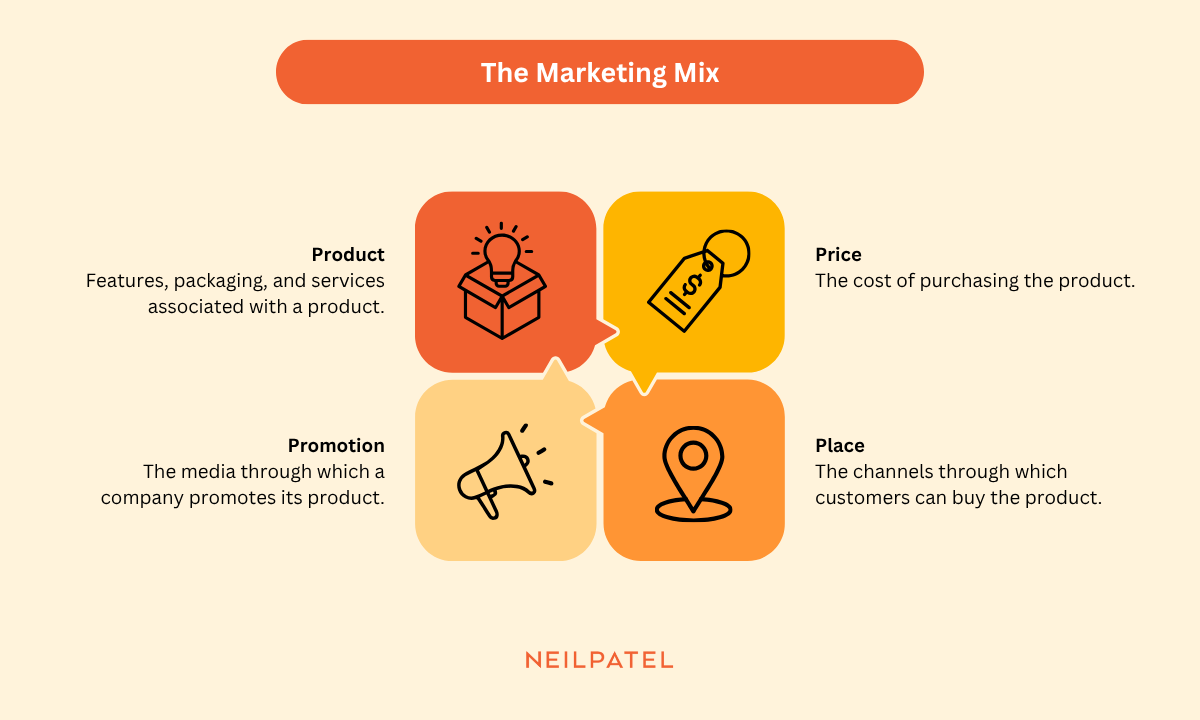
Here’s the meaning behind each of the four Ps:
- Product: What you’re selling, including its features, packaging, and the support that comes with it
- Price: What you charge and how you structure the pricing
- Place: Where and how your customers can buy the product
- Promotion: How you get the word out about the product
To more fully understand the 4 Ps, we need to take a step back. Mention “marketing,” and most people think of customer-facing content like ads, social media posts, emails, videos, and blog articles like this one.
In fact, these represent just one piece of a much broader discipline. They’re the “promotion” part of the mix called marketing communications.
True marketing is a big-picture process that strives to meet all customer needs. And thinking in terms of the 4 Ps allows companies to do exactly that.
What About the 7 Ps and the 4 Cs?
The idea of a marketing mix has been around longer than the 4 Ps themselves.
In 1948, Harvard professor James Culliton described marketing executives as “mixer(s) of ingredients.” Inspired by this idea, fellow Harvard professor Neil Borden often referred to the concept of the marketing mix in the years that followed.
Then in 1960, marketing professor E. Jerome McCarthy organized it into the four elements we know today in his book Basic Marketing: A Managerial Approach.
Other models have been suggested in the years since, with two in particular gaining traction: the 7 Ps and the 4 Cs:
- The 7 Ps: In 1981, marketing professors Bernard Booms and Mary Jo Bitner expanded the 4 Ps to better suit service-based businesses. Their model adds people, process, and physical evidence to the mix. These cover the employees who deliver a service, the delivery process, and the environment where business takes place.
- The 4 Cs: Marketing professor Robert Lauterborn proposed a more customer-oriented alternative to the 4 Ps in 1990. His model replaces them with consumer wants and needs, cost, convenience, and communication. Instead of starting with what a business wants to sell, the 4 Cs push marketers to focus on what customers actually need.
These alternative models add some useful nuance. To me, though, the 4 Ps still make up the strongest foundation for marketing campaigns. I suggest working to adjust the 4 Ps before considering other frameworks. ing point for marketing campaigns. Work on adjusting the 4 Ps before considering other frameworks.
How to Use the 4Ps in Your Marketing Strategy
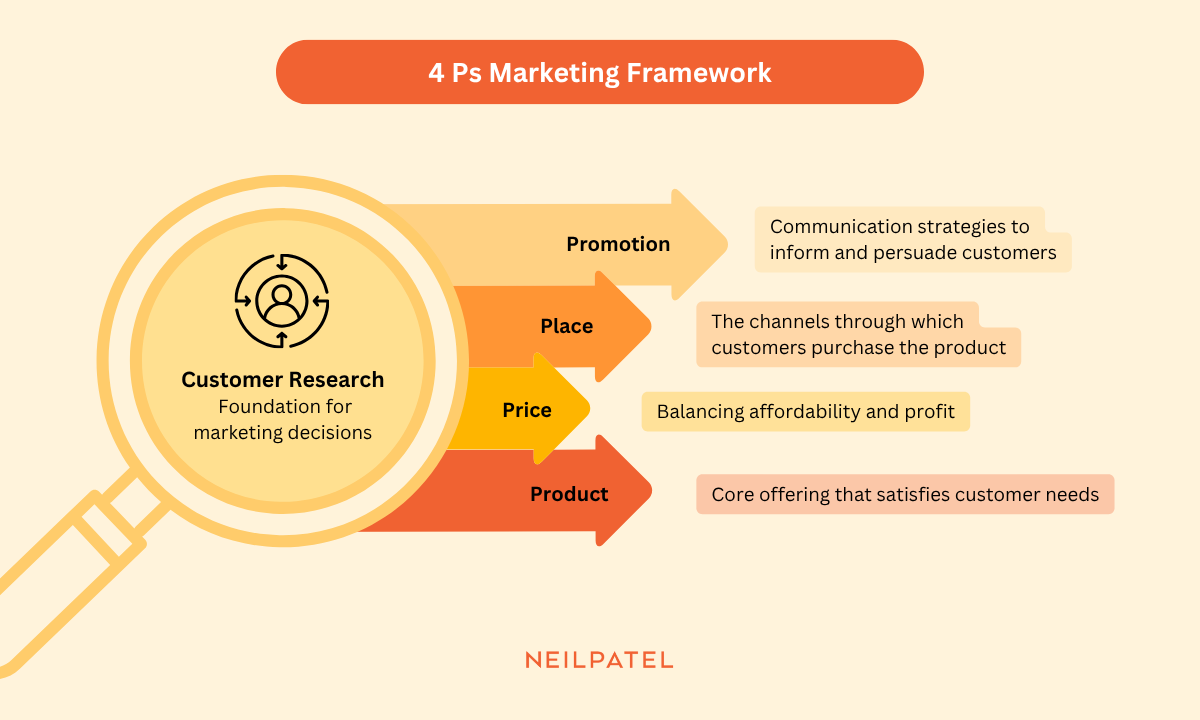
Start with customer research. The better you understand who you’re trying to reach, the easier it’ll be to make informed decisions about your 4 Ps marketing mix.
To get that understanding, listen to what customers are telling you. Surveys and reviews help get you feedback, and conversations with your sales and support teams can fill in the gaps. In addition, website analytics can show you what people do (and don’t do) once they reach your site.
As you bring that information together, look for patterns. What problems are customers trying to solve? How do they prefer to buy, and where do they go for information?
The answers you get will help you decide what to offer, how to price it, and where to focus your marketing efforts.
This can be a lot, so focus on the things that most impact your decision-making around product, price, place, and promotion.
Some more questions to build a clear picture of your customer include:
- What problems are they trying to solve?
- How much are they willing to spend?
- Where do they research and buy products like mine?
Once you have detailed research and answers to these questions, you can draw on them to build and refine your marketing mix.
1. Product: Provide What People Actually Need
Products are the core offerings a company uses to meet consumers’ needs. A product can be tangible, like a luxury car, or intangible, like consulting services. Surrounding value-adds, like aftercare and warranties, are also included.
A big part of defining the product element of the mix is determining which trade-offs to make. It’s not possible to have everything. You might sacrifice ease of use to offer a more complex set of features, then provide additional customer support and onboarding as a compromise.
Our research, for example, shows that 98 percent of customers expect 24/7 support, whereas only 61 percent are bothered about personalized product offers.
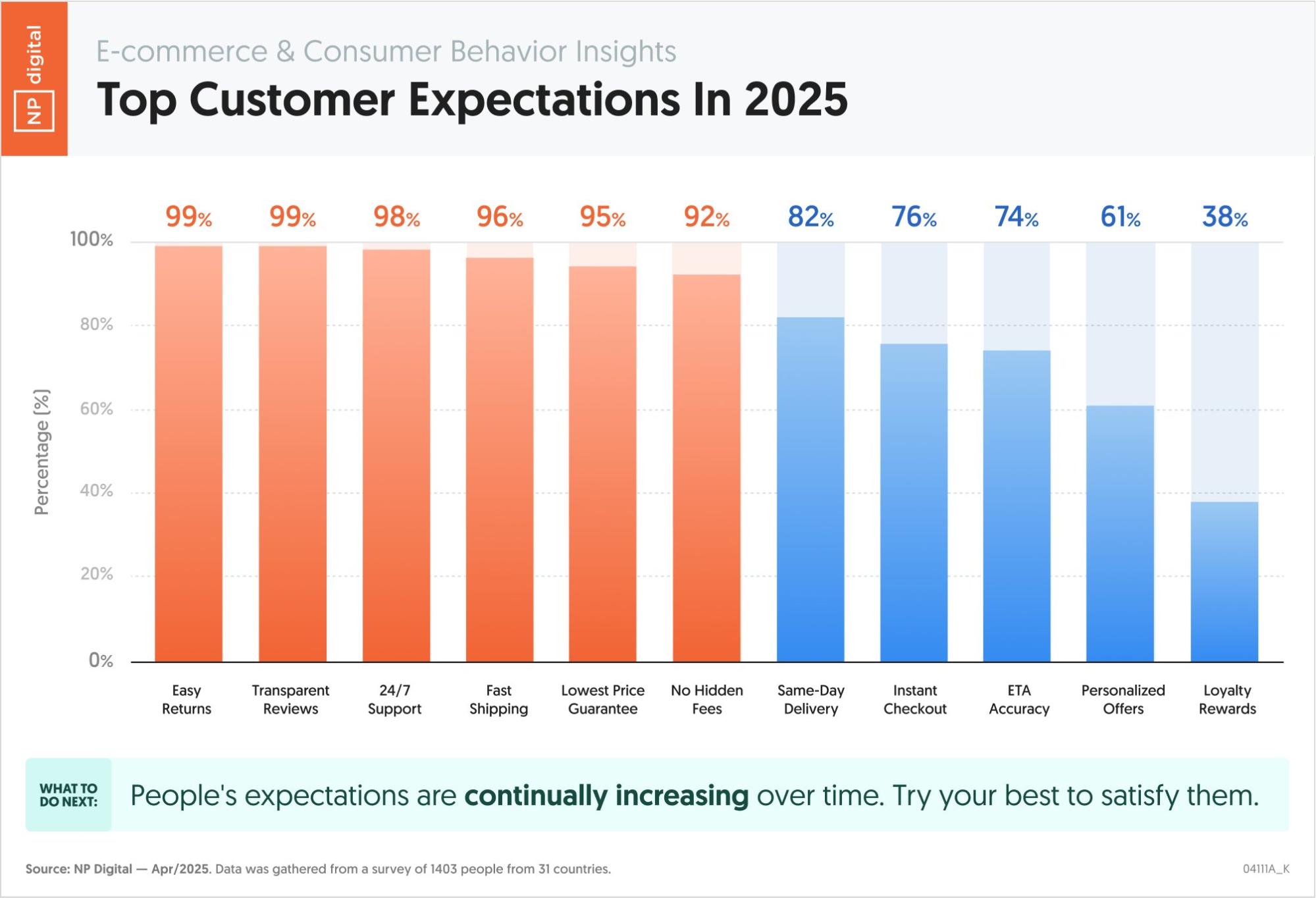
Source
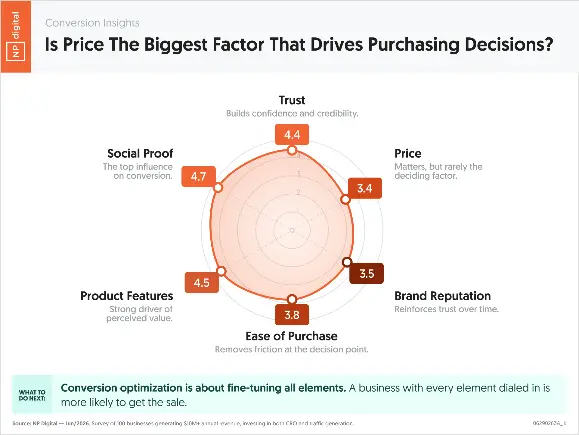
In addition, we have found that product perception goes well beyond features and price. As the graphic below shows, trust, reputation, and social proof play pretty big roles in helping customers decide if they want to buy.
Use data like this to decide which trade-offs make sense to your customers.
Source
One common product mistake is overbuilding features customers don’t need while underinvesting in onboarding and support. A long feature list won’t mean much if customers struggle to get value from the product once they buy it.
Ask these three questions to find the best product-market fit:
- Do product features address core customer pain points?
- Does my product improve on the value proposition of my competitors?
- Is the support package (i.e., customer service, warranties, return policies, etc.) competitive?
2. Price: Find the Ideal Mix of Affordability and Profit
Pricing matters because it determines revenue. Set it too high, and you’ll miss your sales volume targets. Too low, and you’ll see high sales numbers but little to no profit.
Setting a price involves considering three key factors: production and distribution costs, what the competition is doing, and (crucially) what people are willing to pay.
Interestingly, our research shows that a growing number of consumers are willing to pay more for better quality. The best price, then, isn’t necessarily the lowest.
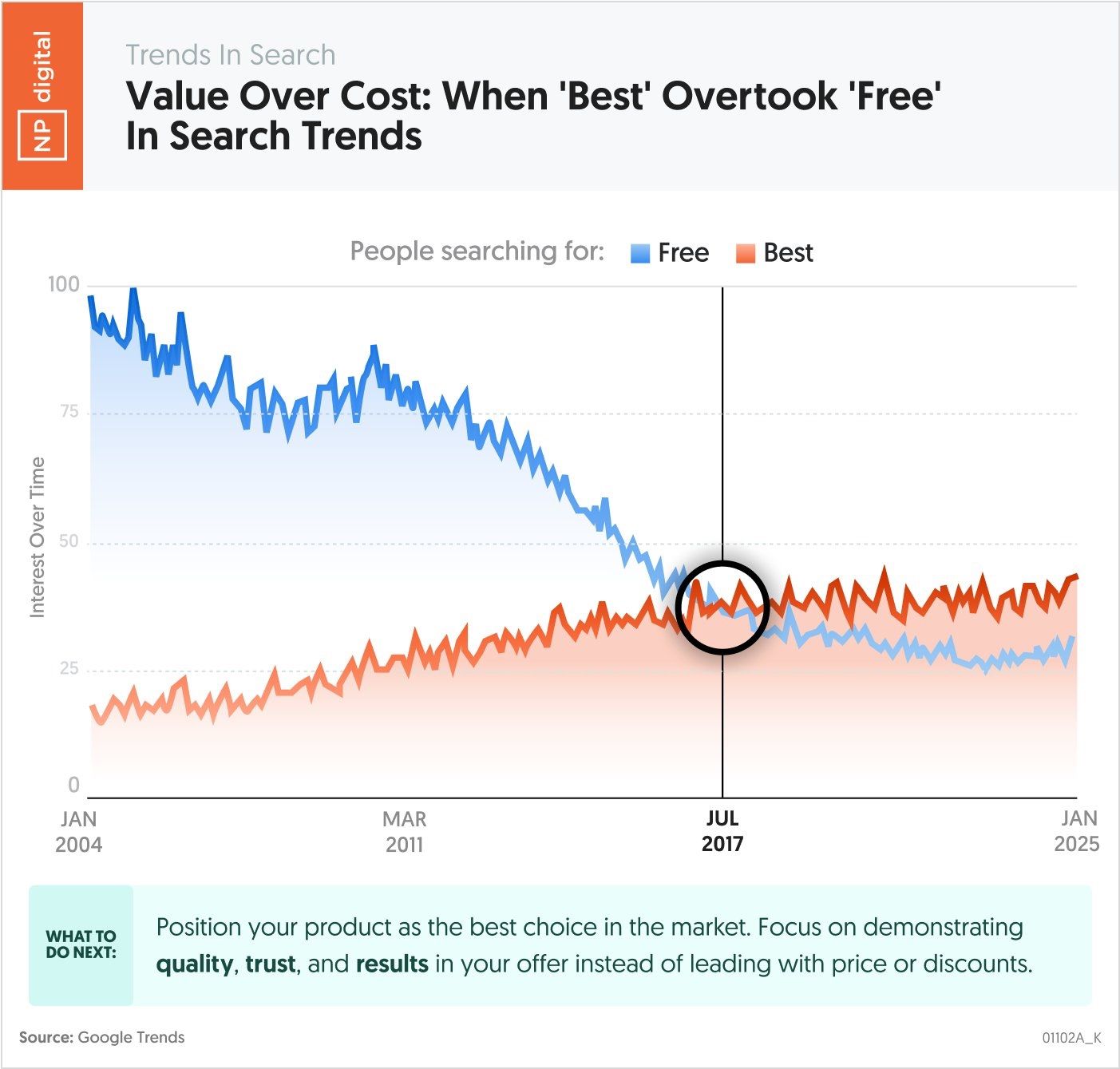
Pricing also depends on what you’re trying to accomplish. For example:
- Penetration pricing starts low to quickly attract customers and market share, then rises as adoption grows. You’ll see this with a lot of SaaS companies.
- Price skimming does the opposite. Consumer electronics companies often release products at premium pricing to nab FOMO-motivated early adopters willing to pay the high price point despite knowing the price will eventually be lower.
- Premium pricing remains high to signal quality and exclusivity, regardless of what the competition’s doing. Think Rolex.
Payment terms can also lower the purchase barrier without permanently discounting your product. Depending on what you sell, subscriptions, free trials, and installment plans can make the price easier for customers to digest.
Ask yourself:
- Does the cost match customers’ ability and willingness to pay?
- Is the price competitive when features are taken into account?
3. Place: Make Sure Customers Can Buy Your Product
Place is about making sure your product’s available where your customers want to buy it. This could mean getting on the best shelves in the right stores, or it can mean choosing the right website, marketplace, or digital platform.
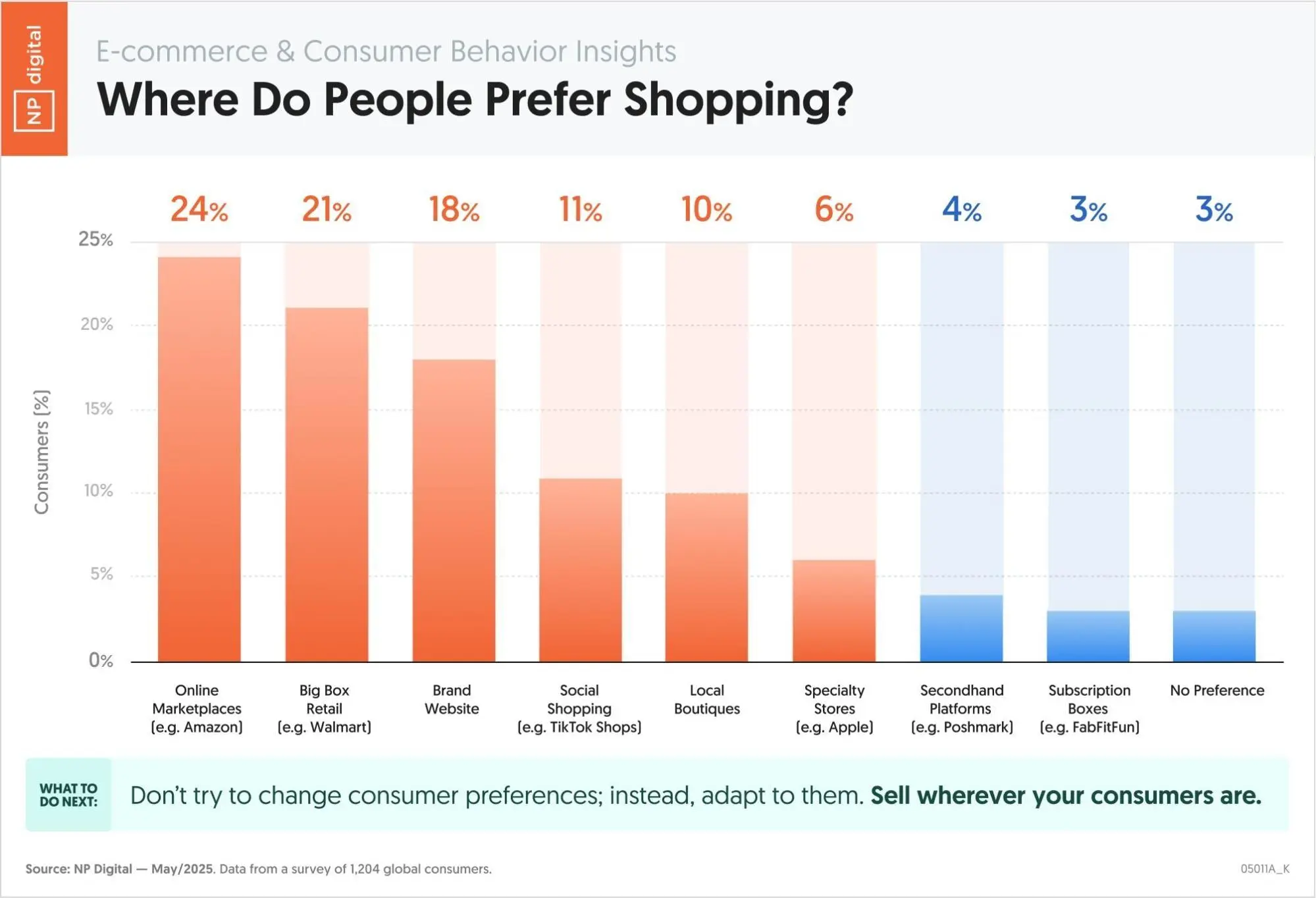
One of the first considerations to make is where people prefer to shop. Unsurprisingly, our research shows that nearly 1 in 4 prefer to do it online.
Source
Delivery logistics also play a role. Access and ease of purchase don’t mean much if high shipping costs or slow deliveries sour the buying experience.
As you make distribution decisions, you’ll likely be choosing from one of three strategies:
- Intense distribution maximizes availability by putting your product in as many outlets as possible.
- Selective distribution is more focused. It involves using a small group of retailers that better match your brand and your customers.
- Exclusive distribution is largely a premium brand play that narrows product availability to one retailer or a small network.
Rolex is a good example of the latter. The fact all their watches are made in Switzerland and distributed through a select network of dealers is a large contributor to the brand’s perceived exclusivity.
The same principle can also apply to digital products. Limiting available platforms, marketplaces, and integrations can give you tighter control over distribution and how your product is positioned.
Questions to help you optimize the place component of your mix include:
- Which physical and digital channels do customers primarily use to make purchases?
- What logistical barriers exist to a well-oiled inventory and distribution network?
4. Promotion: Tell People About What You Do (Persuasively)
Promotion is the marketing communications element of the mix. It’s about telling your target market how your product can help them.
The promotion mix includes five broad categories: advertising, public relations, personal selling, sales promotion, and direct/digital marketing. Promotional tactics like ads, PR, white papers, case studies, direct mail, SEO, and cold outreach all fall under this banner.
Today, people continue to turn to social media as the No. 1 place to discover new brands, though friends remain a strong second.
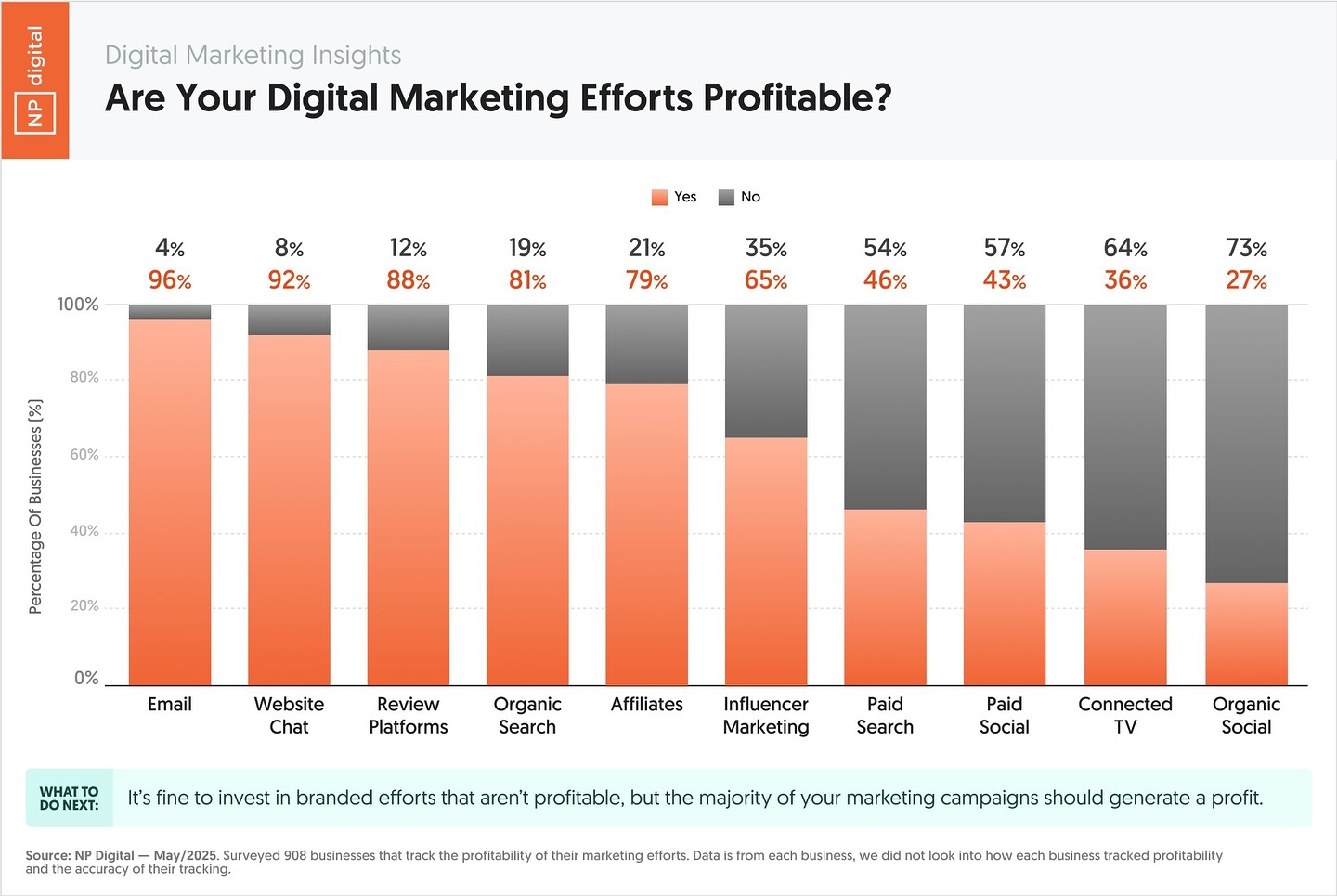
Aligning these and other tactics with each promotional category will help you build a more balanced strategy. Don’t just rely on the methods you know best.
Before any of this can work, you need to first settle on a message. No matter which channels you choose or how many people you reach, you won’t find success if your value proposition is murky and inconsistent.
For example, say a meal delivery service promotes itself online as offering affordable, family-friendly dinners, but its website focuses on gourmet meals. Even if the digital ad draws a bunch of clicks, visitors may quickly leave because they receive mixed messages.
Once you’ve developed your message (and it’s consistent), use customer behaviors and performance data to decide where to promote it.
To uncover your ideal mix of marketing mediums, ask these questions:
- Do you have clear branding and messaging that can be implemented across all marketing communications?
- Which promotional channels do customers use most often to consume information (e.g., social media, Google search, LLMs, reviews, email newsletters)?
How the 4 Ps Work Together
As with all marketing frameworks, there’s a risk of misapplication.
For the 4 Ps, that risk comes in the form of disconnected decisions. Product, price, place, and promotion are interdependent, so changing one will affect the others.
Say you adopt a premium pricing strategy. That decision affects place because selling a high-end product through a discount retailer would send conflicting signals to customers about value. It would also affect promotion because your messaging would have to communicate why your product warrants a higher price.
The same thing happens if you change the product.
Adding more advanced features may require you to invest more in onboarding and customer support. You may also need to adjust your promotional messaging to explain all the features and the value they provide.
That’s why it’s important for one person to own and oversee the entire marketing mix. This person can keep an eye on how decisions about one P affect the others while keeping the different teams from working in silos.
Examples of the Marketing Mix: The 4Ps in Action
Let’s look at some practical examples of how companies optimize the different elements of the marketing mix.
Let’s look at some practical examples of how companies optimize the different elements of the marketing mix. These brands show elements of the 4 Ps in action.
Product Example: How Ubersuggest Prioritizes Usability Over Features
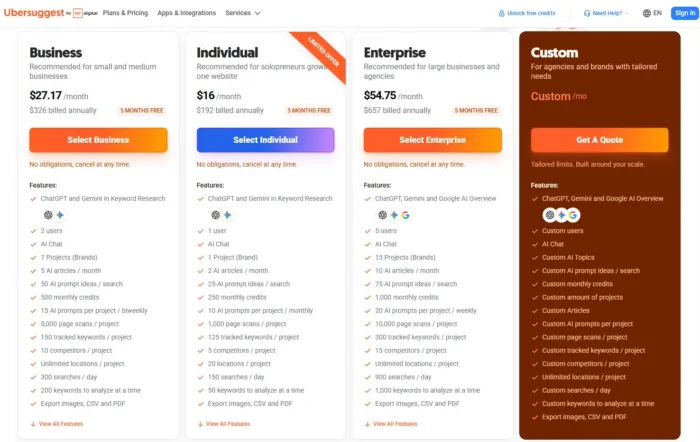
Ubersuggest is my keyword tracking and SEO tool. My core market for this product is individuals and small and medium-sized businesses.
As such, I don’t offer an enormous feature set with hundreds of reports. Instead, I focus on usability.
My goal is to make Ubersuggest easy to use, especially for those new to marketing. On the flip side, my competitors focus on ad agencies and advanced marketers.
Price Example: Rolex’s Premium Pricing Strategy
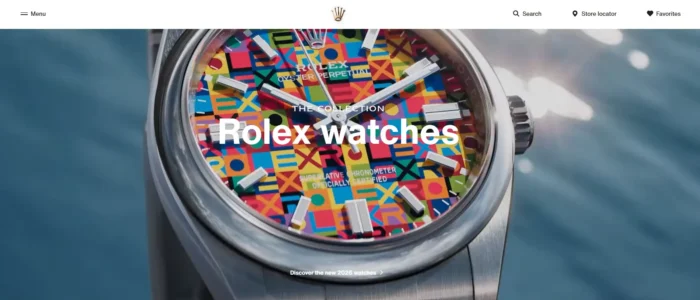
Rolex practically thumbs its nose at affordability, a choice that affects its entire marketing mix.
Its watches typically sit between $10,000 and $100,000. This price range positions the brand firmly in the luxury watch category and reinforces its premium positioning.
Rolex employs a tiered, product-specific pricing strategy. Price is based on manufacturing time, cost of materials, and rarity, with very limited production runs on some watches.
Its multi-product catalog and strong brand storytelling allow the company to make price part of the product’s appeal rather than simply the amount customers pay for a watch.
Place Example: Why McDonald’s Location Strategy Works
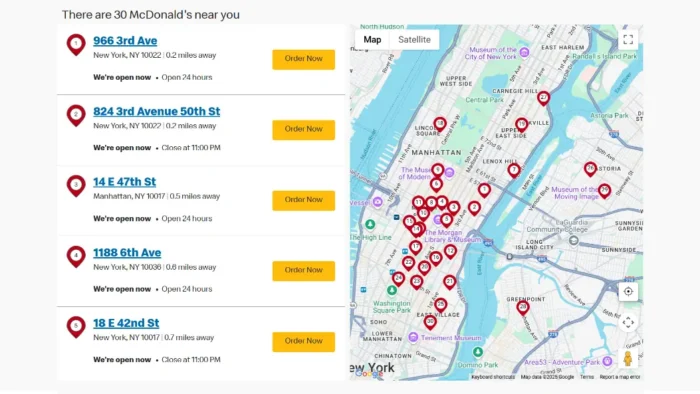
Restaurants and kiosks make up the primary distribution channels of McDonald’s. The brand also offers home deliveries through third-party partners like Uber Eats.
For McDonald’s, place is largely about convenience. It picks areas of high footfall where people are looking for quick food options while they do other things like shopping, working, traveling, and commuting.
Most restaurants are in busy urban areas, but delivery adds another distribution channel for those who don’t want to visit a location at all.
Promotion Example: Red Bull
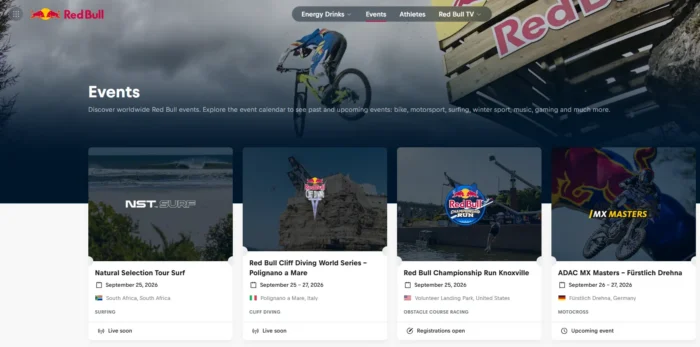
People have joked that Red Bull is an extreme sports company that sells drinks. That says a lot about its messaging and promotional strategy.
Among other initiatives, Red Bull has built its marketing around sports, events, and entertainment. This includes the Red Bull Cliff Diving World Series and Red Bull Paper Wings, a paper airplane competition.
These give the brand great content it can distribute through social media, video, press coverage, and through its own Red Bull TV. These efforts place traditional advertising as a secondary focus in their marketing strategy.
How AI Is Changing the 4 Ps of Marketing
AI is changing how marketers put the 4 Ps of marketing into practice. The strategies behind product, price, place, and promotion haven’t changed much, but AI is giving us new ways to answer them.
Product
Generative AI can speed up the path from an idea to a prototype. At the same time, marketing teams can use AI to compare product concepts and analyze customer feedback to better understand what people want.
Companies are already putting it to work. One recent study finds that 28 percent of respondents say their organization regularly uses generative AI in product and service development.
Yes, you still need to ID your customers and build a solid go-to-market strategy. While AI can also help you work through those decisions, it’s still up to you and your marketing team to make the final call.
Price
AI can also help businesses adjust prices in response to changes in demand. Dynamic pricing, which you’ll find in industries like airlines and ridesharing, is a good example of this.
Airbnb offers a more concrete illustration. Its Smart Pricing technology uses machine learning to estimate the odds a property will be booked at a particular price on a particular date. Hosts use this to adjust their rates.
Even as we rely more on tools like these, the goal is still to find a price customers will pay, and that also supports business success. AI just gives companies another way to find and adjust that balance.
Place
AI is changing how customers discover products online.
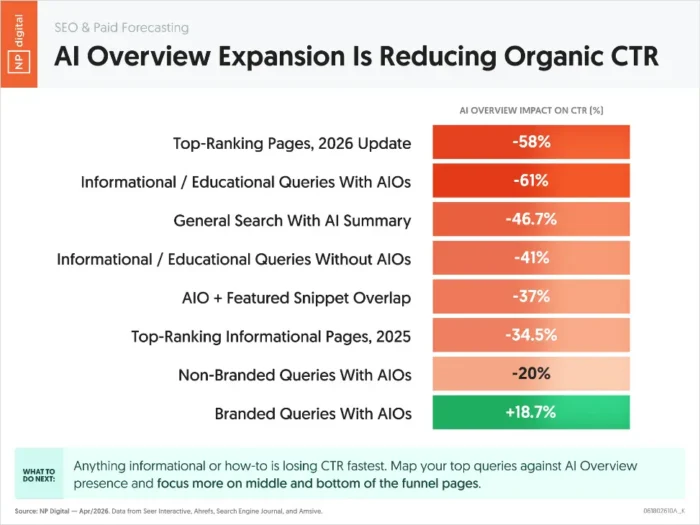
AI Overviews push traditional search results farther down the page, making visibility within those summaries increasingly important. As our graphic below shows, today’s top-ranking pages are seeing a 58 percent drop in click-through rate when an AI Overview appears.
Source
These stats tell us that optimizing content for organic rankings is only part of the battle. Clear answers to customers’ questions can also improve your chances of being cited in an AI Overview.
Once customers reach your website, AI can help them discover products there, too. Recommendation systems suggest items based on shoppers’ interests and behavior, potentially introducing them to their next favorite products (yours).
For example, eyewear retailer GlassesUSA reported an 88 percent increase in revenue after it started using an AI-powered recommendation widget on its homepage.
Promotion
Marketing teams are already using AI to develop creative concepts and tailor campaigns to different audiences. They’re also using it to refine ad targeting and bidding as campaigns progress.
According to a recent survey, 73.9 percent of senior marketing leaders report using AI for content creation, while 45.2 percent use it for targeting. These tools give marketers more ways to test their ideas and adjust campaigns based on performance.
While AI helps marketers focus ideas and channels, it doesn’t replace the need for a clear message that gives people a reason to buy. Marketers still must understand their audience and evaluate whether their promotions are delivering results.
FAQs About the 4 Ps
How can I use the 4 Ps of marketing to prioritize marketing initiatives?
First, figure out what’s keeping customers from buying. If your product doesn’t meet their needs, improving it probably matters more than increasing your advertising budget. If customers want your product but can’t find it, focus on distribution. Use the 4 Ps to identify the biggest obstacle to a purchase, then work to remove the obstacles.
When is it appropriate to change the price?
Consider adjusting your price when your costs change or customer demand suggests your current price no longer matches the value you offer. Before making a change, review your profit margins and test customer response. Remember: A lower price won’t always improve profitability.
What signs indicate our place and distribution choices are working?
Can customers find and buy your product through the channels they prefer most? Strong conversion rates and consistent sales indicate that your distribution strategy is probably working. But also pay attention to customer feedback. Complaints related to availability and the purchasing experience show you might have gaps that could be improved.
How should promotional tactics differ for a new offering?
When taking a new product or service to market, your first priorities should be building awareness and explaining how it solves a specific customer problem. Demonstrations and educational content can help with this. Then, as you grow brand identity, you can start considering buyer promotions, like targeted offers.
Can the 4 Ps of marketing be adapted for digital products?
Yes. For a digital solution, “product” includes its features and user experience, while “price” will likely be a subscription or a one-time purchase. “Place” is where customers discover and access the product, like your website or an app marketplace. And finally, “promotion” includes your efforts to attract users and communicate the product’s value through efforts like SEO, online ads, email marketing, webinars, and social media.
{
“@context”: “https://schema.org”,
“@type”: “FAQPage”,
“mainEntity”: [
{
“@type”: “Question”,
“name”: ” How can I use the 4 Ps of marketing to prioritize marketing initiatives? “,
“acceptedAnswer”: {
“@type”: “Answer”,
“text”: “
First, figure out what’s keeping customers from buying. If your product doesn’t meet their needs, improving it probably matters more than increasing your advertising budget. If customers want your product but can’t find it, focus on distribution. Use the 4 Ps to identify the biggest obstacle to a purchase, then work to remove the obstacles.
”
}
}
, {
“@type”: “Question”,
“name”: “When is it appropriate to change the price?”,
“acceptedAnswer”: {
“@type”: “Answer”,
“text”: “
Consider adjusting your price when your costs change or customer demand suggests your current price no longer matches the value you offer. Before making a change, review your profit margins and test customer response. Remember: A lower price won’t always improve profitability.
”
}
}
, {
“@type”: “Question”,
“name”: “What signs indicate our place and distribution choices are working?”,
“acceptedAnswer”: {
“@type”: “Answer”,
“text”: “
Can customers find and buy your product through the channels they prefer most? Strong conversion rates and consistent sales indicate that your distribution strategy is probably working. But also pay attention to customer feedback. Complaints related to availability and the purchasing experience show you might have gaps that could be improved.
”
}
}
, {
“@type”: “Question”,
“name”: “How should promotional tactics differ for a new offering? “,
“acceptedAnswer”: {
“@type”: “Answer”,
“text”: “
When taking a new product or service to market, your first priorities should be building awareness and explaining how it solves a specific customer problem. Demonstrations and educational content can help with this. Then, as you grow brand identity, you can start considering buyer promotions, like targeted offers.
”
}
}
, {
“@type”: “Question”,
“name”: ” Can the 4 Ps of marketing be adapted for digital products?”,
“acceptedAnswer”: {
“@type”: “Answer”,
“text”: “
Yes. For a digital solution, “product” includes its features and user experience, while “price” will likely be a subscription or a one-time purchase. “Place” is where customers discover and access the product, like your website or an app marketplace. And finally, “promotion” includes your efforts to attract users and communicate the product’s value through efforts like SEO, online ads, email marketing, webinars, and social media.
”
}
}
]
}
Conclusion
There’s a reason the 4 Ps have been around for more than 60 years. They give you a simple framework for making marketing decisions with your customers top of mind.
When something isn’t working, the 4 Ps can guide you as you figure out where to focus your attention as you solve the issue.
The tools we use to make these decisions continue to change. AI is the latest example, but it hasn’t changed the fundamental questions marketers need to answer.
The 4 Ps remain useful because they help you work through the most important questions, regardless of the technology you use.
If you need help applying the 4 Ps or turning your answers into a marketing strategy that drives results, NP Digital’s marketing services can help. Just reach out, and we’ll be happy to provide a consultation.
